
US House Votes to Curb Trump’s War Powers Amid Escalating Iran Conflict
By SKYHIGHNEWSHUB · 04/06/2026 9:20 AM · 3 min read
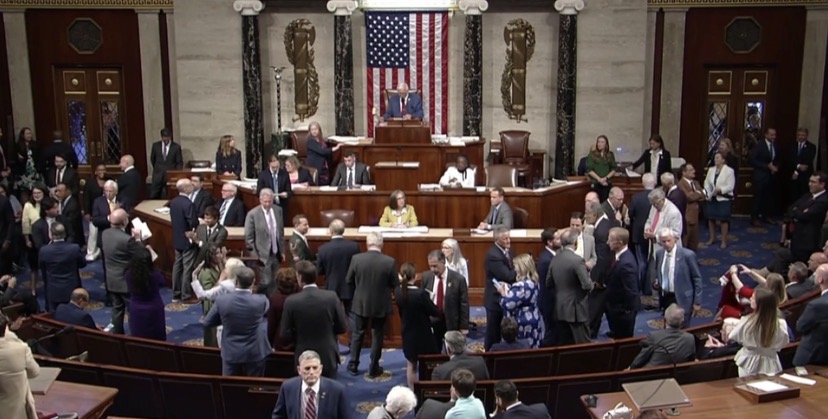
In a significant political setback for President Donald Trump, the United States House of Representatives has approved a resolution seeking to limit his authority to continue military operations against Iran without congressional approval.
The measure passed Wednesday in a narrow 215-208 vote, with four Republican lawmakers breaking ranks to join Democrats in supporting the effort.
Although largely symbolic at this stage, the resolution represents one of the strongest congressional challenges yet to Trump’s handling of the ongoing conflict with Iran and highlights growing bipartisan unease over America’s deepening military involvement in the Middle East.
The resolution invokes the War Powers framework, requiring the President to either withdraw U.S. military forces engaged in hostilities against Iran or seek formal authorization from Congress.
While the White House has dismissed the measure as unconstitutional and an infringement on executive authority, its passage underscores mounting pressure on the administration amid rising fuel prices, economic concerns and increasing public opposition to the conflict.
The vote marks the fourth attempt by lawmakers to restrain Trump’s war-making powers since hostilities erupted earlier this year.
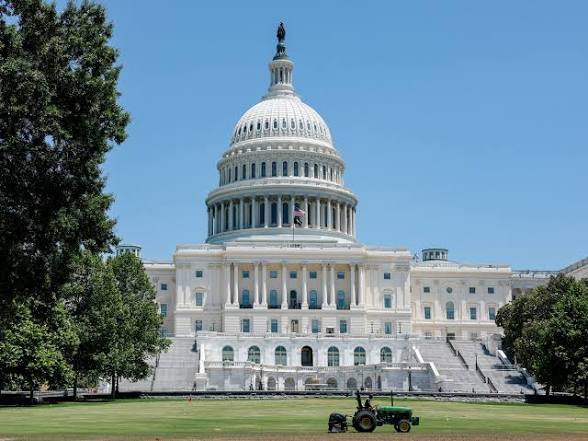
Under the U.S. Constitution, Congress holds the authority to declare war, a point repeatedly emphasized by supporters of the resolution.
Michigan Republican Congressman Tom Barrett, one of the four GOP lawmakers who voted in favour of the measure, defended his decision.
“Congress alone declares war. That’s something we need to protect,” Barrett said after the vote.
Asked whether he feared political repercussions from Trump, Barrett replied: “I vote my conscience for what I think is right.”
Democratic lawmakers described the outcome as a major turning point.
Representative Gregory Meeks, ranking Democrat on the House Foreign Affairs Committee, called the vote a “significant bipartisan rebuke” of the President’s military strategy.
Meeks argued that the war had failed to achieve its stated objectives while increasing costs for American consumers and complicating diplomatic efforts to address Iran’s nuclear programme.
“The American people do not want another open-ended conflict in the Middle East,” he said.
The House action follows a similar initiative in the Senate, which advanced through committee in May but has yet to receive a full chamber vote.
Should the Senate also approve the resolution, it would become one of the most consequential congressional assertions of war powers in recent years, although legal challenges would likely follow.
The conflict began on February 28 when the United States and Israel launched coordinated strikes on Iranian targets. Tehran responded with attacks against Israel and American-aligned interests in the Gulf region, including actions that disrupted traffic through the strategic Strait of Hormuz.
Although Washington and Tehran agreed to a preliminary ceasefire in April, sporadic military exchanges have continued.
Just hours before the House vote, Trump insisted that negotiations with Iran were progressing and suggested a broader settlement could be reached soon.
“In theory, they’re pretty close to signing a paper,” Trump told reporters at the White House.
Nevertheless, Wednesday’s vote highlights growing divisions within both Congress and the Republican Party over the future of the conflict and the extent of presidential authority in military affairs.
Written by
SkyhighNewshub
SkyHigh NewsHub correspondent.