
US, Iran Exchange Fresh Military Strikes as Fragile Gulf Ceasefire Comes Under Pressure
By OUR REPORTER · 06/06/2026 7:55 AM · 2 min read
The fragile ceasefire between the United States and Iran has come under renewed strain following a fresh exchange of military strikes in the Gulf region, raising concerns about the possibility of a wider escalation between the long-time adversaries.
The latest confrontation began after US forces intercepted and destroyed four Iranian drones allegedly launched toward the Strait of Hormuz, one of the world’s most strategically important maritime routes.
According to the United States Central Command (CENTCOM) the drones posed an immediate threat to international shipping and regional security.
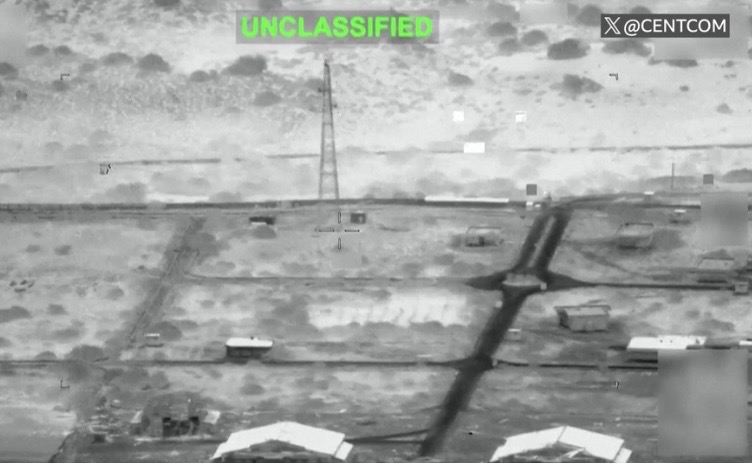
Following the interception, American forces carried out retaliatory strikes against Iranian coastal surveillance radar facilities in southern Iran, targeting what US officials described as assets linked to future attack planning.
In a statement, CENTCOM said the strikes were undertaken as a defensive measure aimed at protecting maritime traffic and preventing additional threats in the Gulf.
Iran however, responded with missile attacks targeting American military facilities in Kuwait and Bahrain.
Iranian state media reported that ballistic missiles were launched at two US air bases in Kuwait and at facilities associated with the US Navy in Bahrain.
American military officials later disclosed that seven missiles were fired, with six successfully intercepted while one failed to reach its intended target.
The exchange marks the latest flare-up in tensions between Washington and Tehran despite a ceasefire arrangement reached earlier this year following months of hostilities.
Earlier in the week, Kuwaiti authorities reported that drone attacks linked to the conflict caused casualties and injuries at Kuwait International Airport, further heightening regional anxiety.
Iran’s Islamic Revolutionary Guard Corps (IRGC) denied responsibility for that incident, arguing that damage at the airport resulted from a malfunction involving US missile defence systems.
US authorities rejected the claim, insisting the attack was deliberate and directly attributable to Iranian forces.
The latest hostilities come as diplomatic efforts aimed at securing a more comprehensive peace agreement continue to stall.
Negotiations have faced repeated setbacks amid disagreements over key provisions, with both sides accusing each other of altering previously discussed terms.
The confrontation has also reignited concerns about the security of the Strait of Hormuz, a critical global energy corridor through which roughly one-fifth of the world’s oil and liquefied natural gas supplies pass.
Any disruption to traffic through the waterway carries significant implications for global energy markets and international trade.
Despite the ongoing tensions, limited diplomatic engagement remains in place. In a notable development, the United States recently approved visas for Iran’s national football team ahead of its participation in the upcoming FIFA World Cup, underscoring the complex relationship between the two countries even amid continued military confrontation.
Regional analysts warn that unless diplomatic channels gain momentum, repeated military exchanges could further destabilise an already volatile Middle East and complicate efforts to achieve a lasting settlement between Washington and Tehran.
Written by
Our Reporter
SkyHigh NewsHub correspondent.