
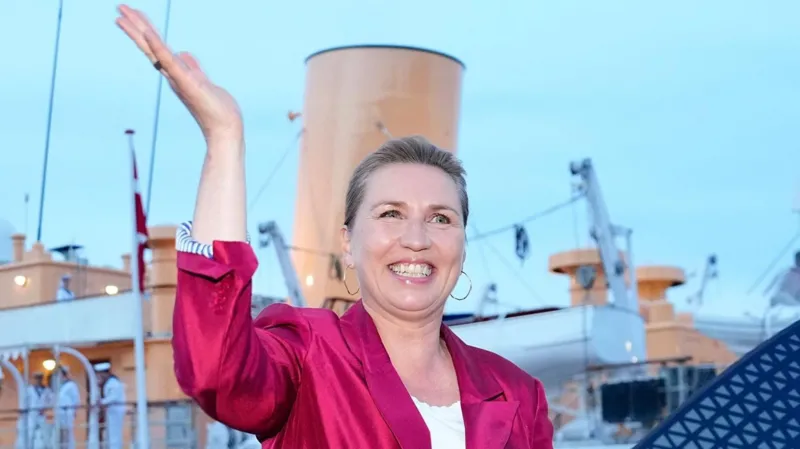
Denmark’s Frederiksen to Lead New Coalition Government After Months of Negotiations
By OUR REPORTER · 02/06/2026 8:25 AM · 2 min read
Denmark’s acting Prime Minister, Mette Frederiksen, is set to begin a third term in office after successfully concluding months of negotiations to form a new centre-left coalition government following the country’s inconclusive general election.
The breakthrough comes 69 days after Danish voters went to the polls in March, producing a fragmented parliament in which no party secured enough seats to govern alone.
Frederiksen, leader of the Social Democratic Party, confirmed the agreement after meeting with King Frederik X, announcing that a coalition deal had finally been reached after what she described as lengthy and difficult negotiations.
The new government will comprise the Social Democrats, the Socialist People’s Party, the centre-left Radikale Venstre and the centrist Moderates.
A statement from the Danish Royal Palace confirmed that the King would formally receive the new government at Amalienborg Palace in Copenhagen.
The coalition deal secures a third consecutive term for Frederiksen despite her party recording its weakest electoral performance in more than a century.
In the March election, the Social Democrats emerged as the largest party but won only 21.9 per cent of the vote, securing 38 parliamentary seats far below the 90 seats required for a majority government.
The prolonged coalition talks reflected the increasingly fragmented nature of Danish politics, with twelve parties gaining representation in parliament.
Frederiksen now returns to office at a critical moment for Denmark, facing both domestic and international challenges.
One of the most pressing issues confronting her administration is renewed pressure from Washington following repeated statements by Donald Trump regarding Greenland, the autonomous Danish territory that has become strategically significant due to its Arctic location and natural resources.
At home, the government is expected to focus on rising living costs, economic stability, welfare reforms, environmental concerns and agricultural policies.
Issues such as pesticide contamination of drinking water, animal welfare and climate impacts associated with intensive farming featured prominently during the election campaign.
Frederiksen expressed confidence that the coalition would provide stable leadership and deliver policies capable of addressing both current and future challenges facing Danish society.
“We look forward to presenting the political foundation of this government,” she said, stressing that the coalition would govern in the interests of both present and future generations.
The formation of the new administration officially ends one of Denmark’s longest post-election political negotiations in recent years.
Written by
Our Reporter
SkyHigh NewsHub correspondent.