
Senate Expands Safe Schools Probe to TETFund, NELFUND, UBEC, Humanitarian Ministry
By OUR REPORTER · 21/07/2026 2:57 PM · 5 min read
The Senate has expanded the scope of its investigation into the Safe Schools Initiative (SSI), bringing several federal education, humanitarian and social intervention agencies under the committee's scrutiny.
The upper chamber also approved a three-week extension for the Senate Ad-hoc Committee investigating the programme to complete its assignment and submit its report.
The institutions now covered by the expanded investigation include the Tertiary Education Trust Fund (TETFund), Nigerian Education Loan Fund (NELFUND), Universal Basic Education Commission (UBEC), Federal Ministry of Humanitarian Affairs and Poverty Alleviation and the National Social Investment Programme Agency (NSIPA).
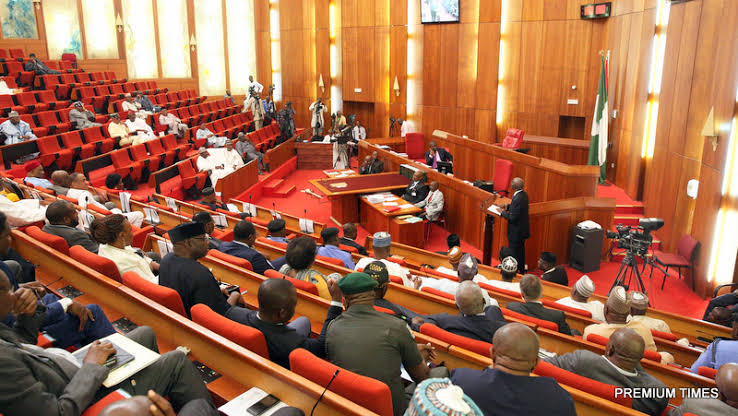
The Senate approved the extension and expanded mandate on Tuesday following a motion moved by the Chairman of the Ad-hoc Committee, Senator Orji Uzor Kalu (APC, Abia North), under Orders 41 and 51 of the Senate Standing Orders, 2026, as amended.
Presenting the motion, Kalu told his colleagues that preliminary findings from the committee's investigation had revealed significant links between the funding and implementation of the Safe Schools Initiative and the activities of several federal institutions responsible for education financing, student welfare, humanitarian assistance and social intervention programmes.
He argued that examining the Safe Schools Initiative in isolation could produce an incomplete picture of the challenges surrounding school security, educational infrastructure and intervention programmes targeting vulnerable students.
“The issues surrounding student security, educational infrastructure funding and social intervention schemes for vulnerable learners across the country are deeply interwoven. Investigating the Safe Schools Initiative without reviewing these complementary bodies will result in fragmented legislative oversight,” Kalu said.
The expanded mandate will enable the committee to examine financial flows, operational challenges and accountability mechanisms across the Safe Schools Initiative and the newly included agencies.
The committee is expected to review social safety-net allocations linked to school feeding programmes, emergency relief interventions for displaced students and educational rehabilitation initiatives administered through the Federal Ministry of Humanitarian Affairs and Poverty Alleviation and NSIPA.
It will also examine infrastructure and security-related intervention projects funded by TETFund in beneficiary tertiary institutions.
The committee is further expected to scrutinise NELFUND's disbursement procedures, operational readiness, administrative efficiency and the mechanisms through which students access education loans.
UBEC's interventions in the basic education sector will also come under review as lawmakers seek to establish how resources allocated to improve schools and educational infrastructure are being utilised.
Kalu said the additional time was necessary because the committee's extensive schedule and other legislative engagements had prevented it from completing planned visits to some locations relevant to the investigation.
“We’re supposed to submit our report, and there are four key areas that were not done. I needed the permission of the Senate so that we can conclude it in the next two or three weeks and come back with a report,” he said.
Following the presentation, Senate President Godswill Akpabio sought the views of lawmakers on the request for additional time.
The Senate subsequently approved the request through a voice vote, granting the committee another three weeks to conclude its work.
The investigation into the Safe Schools Initiative was launched by the Senate in December last year amid continuing concerns over attacks on educational institutions across the country despite successive government interventions aimed at improving the safety of schools.
The probe gained further urgency following the abduction of 25 female students of Government Girls Comprehensive Secondary School, Maga, in Kebbi State. The incident, in which the school's Vice Principal was reportedly killed by bandits, renewed concerns over the vulnerability of students and teachers in communities affected by insecurity.
The Safe Schools Initiative itself was established in May 2014, following the abduction of 276 schoolgirls from Chibok, Borno State.
The programme was conceived as a collaborative initiative involving the Federal Government, the United Nations and private-sector stakeholders, with the objective of improving security around schools, particularly in areas affected by conflict and insurgency.
As part of its ongoing investigation, the Senate committee has already raised questions over the management and utilisation of funds allocated to the initiative.
At an investigative hearing, the committee questioned the disbursement of ₦15 billion released for the programme in 2023.
The Nigerian Police Force was identified as the largest beneficiary, receiving ₦6.225 billion, while the Nigeria Security and Civil Defence Corps (NSCDC) received ₦3.362 billion.
Another ₦2.250 billion was allocated to Defence Headquarters, while ₦519 million went to the Federal Ministry of Education.
The amount released to the Department of State Services (DSS) was not publicly disclosed during the hearing.
The committee had also raised concerns over alleged financial irregularities and consultancy expenses linked to the programme.
It subsequently directed the Safe Schools Financing Office to submit a reconciled and comprehensive account of funds released and expenditures incurred, alongside details of contractors and relevant supporting documents relating to the Central Bank of Nigeria Trust Fund account.
During one of the committee's engagements, the National Coordinator of Financing Safe Schools in Nigeria, Hajia Halima Iliya, also disclosed that the initiative had received financial support from both domestic and international partners.
According to her, the programme received $10 million from the Federal Government, another $10 million from Nigerian business leaders, $1 million from the African Development Bank and €2 million from the German Government.
She further disclosed that $4 million from the Norwegian Government was managed through UNICEF, alongside additional support from USAID, the Qatar Foundation and United Nations agencies.
With the expansion of the investigation, the Senate committee will now examine a wider network of education, humanitarian and social intervention programmes, with particular attention to how public and donor funds are allocated, managed and deployed.
The broader inquiry is expected to help lawmakers determine whether existing interventions are achieving their intended objectives and whether funds committed to school security, education infrastructure, student welfare and humanitarian support are translating into measurable outcomes.
The committee's eventual report is also expected to provide recommendations on strengthening accountability and coordination among the agencies involved, while addressing persistent gaps in the protection and welfare of Nigerian students.
For the Senate, the expanded investigation represents an attempt to move beyond examining the Safe Schools Initiative as a standalone security programme and assess the wider institutional and financial framework supporting the safety, education and welfare of vulnerable learners across the country.
Written by
Our Reporter
SkyHigh NewsHub correspondent.