
Reps Demand Answers From NSA Over Failure to Act on PFIPC Legitimacy Alert
By OUR REPORTER · 22/07/2026 6:43 AM · 9 min read
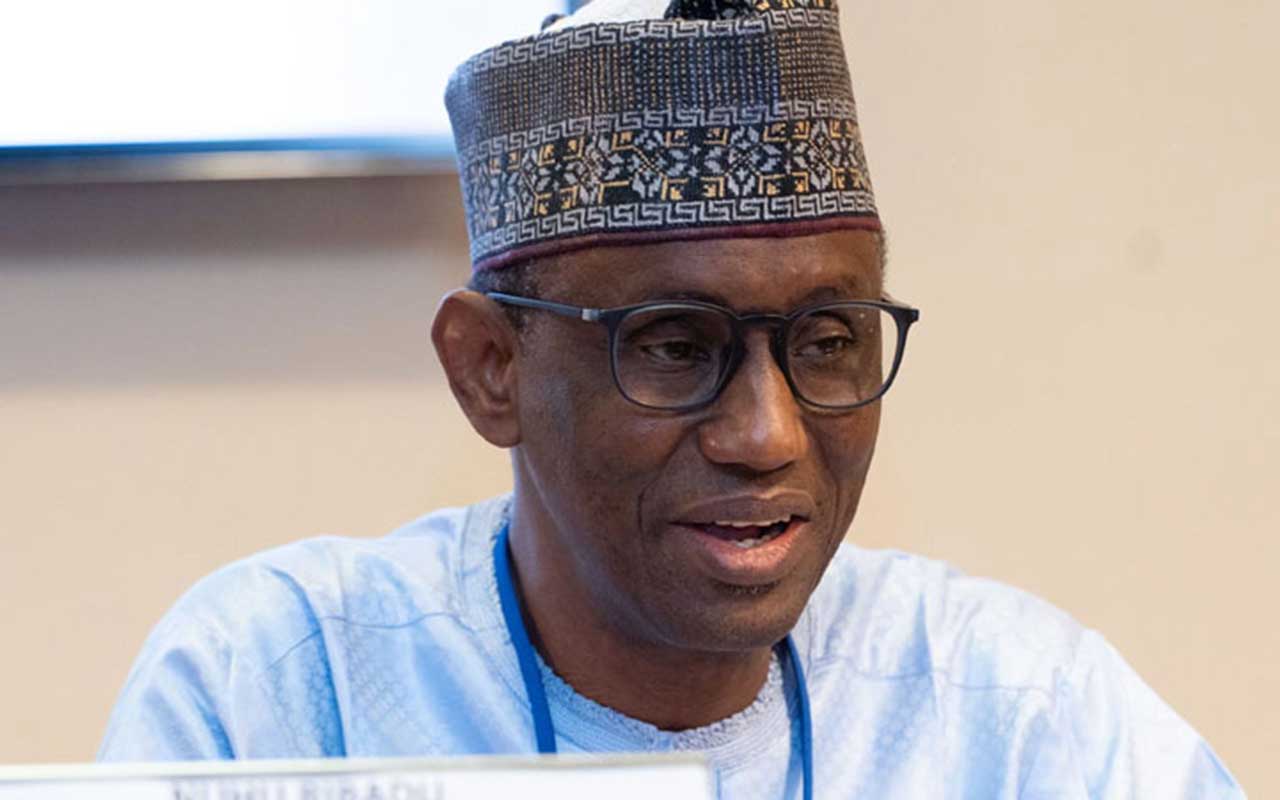
The House of Representatives has summoned the National Security Adviser (NSA), Nuhu Ribadu and the Minister of Foreign Affairs to explain how the disputed Presidential Foreign Investment Promotion Council (PFIPC) allegedly continued to operate despite concerns raised about its legitimacy.
The summons followed revelations by the Ministry of Foreign Affairs that it had detected discrepancies in correspondence from the council and subsequently sought clarification from the Office of the National Security Adviser.
The House ad hoc committee investigating the alleged establishment and operations of the PFIPC without legal backing wants the NSA to explain why no action was taken after his office reportedly confirmed that the promoter of the council, Prince Adeniyi Matthew Adeyemi, was unknown to the Federal Government.
The committee also issued a final ultimatum to Ministries, Departments and Agencies (MDAs) that failed to honour previous invitations, directing their accounting officers to appear before it on Thursday with all requested documents.
The development followed the appearance of the Permanent Secretary of the Ministry of Foreign Affairs, Dunoma Umar Ahmed, who submitted a memorandum dated July 21, 2026, detailing the ministry's limited interactions with Adeyemi and the steps it took after detecting irregularities.
Ahmed told the committee that Adeyemi, who presented himself as the Director-General of the Presidential Economic Advisory Council/Presidential Foreign Investment Promotion Council (PEAC/PFIPC), approached the ministry on three occasions seeking collaboration and endorsement for a proposed World Investment Summit in Nigeria.
The requests, according to the ministry, were received on June 26, 2025; August 5, 2025; and June 5, 2026.
The ministry said it declined to act on the requests after conducting due diligence and identifying discrepancies in the correspondence submitted by Adeyemi.
“Guided by extant rules and regulations as well as the necessity of carrying out due diligence before obliging any request, the ministry did not take any action on the requests,” the memorandum stated.
It added that its decision was also influenced by “some of the discrepancies observed in the letters submitted by Prince Adeyemi and the ongoing investigation on the legitimacy of the PFIPC and the personality of its alleged Director-General.”
The ministry subsequently wrote to the Office of the National Security Adviser on October 16, 2025, seeking clarification on Adeyemi's status.
According to Ahmed, the NSA responded on November 26, 2025, after making enquiries from the Office of the Secretary to the Government of the Federation and the Office of the Chief of Staff to the President.
The response, he said, indicated that “Prince Mathew Adeyemi is unknown to any office of the Federal Government.”
Ahmed further told the lawmakers that the Ministry of Foreign Affairs had no official relationship with the PFIPC and did not participate in any diplomatic engagements, bilateral meetings or multilateral discussions allegedly organised by the council.
“The ministry did not participate in any diplomatic engagement, bilateral and multilateral discussions held by the PFIPC.
“The ministry has never had any official interaction or engagement with the PFIPC or its alleged Director-General,” he said.
The testimony, however, raised questions among lawmakers over what steps were taken after the ministry received confirmation that the organisation lacked official recognition.
A member of the committee, Abubakar Hassan Fulata, asked whether the ministry had formally informed Adeyemi that the organisation was illegal and warned him against further dealings with government institutions.
“After confirming from the Office of the Secretary to the Government of the Federation and the Office of the Chief of Staff to Mr President that this entity does not exist legally, did you communicate to the so-called Director-General that this organisation is illegal and that you should not interact with it any further?” Fulata asked.
In response, the committee chairman, Yusuf Gagdi, said the ministry appeared to have acted appropriately by referring the matter to the NSA but insisted that the security office must account for its response after determining that the council was not a legitimate government entity.
“The Office of the National Security Adviser should appear before this committee and explain that aspect,” Gagdi said.
He added: “Foreign Affairs received correspondences from this agency under investigation. They noticed discrepancies and requested the Office of the NSA to find out the status of the agency. The NSA responded that it is an illegal agency.
“What has the Office of the NSA done as a security office after discovering that the agency does not exist? I think they should have taken action, so they should tell us the action they have taken.”
Lawmakers also questioned how the alleged council was able to engage foreign diplomats and organise activities involving international representatives despite the Ministry of Foreign Affairs maintaining that it had no official dealings with the organisation.
Gagdi said the situation exposed serious gaps in coordination among government institutions, particularly where diplomatic engagements were concerned.
“Our responsibility is to make laws. Then a strange agency that is supposed to do our function is introduced to us. We notice discrepancies, report to the NSA, the NSA responds that the agency is illegal, then all of a sudden we see the agency engaging foreign nationals in diplomatic functions that need to be coordinated by the Ministry of Foreign Affairs,” he said.
Describing the situation as unacceptable, the lawmaker added: “Somebody will outsmart agencies, form a fake agency, get documents and approvals from agencies, conduct diplomatic engagements with foreign nationals. I think this is a big insult on the Nigerian people.”
Responding on behalf of the ministry, Ahmed acknowledged that some organisations occasionally bypass established diplomatic channels by engaging foreign missions directly.
“Sometimes, we find that some of these organisations engage in direct missions without the permission of the ministry.
“We always send circulars to inform them that it is necessary to follow the laid-down channels of communication,” he said.
The committee, however, said the investigation would continue and that the Minister of Foreign Affairs must personally appear before the panel.
Gagdi also directed the committee secretariat to invite the NSA to respond to questions arising from the ministry's testimony.
The committee separately expressed disappointment over the failure of several invited MDAs to appear before it, warning that continued non-compliance could attract constitutional sanctions.
Gagdi described the absence of the agencies as a serious affront to the oversight powers of the House.
“The House of Representatives Ad-Hoc Committee investigating activities surrounding the alleged establishment and operations of the Presidential Foreign Investment Promotion Council wishes to express its profound disappointment over the failure of some Ministries, Departments and Agencies of the Federal Government to honour its invitation and appear before the committee today,” he said.
He said the committee viewed the failure to appear as “a very serious affront on the constitutional oversight powers of the House of Representatives and an unacceptable disregard for the authority of the Parliament, which represents the sovereign will of the Nigerian people.”
According to Gagdi, invitations issued by properly constituted committees of the House are backed by Sections 88 and 89 of the 1999 Constitution, as amended, and therefore constitute a legal obligation rather than a courtesy.
He announced a final notice to the affected agencies, directing their chief executives and accounting officers to appear personally before the committee on Thursday with all relevant documents.
“Thursday is the final opportunity for every defaulting agency to comply. We don't want representation. We don't want permanent secretaries. We want the accounting officers of the agencies to appear before us with all the relevant documents requested by the committee and any other documents they consider useful,” he declared.
The committee chairman warned that agencies that failed to appear without lawful justification would face the full weight of the law.
“Any ministry, department or agency that fails to appear without lawful justification will leave the committee with no alternative but to invoke every constitutional and statutory power available to us as the House of Representatives to compel compliance and ensure accountability,” he said.
Gagdi maintained that the probe was not targeted at any individual or institution but was designed to establish the facts surrounding the alleged council and protect the integrity of public administration.
“This investigation is in the national interest. It is not targeted at any individual or institution, but it is aimed at establishing the facts, protecting the integrity of public administration, guarding the rule of law and ensuring that no public officer or institution operates outside the framework of the Constitution and the laws of the Federal Republic of Nigeria,” he said.
He assured that the committee would conduct its assignment professionally and transparently, insisting that no government institution would be allowed to frustrate the investigation.
During the sitting, the committee also rejected the representative sent by the Ministry of Finance.
The official, who identified himself as a Deputy Director in the Cash Management Department, told the panel that he had been delegated by the Minister of Finance to represent the ministry.
The committee, however, ruled that the appearance was unacceptable, insisting that the ministry's accounting officer must personally appear before it.
The decision followed issues raised in the course of the hearing concerning the Ministry of Finance and its alleged links to the disputed council and the N1.3 billion allocation associated with the PFIPC in the 2026 Appropriation Act.
Before adjourning, the committee noted that the Ministry of Foreign Affairs had raised questions relating to the Finance Ministry, further reinforcing the need for its leadership to appear personally.
The hearing was adjourned until Thursday, July 23, 2026, at noon, when the committee expects the defaulting agencies and their accounting officers to appear with the requested documents.
The latest development deepens the House investigation into how the disputed PFIPC allegedly secured government-related recognition, interacted with public institutions and foreign representatives, and became associated with budgetary provisions despite questions over its legal status.
The probe is expected to focus further on the roles played by government agencies that interacted with or received correspondence from the organisation, as lawmakers seek to determine how the alleged council operated within or around the machinery of government despite concerns about its legitimacy.
Written by
Our Reporter
SkyHigh NewsHub correspondent.