
Peter Obi at 65: Tinubu 'Tired' to Govern, Nigeria Now Has 140 Million People Living in Poverty
By OZIOMA IWUH · 19/07/2026 6:42 AM · 5 min read
The presidential candidate of the Nigeria Democratic Congress (NDC), Peter Obi, has declared that President Bola Tinubu no longer has the capacity to effectively govern Nigeria, arguing that worsening poverty, insecurity and economic hardship reflect what he described as a failure of leadership rather than flaws in the country's political system.
Speaking in an extensive interview with Sun to mark his 65th birthday, Obi also reaffirmed his determination to contest the 2027 presidential election, insisting that his candidacy remains intact despite controversies surrounding his party.
The former Anambra State governor maintained that the country's challenges stem from what he called "transactional governance" and argued that Nigeria requires transformational leadership focused on production, education, healthcare and human capital development.
'By God's grace, I'll be on the ballot'
Asked whether he remained optimistic about contesting the 2027 presidential election amid internal issues involving the NDC, Obi said he still believed he would appear on the ballot.
"I have a wish that I want to be on the ballot. And I still believe today that I'm going to be on the ballot. But the rest is left for God," he said.
According to him, the NDC has already concluded its primary election, selected its presidential candidate and uploaded the nomination to the Independent National Electoral Commission (INEC).
However, Obi alleged that Nigeria's democratic process was being undermined by those in power. He argued that opposition parties should be encouraged to strengthen democracy rather than weakened.
'Nigeria's problem is leadership'
Obi dismissed suggestions that Nigeria's difficulties were caused by structural problems, insisting that leadership remains the country's biggest challenge.
"We blame the leadership. It has nothing to do with the system," he said.
The former governor argued that Nigerians were experiencing significantly harsher living conditions than they did a few years ago. Citing poverty statistics, Obi claimed the number of Nigerians living in poverty had risen dramatically under the current administration.
"We had 87 million people living in poverty. Today, there are 140 million people in poverty," he said.
He added that rising hunger, unemployment and declining living standards demonstrated that government reforms had not translated into improved welfare for ordinary citizens.
Criticism of Tinubu's administration
Obi accused the Tinubu administration of failing to channel the gains from major economic reforms into meaningful development. According to him, the issue was not the removal of fuel subsidy itself but how the savings generated from the policy had been utilised.
He maintained that he had consistently supported ending fuel subsidy because of what he described as corruption embedded within the system.
"I will remove subsidy," Obi said.
"But the question is: where are the trillions saved invested? If I say I'm removing subsidy, it is because we want to invest it in critical areas of development like education, healthcare and pulling people out of poverty."
He also alleged that government borrowing had continued to increase despite the removal of subsidy.
'Tinubu is tired'
One of Obi's strongest criticisms during the interview was his assessment of President Tinubu's current ability to lead. Responding to suggestions that Tinubu had demonstrated courage through reforms such as fuel subsidy removal, tax reforms and support for state policing, Obi argued that age and capacity had become major factors.
"The truth is that President Tinubu is tired. He doesn't have the capacity to govern this country today."
He added that the Tinubu who governed Lagos State years ago was different from the current president.
"The Tinubu that was governor of Lagos State is not Tinubu the President. They are two different persons in terms of strength."
Plans for security and power
Obi said tackling insecurity would require political will, intelligence-driven operations and sustained commitment.
He also pledged to prioritise electricity if elected president.
According to him, his administration would target generating, transmitting and distributing at least 10,000 megawatts of electricity within four years.
He cited the embedded power model implemented in Aba as an example that could be replicated across Nigeria.
Support for state police
The NDC candidate also reiterated his support for state police and community policing. Drawing from his experience as governor of Anambra State, Obi said he invested in community security structures by providing operational vehicles, equipment and funding.
"There is nothing wrong with state police; even community police. We need it," he said.
On Kwankwaso alliance
Obi defended his choice of former Kano State governor Rabiu Musa Kwankwaso as his running mate, saying both men shared similar development philosophies.
According to him, their common focus is education and poverty reduction.
He dismissed suggestions of internal disagreements between both political camps.
"We have no problem whatsoever. We want to change the society."
Claims of political intimidation
Obi also alleged that he had faced political intimidation, claiming some governors discouraged him from visiting their states.
He said such actions reflected what he described as growing intolerance within Nigeria's democratic space.
"The question is: don't we have freedom of movement in Nigeria?" he asked.
Education remains central
The former governor said education would remain the foundation of his development agenda.
According to him, Nigeria must invest heavily in human capital to enable young Nigerians compete globally.
"Our youths have been neglected. They should be our engine of growth," Obi said.
He added that moving Nigeria "from consumption to production" remains one of his central policy objectives.
Call for credible elections
Looking ahead to the 2027 general election, Obi urged Nigerians to register to vote and defend the integrity of the electoral process.
He described the election as a defining moment for the country.
"Election in 2027 is not among the candidates. It's between Nigerians and politicians," he said.
He also urged the Independent National Electoral Commission, security agencies and citizens to play their roles in ensuring free, fair and credible elections.
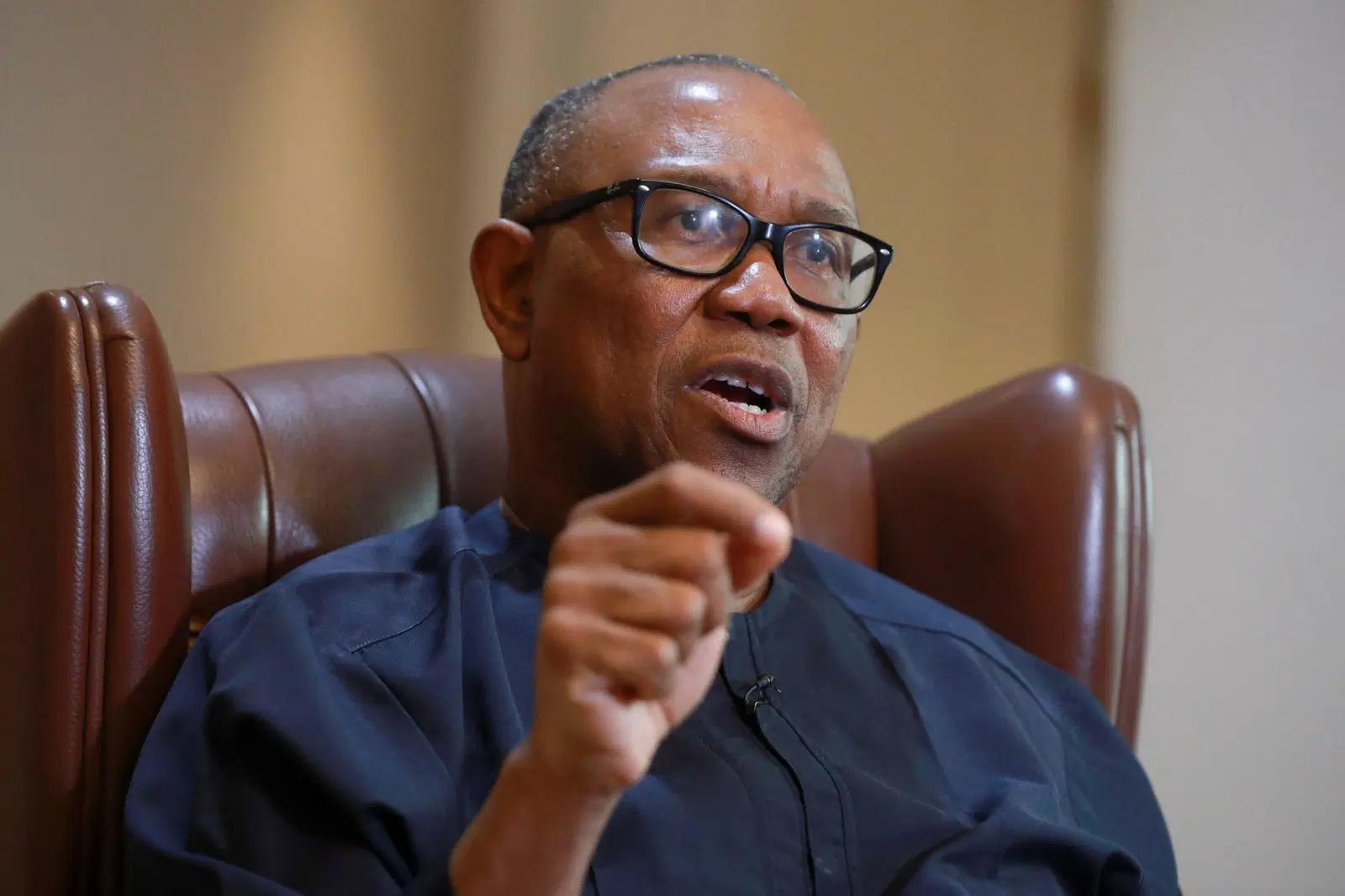
Obi made the remarks during an exclusive interview with Sun published ahead of his 65th birthday, where he reflected on his political journey, governance philosophy and plans for Nigeria should he emerge victorious in the 2027 presidential election.
Written by
Ozioma Iwuh
SkyHigh NewsHub correspondent.