
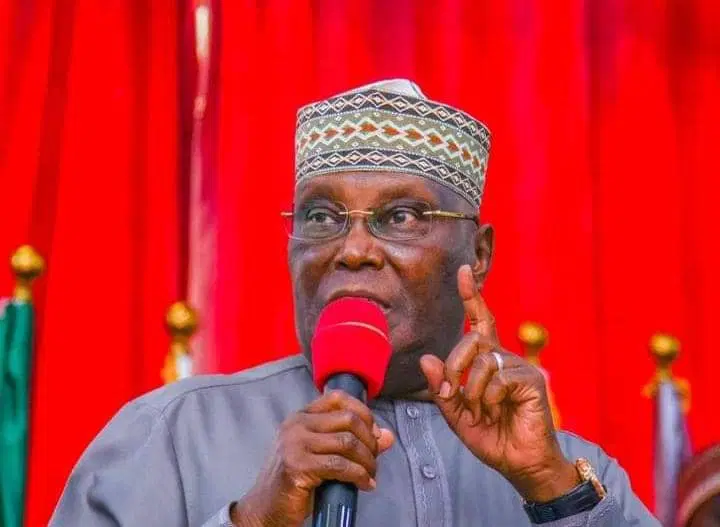
Atiku Lobby Firm Revives Tinubu’s 1993 Forfeiture Case With US Officials, Congress
By OUR REPORTER · 21/07/2026 6:06 PM · 6 min read
A Washington-based lobbying firm engaged by former Vice President Atiku Abubakar has said it has begun sharing documents relating to a longstanding United States forfeiture case involving President Bola Ahmed Tinubu with officials of the Donald Trump administration, members of Congress and congressional staff.
The firm, Von Batten-Montague-York, L.C., said the materials include records from the United States Department of Justice (DOJ) and related court documents concerning a 1993 civil forfeiture proceeding involving funds connected to Tinubu.
The development brings renewed attention to a case that has featured prominently in Nigeria's political and legal discourse, particularly since the 2023 presidential election, when questions surrounding the historical US forfeiture proceedings were raised during legal challenges to the election of President Tinubu.
The lobbying firm was reportedly engaged by Atiku, the presidential candidate of the African Democratic Congress (ADC) for the 2027 election, in March under a 12-month agreement reportedly valued at $1.2 million.
The engagement reportedly covers advocacy, diplomatic outreach and efforts to present Atiku's perspectives on issues concerning Nigeria-US relations.
In a post on X, the firm said it had held discussions with officials of the US government as well as congressional offices before commencing the distribution of more than 60 pages of DOJ records and related court materials.
According to the firm, some of the officials it contacted were previously unaware of the historical proceedings, prompting it to provide the documents for their review.
“Following discussions with members of the Trump administration, Congress and senior congressional staff, we began providing more than 60 pages of Department of Justice documents concerning the DOJ’s allegations relating to Nigerian President Bola Ahmed Tinubu’s alleged involvement in a heroin trafficking investigation spanning the late 1980s and early 1990s,” the firm stated.
The materials circulated by the lobbying company include a background chronology titled: “Background and Chronology of the 1993 U.S. Department of Justice Heroin-Proceeds Forfeiture Case and the 2023 FOIA Litigation Concerning Alleged Heroin Trafficking from Nigeria to the United States Involving Bola Ahmed Tinubu, the current President of the Federal Republic of Nigeria.”
According to the chronology accompanying the documents, the DOJ's 1993 civil forfeiture action emerged from a US investigation into a suspected drug trafficking organisation alleged to have operated between Nigeria and the United States.
The records refer to a case filed before the United States District Court for the Northern District of Illinois, identified as United States v. Funds in Account No. 263226700 et al.
The case involved funds which the US government alleged were either proceeds of narcotics trafficking or connected to money laundering activities.
The documents identify Tinubu, Adegboyega Mueez Akande and Abiodun Agbele among individuals named in the government's allegations.
The chronology states that US investigators examined activities dating from 1988 to 1991 and alleged that proceeds linked to a drug trafficking network were deposited into bank accounts in the United States associated with Tinubu.
It further states that the DOJ alleged that Tinubu controlled multiple accounts and that some of the funds held in those accounts were connected to illicit activities.
The documents also reference Akande as an associate of Tinubu whom the DOJ allegedly linked to the organisation under investigation.
Agbele was described in the chronology as another associate whom Tinubu said he knew through Akande.
The DOJ subsequently instituted a civil forfeiture proceeding in 1993 seeking the seizure of funds identified in the case.
According to the chronology circulated by the lobbying firm, the case was ultimately resolved through a civil settlement, under which a portion of the funds was forfeited to the United States government.
The historical case has remained a subject of political controversy in Nigeria, particularly because of questions over what the proceedings meant for Tinubu's eligibility to contest the 2023 presidential election.
The documents circulated by the firm also highlight subsequent efforts to obtain records connected to the historical investigation.
According to the chronology, journalist Aaron Greenspan filed a Freedom of Information Act (FOIA) lawsuit in 2023 seeking records from several US federal agencies, including documents relating to the investigation.
The firm said a US District Court in Washington, DC, ruled in 2025 that some federal agencies could not rely on a blanket refusal to confirm or deny the existence of certain records and directed them to process parts of the FOIA request in accordance with applicable legal requirements.
The lobbying firm said the FOIA litigation remains ongoing.
It added that the records were being shared with congressional committees for what it described as “informational and oversight purposes”, citing the strategic relationship between Nigeria and the United States.
The latest development therefore places the historical forfeiture case within a broader political and diplomatic context, as Atiku's representatives seek to draw the attention of US policymakers to records they believe are relevant to the assessment of Nigeria's leadership and its relationship with Washington.
The issue of the 1993 US forfeiture proceedings was also examined during the legal challenges that followed Nigeria's 2023 presidential election.
Atiku Abubakar and Peter Obi challenged Tinubu's victory at the Presidential Election Petition Court (PEPC), with arguments relating, among other issues, to the US forfeiture proceedings and their implications for Tinubu's eligibility to contest the election.
However, the PEPC rejected the argument that the forfeiture proceedings, as presented before it, established a disqualifying criminal conviction against Tinubu in the United States.
The court held that the forfeiture proceeding was civil in nature and that the petitioners had not established that Tinubu had been convicted of a criminal offence in the United States.
The court also ruled that the evidence before it did not establish that Tinubu had provided false information to the Independent National Electoral Commission (INEC) by failing to disclose the forfeiture matter.
The legal findings remain an important part of the record surrounding the controversy, even as political actors and advocacy groups continue to revisit the historical US proceedings.
The decision by Atiku's US lobbying firm to circulate the records to members of the Trump administration and Congress could therefore renew political discussion in Washington over the matter.
For now, however, the records being presented by the lobbying firm remain part of an ongoing political and advocacy effort. Their circulation does not, by itself, amount to a new criminal finding against President Tinubu, nor does it alter the findings previously reached by Nigerian courts regarding the nature and implications of the 1993 civil forfeiture proceedings.
The development is nevertheless likely to attract renewed attention in both Nigeria and the United States, particularly as political parties and their candidates begin positioning themselves ahead of the 2027 presidential election and as Nigeria continues to navigate its strategic relationship with Washington.
Written by
Our Reporter
SkyHigh NewsHub correspondent.