
Flooding: Shettima Orders Early Action as FG Activates New Flood Response System
By OUR REPORTER · 25/06/2026 8:21 PM · 3 min read
As Nigeria enters the peak of the rainy season, Vice President Kashim Shettima has directed the immediate activation of a new national flood preparedness mechanism aimed at enabling early intervention and reducing the devastating impact of flooding across the country.
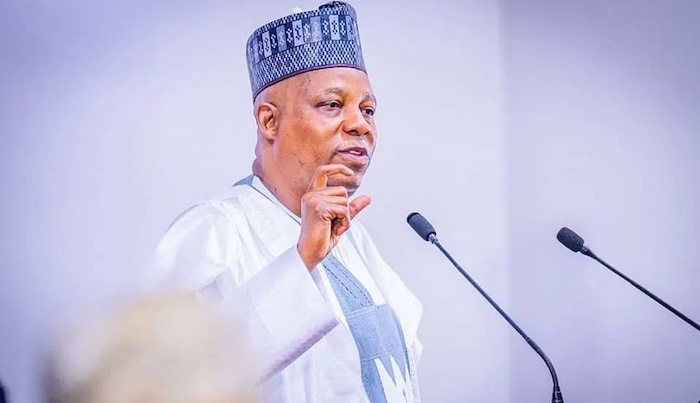
The Vice President issued the directive on Thursday during a meeting of the Anticipatory Action Task Force (AATF) at the Presidential Villa in Abuja, where he called for a shift from emergency response to proactive disaster preparedness.
Shettima ordered the National Emergency Management Agency (NEMA), the AATF and other relevant agencies to begin immediate consultations for the operationalisation of the proposed Fusion and Trigger Room, a national platform designed to coordinate data collection, risk monitoring, forecasting and rapid deployment of interventions before disasters occur.
He also directed agencies involved in flood management to review and update their budgets in line with approved allocations and establish clear implementation priorities to ensure resources are deployed without delay.
According to the Vice President, the Tinubu administration remains committed to building a system that anticipates disasters rather than reacting after lives and property have already been lost.
Shettima noted that climate-related disasters are becoming more frequent and severe, making it imperative for government institutions to adopt a more strategic and preventive approach.
"We are called to act early, to reduce losses before they multiply and to protect vulnerable communities before crises unfold around them," he said.
He stressed that Nigeria requires a coordinated institutional framework capable of anticipating hazards, consolidating intelligence, coordinating decisions and activating emergency responses before situations deteriorate.
The Vice President said the proposed Fusion and Trigger Room would serve as the country's central hub for monitoring risks, coordinating inter-agency actions and activating early response mechanisms whenever warning signs emerge.
Shettima warned against bureaucratic bottlenecks that often delay the release and deployment of approved emergency funds.
According to him, anticipatory action can only succeed when resources meant for preparedness are made available exactly when needed.
"To wait until disaster strikes before releasing what we have already approved is to defeat the very purpose of acting early," he stated.
He directed relevant institutions to work together to ensure that implementation timelines are not hindered by administrative delays.
The Vice President also called on state governments to play active roles in disaster preparedness efforts, insisting that federal intervention alone would not be sufficient.
He urged governors and state agencies to take ownership of flood mitigation initiatives within their jurisdictions and work closely with federal authorities to achieve measurable outcomes.
"Preparedness cannot succeed without ownership at the subnational level," Shettima said.
Earlier, Minister of Humanitarian Affairs and Poverty Reduction, Dr Bernard Doro, described the Federal Government's approval of funding for anticipatory flood action as a timely intervention.
He emphasised the need for coordinated implementation of flood response programmes using existing national social registers and digital payment systems in collaboration with state governments.
Also speaking, the United Nations Resident and Humanitarian Coordinator in Nigeria, Mohamed Fall, commended President Bola Tinubu for approving funds for proactive flood management, describing the move as evidence of strong political commitment and national ownership.
According to him, investments in anticipatory action have consistently proven effective in saving lives, protecting livelihoods and reducing the cost of disaster recovery.
"Whenever Nigeria takes a step of this magnitude, it often becomes a blueprint for the rest of Africa," Fall said.
Director-General of NEMA, Zubaida Umar, assured stakeholders that the approved intervention funds would help prevent loss of lives and protect vulnerable communities.
She disclosed that the agency has already identified priority areas and issued early warning alerts ahead of potential flooding incidents.
The latest directive follows the approval by the National Economic Council (NEC) of an ₦83.2 billion intervention fund to support anticipatory actions against flooding nationwide.
Written by
Our Reporter
SkyHigh NewsHub correspondent.