
EFCC Seeks Stronger Africa-Wide Partnership to Combat Terrorist Financing, Protect Civil Society Groups
By OUR REPORTER · 16/07/2026 6:25 AM · 4 min read
The Economic and Financial Crimes Commission (EFCC) has called for stronger collaboration among African governments, regulators and civil society organisations to combat terrorist financing while ensuring legitimate non-profit organisations are not subjected to unnecessary regulatory restrictions.
The anti-graft agency said effective implementation of global anti-money laundering and counter-terrorist financing standards requires intelligence-driven, risk-based regulation rather than blanket controls that could undermine humanitarian and development organisations.
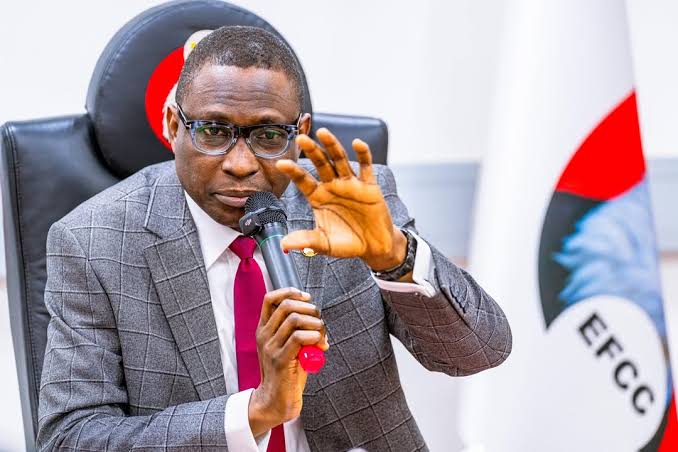
EFCC Chairman Mr. Ola Olukoyede made the call at the 3rd Africa High-Level Civil Society Anti-Money Laundering and Counter-Terrorist Financing (AML/CFT) Conference in Abuja.
Represented by the Director of the Special Control Unit against Money Laundering (SCUML), Mr. Harry Erin, Olukoyede said terrorist financing, violent extremism, organised transnational crime and illicit financial flows remain major threats to Africa's peace, democratic institutions and economic development.
He stressed that Financial Action Task Force (FATF) Recommendation 8 does not require governments to impose restrictions on all non-profit organisations but instead encourages countries to identify organisations genuinely vulnerable to terrorist financing abuse while protecting the vast majority engaged in lawful humanitarian and development work.
"Effective implementation of FATF Recommendation 8 depends on trust, trust between regulators and civil society, trust between governments and development partners, built through transparency, consultation, information sharing and mutual respect," he said.
Olukoyede said Nigeria's progress was made possible through close collaboration among key institutions, including the EFCC, SCUML, the Nigerian Financial Intelligence Unit (NFIU), the Office of the National Security Adviser (ONSA), the Corporate Affairs Commission (CAC) and civil society organisations.
According to him, the partnership enabled Nigeria to conduct a comprehensive terrorist financing risk assessment of the country's non-profit sector.
He explained that the assessment has helped regulators adopt a more targeted supervisory approach by identifying areas of vulnerability while allowing genuine charities and humanitarian organisations to continue their work without undue regulatory burdens.
The EFCC chairman added that Nigeria's reforms demonstrate that compliance with international standards should strengthen institutions, improve transparency and build public confidence rather than simply satisfy global evaluation requirements.
Also speaking, the Executive Director of Spaces for Change (S4C), Mrs. Victoria Ibezim-Ohaeri, said the conference marked a decade of the organisation's advocacy for the proper implementation of FATF Recommendation 8 in Nigeria.
She noted that sustained engagement between regulators and civil society had transformed what was once a difficult relationship into a productive partnership.
According to her, the collaboration has resulted in significant reforms, including Nigeria's standalone terrorist financing risk assessment for the non-profit sector and the removal of non-profit organisations from the list of reporting entities under the Money Laundering (Prevention and Prohibition) Act.
Ibezim-Ohaeri said Nigeria's progress has earned the country a compliant rating on FATF Recommendation 8 and is now serving as a model for other African countries, including Ghana, The Gambia, Togo and Burkina Faso.
She added that hosting the conference in Abuja reflects Africa's growing determination to shape global discussions on financial integrity, counter-terrorism financing and security through solutions tailored to the continent's realities.
Earlier, Chairman of the Board of Spaces for Change, Mr. Samuel Diminas, highlighted the devastating impact of illicit financial flows on Africa's development.
He said the continent loses an estimated $88 billion annually through illicit financial activities, depriving governments of resources needed for development and public services.
Delivering the keynote address, the United Nations Special Rapporteur on the Promotion and Protection of Human Rights and Fundamental Freedoms while Countering Terrorism, Professor Ben Saul, commended Nigeria for achieving compliance with FATF standards in late 2025.
He also praised the ambition of Nigeria's National Counter-Terrorism Centre (NCTC) to become a regional hub for counter-terrorism expertise and expressed optimism about continued collaboration with Nigerian authorities.
Saul said the conference provided an important opportunity to examine how FATF standards can be effectively implemented without undermining human rights and civic freedoms.
He noted that the 2023 revision of FATF Recommendation 8 clearly states that only non-profit organisations falling within FATF's risk definition should be subjected to counter-terrorism financing measures.
According to him, regulatory measures should always be risk-based, proportionate and evidence-driven, rather than indiscriminately targeting the entire non-profit sector.
The UN expert warned that many countries continue to over-regulate civil society organisations by imposing excessive registration, reporting, auditing and monitoring requirements based on outdated or inadequate risk assessments.
He cautioned that such measures divert limited resources away from humanitarian assistance, peacebuilding, human rights advocacy and efforts to prevent violent extremism while discouraging legitimate charitable activities.
Saul urged governments to strike an appropriate balance between safeguarding national security and protecting the vital contributions of civil society organisations to sustainable development and democratic governance.
Written by
Our Reporter
SkyHigh NewsHub correspondent.