
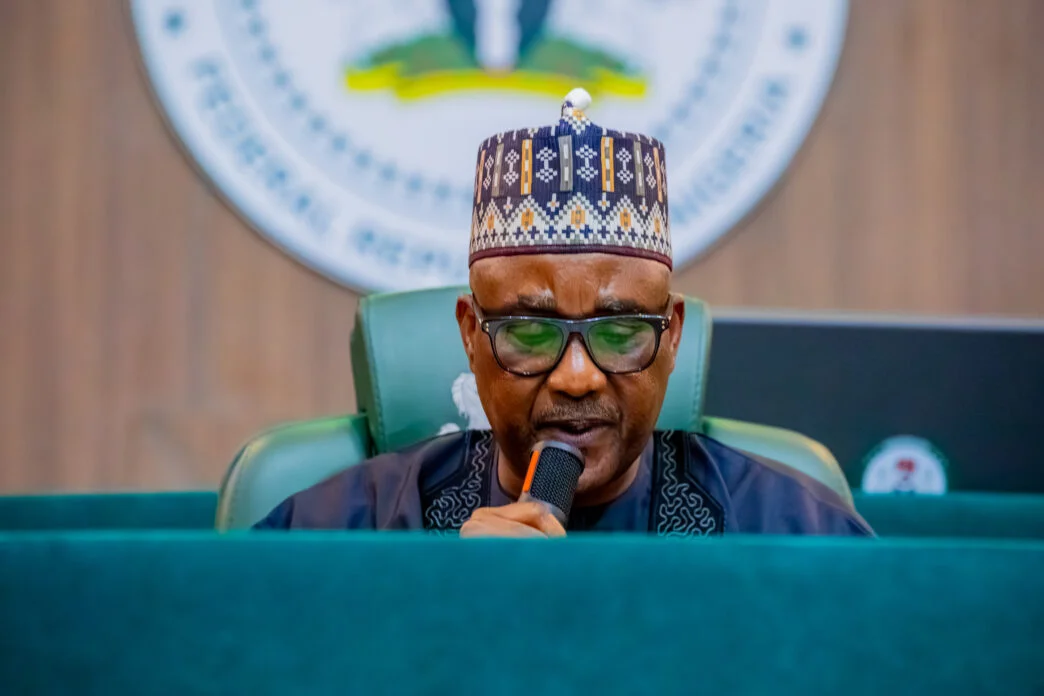
Abbas Defends State Police Bill, Says Governors Can’t Turn Outfit Into Private Army
By OUR REPORTER · 16/07/2026 5:55 AM · 5 min read
Speaker of the House of Representatives, Rt. Hon. Tajudeen Abbas, has defended the proposed State Police Bill, assuring Nigerians that the constitutional amendment contains extensive safeguards designed to prevent governors or political actors from turning state police commands into personal security outfits.
Speaking on Wednesday at the National Security Roundtable, organised as part of activities marking the 2026 National Assembly Open Week in Abuja, Abbas acknowledged public concerns over the possibility of abuse but maintained that the drafters of the legislation had anticipated those fears and built strong constitutional protections into the proposal.
"I understand the concern that many people bring to this discussion, and it is a reasonable one. It is the fear that a State Police could become the private army of a governor or a political godfather," Abbas said.
"The people who drafted this Bill had the same fear, and they answered it."
The Speaker explained that governors would not possess unilateral authority to appoint or remove State Commissioners of Police under the proposed constitutional framework.
Instead, appointments would be made based on recommendations from the National Police Council and would require confirmation by the relevant State House of Assembly. Similarly, the removal of a State Commissioner of Police would require the approval of two-thirds of members of the State Assembly and must be based on established misconduct.
Abbas also explained that the proposed amendment provides constitutional authority for the Federal Police Service to intervene where a state police command becomes compromised or acts against the interests of citizens.
However, he stressed that such intervention would only occur under clearly defined constitutional circumstances.
"If a State Police breaks down, or falls into the wrong hands, or turns against the very people it should protect, the Constitution allows the Federal Police to step in... only in defined situations, only in writing, only for a limited period, with notice to the Governor and to the National Assembly within forty-eight hours, and always subject to the courts," he said.
He emphasised that the proposal does not empower the Federal Government to dissolve state police institutions or suspend democratically elected state governments, describing the safeguards as essential to preserving Nigeria's federal structure.
Abbas described President Bola Ahmed Tinubu's decision to transmit an Executive Bill on state police to the National Assembly as a historic milestone after decades of unresolved national debate on decentralising policing.
"For the first time in our history, a sitting President has made State Police a central part of national reform," he said.
According to the Speaker, Nigeria's increasingly complex security challenges, including banditry, kidnapping, farmer-herder conflicts and attacks on schools have exposed the limitations of a centrally controlled policing system.
"A country as large and as varied as ours cannot be policed forever by one central Force run from the capital," Abbas stated, arguing that effective policing requires officers who understand local communities, languages and security dynamics.
Abbas explained that the constitutional amendment would rename the Nigeria Police Force as the Federal Police Service, while allowing states that satisfy constitutional and operational requirements to establish their own police services.
He noted that no state would be permitted to launch a police service until its House of Assembly enacted the necessary enabling law and the state satisfied operational benchmarks established by the National Assembly.
Under the proposed framework, the Federal Police Service would retain exclusive responsibility for terrorism, border security, federal offences and policing within the Federal Capital Territory.
State police services, on the other hand, would concentrate on maintaining law and order within their respective jurisdictions.
The Speaker further disclosed that state police organisations would operate under independent State Police Service Commissions, receive direct funding and remain subject to strict constitutional restrictions prohibiting the use of policing powers for political, ethnic or religious purposes.
Drawing from international examples including Germany, Canada, India and the United States, Abbas argued that successful federal policing systems rely on clear national standards, intelligence sharing and robust accountability mechanisms.
Despite expressing support for the proposal, Abbas assured Nigerians that the National Assembly would carefully scrutinise critical issues before passing the legislation.
These include sustainable funding arrangements, operational standards, intelligence coordination and the integration of existing community-based security structures such as vigilante organisations.
He advocated a phased implementation strategy that would begin with the enactment of a National Minimum Standards Act before any state police command becomes operational.
"The National Minimum Standards Act must come before the first State Police issues a single directive: standards first, structures after," he said.
Abbas also stressed the need for a reliable funding model to ensure state police institutions do not become ineffective because of inadequate financial resources.
Beyond state policing, he called for broader security reforms, including stronger intelligence-sharing systems, the establishment of a comprehensive national criminal and biometric database, improved border security, greater deployment of technology and enhanced welfare for security personnel.
Other participants at the National Security Roundtable also advocated comprehensive reforms to Nigeria's security architecture.
House Leader Prof. Julius Ihonvbere called for constitutional recognition of traditional rulers and greater involvement of community organisations in intelligence gathering.
Former Chief of Defence Staff Gen. Lucky Irabor (retd.) urged Nigeria to prioritise intelligence-driven operations, institutional collaboration and the responsible application of technology in national security.
Kaduna State Governor Uba Sani advocated stronger intelligence-led policing, enhanced joint security operations and increased deployment of artificial intelligence, biometric systems and forensic technology to combat crime.
Chairman of the Niger State Council of Traditional Rulers and Etsu Nupe, Brig.-Gen. Yahaya Abubakar (retd.), also endorsed the establishment of state police, describing it as a necessary step towards strengthening community security.
Also speaking, the United Kingdom's Head of Development Cooperation, Ms. Cynthia Rowe, welcomed the consultative process surrounding the proposed legislation, saying broader engagement with civil society would enhance democratic governance and build public confidence in the reform process.
Written by
Our Reporter
SkyHigh NewsHub correspondent.