
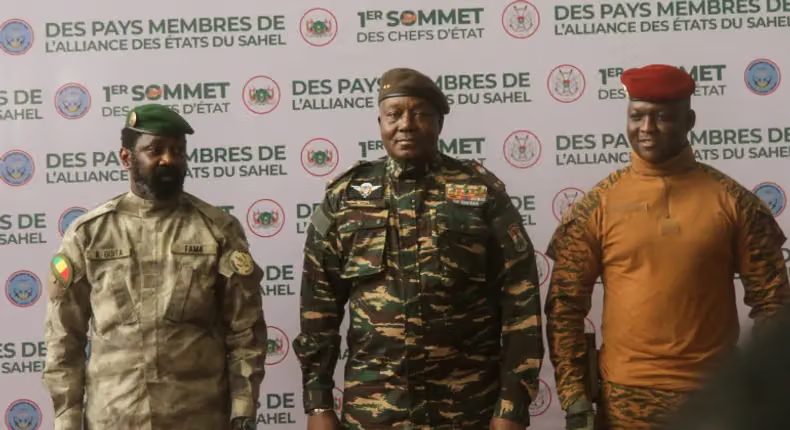
Burkina Faso, Mali, Niger Begin Formal Exit from ICC, Deepening Split with Western Institutions
By OUR REPORTER · 03/07/2026 8:01 AM · 3 min read
Burkina Faso, Mali and Niger have formally begun the legal process of withdrawing from the International Criminal Court (ICC), marking another major step in the three military-led governments broader effort to distance themselves from Western-backed international institutions.
The Hague-based court confirmed on Wednesday that the three Sahel countries had submitted formal notifications of their intention to withdraw from the Rome Statute, the treaty establishing the ICC.
Under Article 127 of the Rome Statute, the withdrawal will only take effect one year after the court receives the notification, meaning the three countries will remain members of the tribunal throughout the notice period.
The ICC, the world's permanent court for prosecuting individuals accused of genocide, crimes against humanity, war crimes and the crime of aggression, said the withdrawal process would not affect any legal obligations or investigations arising while the countries were members.
The governments of Burkina Faso, Mali and Niger first announced plans to leave the court in September 2025, accusing the ICC of disproportionately targeting African countries while failing to hold more powerful nations to the same standards.
They described the tribunal as a tool of "neocolonial repression" and argued that it no longer reflects the principles of fairness and equal justice.
Responding to the notifications, the ICC warned that the withdrawal of the three countries could weaken global efforts to fight impunity and deny justice to victims of some of the world's gravest crimes.
The court also stressed that any obligations incurred during their membership, including cooperation with ongoing investigations would remain legally binding even after their eventual withdrawal.
The development comes as the three countries continue to battle Islamist insurgencies that have destabilised the Sahel for more than a decade. Armed groups linked to al-Qaeda and the Islamic State remain active across the region, while human rights organisations have repeatedly accused both extremist groups and state security forces of committing serious abuses against civilians.
The ICC has maintained an investigation into alleged war crimes in Mali since 2013 following a referral by the country's former civilian government.
The planned withdrawal also reflects a wider geopolitical shift by the three neighbouring countries following a series of military coups between 2020 and 2023.
Since taking power, the military governments have severed defence cooperation with France, withdrawn from the Economic Community of West African States (ECOWAS), launched a joint biometric passport initiative, announced plans for a regional investment bank and stabilisation fund, and expanded security cooperation with Russia.
Supporters of the military governments have portrayed the ICC withdrawal as another assertion of national sovereignty and independence from Western influence.
Critics, however, argue that leaving the world's only permanent international criminal tribunal could further weaken accountability mechanisms in a region already facing conflict, political instability and persistent allegations of human rights abuses.
Although the withdrawal process has now officially commenced, Burkina Faso, Mali and Niger will remain subject to the Rome Statute until the one-year notice period expires, while existing legal responsibilities arising from their membership will continue beyond their formal exit.
Written by
Our Reporter
SkyHigh NewsHub correspondent.