
State Police Constitutional Framework Near Completion, Presidency Reveals
By SKYHIGHNEWSHUB · 04/06/2026 8:45 PM · 3 min read
The Presidency has disclosed that significant progress has been made toward the establishment of state police in Nigeria, with constitutional amendments required for its implementation expected to be presented in the near future.
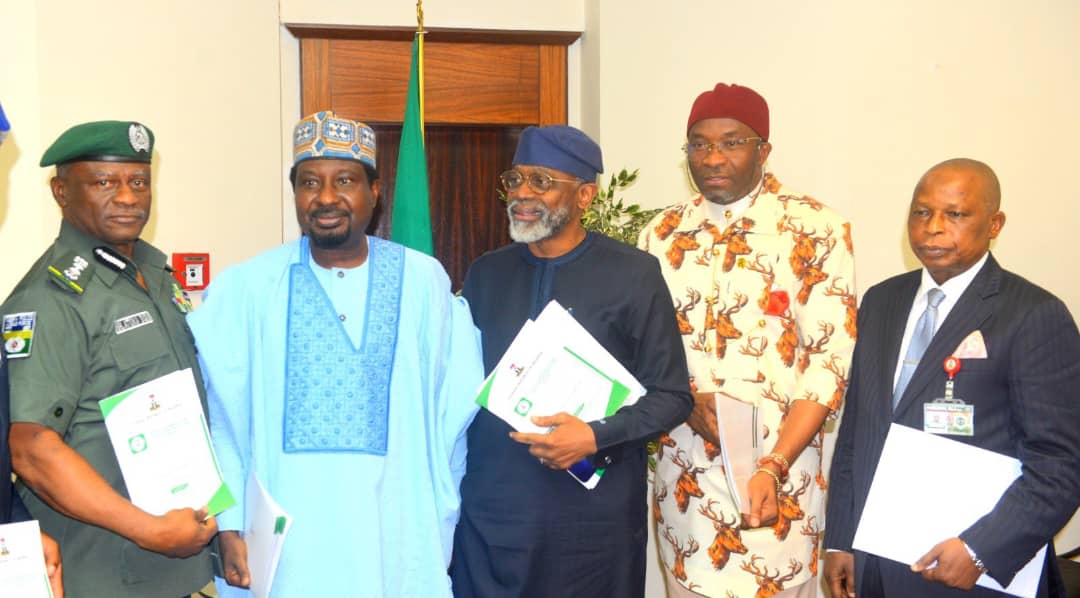
Chief of Staff to the President, Hon. Femi Gbajabiamila, made the disclosure on Thursday while briefing State House Correspondents after a high-level consultative meeting on state policing held at the Presidential Villa, Abuja.
The meeting brought together senior officials from the Executive, National Assembly and security agencies as part of ongoing efforts to develop a workable framework for decentralised policing across the country.
Gbajabiamila said discussions on the initiative began several months ago following a directive from President Bola Ahmed Tinubu and have since recorded substantial progress.
According to him, while there is widespread agreement on the need for state police, the process requires careful constitutional and legal considerations before implementation can commence.
“We started deliberations in the last three or four months on how to go about the establishment of state police as directed by Mr President,” Gbajabiamila said.
“Establishing state police is not something that you do with the snap of the fingers. There is a lot involved in terms of constitution and legalities and thank God we have now gained a lot of traction.”
“Hopefully, the amendment will come shortly, and the details of the amendment will come after that.”
The Chief of Staff explained that current discussions have progressed beyond policy debates and are now focused on the specific constitutional amendments required to provide a legal foundation for state policing.
He noted that once the constitutional framework is completed, the enabling legislation needed for operational implementation would follow.
“Right now, what we are looking at is the constitutional amendment itself, and then the enabling law would follow thereafter. That is what we have been deliberating on in the last couple of hours,” he added.
Gbajabiamila observed that national conversations surrounding state police have evolved significantly over the years.
According to him, the issue is no longer whether Nigeria should adopt a decentralised policing structure but rather how to establish one that is legally sound, operationally effective and capable of addressing the country’s complex security challenges.
He said President Tinubu, a long-time advocate of state police, would receive a detailed report on the outcome of the consultations as the process moves toward its next phase.
The latest development marks one of the most significant steps yet in Nigeria’s decades-long debate over police reforms and the decentralisation of internal security responsibilities.
Advocates of state policing have consistently argued that Nigeria’s centralised police structure has become overstretched in the face of rising insecurity, including terrorism, banditry, kidnapping, communal violence and other emerging threats.
Supporters believe state police would strengthen local intelligence gathering, improve rapid response capabilities and allow sub-national governments to play a more direct role in securing their communities.
President Tinubu has repeatedly maintained that Nigeria’s evolving security environment requires innovative solutions, including greater decentralisation of policing functions.
The meeting formed part of a broader series of consultations being coordinated by the Federal Government to build consensus around the initiative and develop safeguards to ensure accountability, professionalism and constitutional compliance.
Among those who attended the meeting were Deputy Senate President Jibrin Barau, Deputy Speaker of the House of Representatives Benjamin Kalu, Attorney-General of the Federation and Minister of Justice Prince Lateef Fagbemi, Inspector-General of Police Tunji Disu and other senior government officials.
The push for state police has gained renewed momentum in recent months amid increasing calls from governors, traditional rulers, civil society groups and security experts for reforms aimed at strengthening grassroots security and improving the protection of lives and property across the federation.
If implemented, state police would represent one of the most far-reaching security reforms in Nigeria’s democratic history and could fundamentally reshape the country’s policing architecture.
Written by
Skyhighnewshub
SkyHigh NewsHub correspondent.