
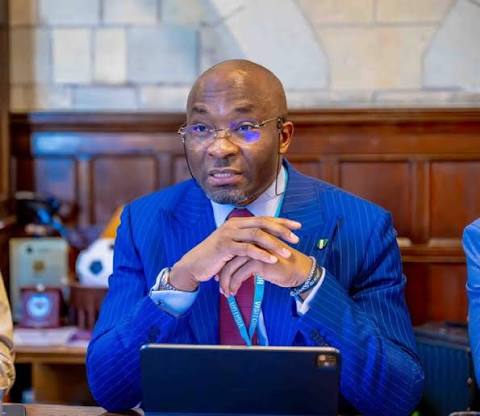
Kalu Denies ₦1bn Church Instrument Allocation, Says Fund Targets Youth Reorientation
By OUR REPORTER · 22/07/2026 3:19 PM · 4 min read
The Office of the Deputy Speaker of the House of Representatives, Benjamin Okezie Kalu, has rejected reports that ₦1 billion was allocated in the proposed 2026 budget for the purchase of musical instruments for churches in Bende Federal Constituency of Abia State.
The office described the reports as misleading, saying the controversial budget provision was intended for a broader Youth Re-orientation and Social Support Programme to be implemented through faith-based organisations across the constituency.
In a statement issued on Wednesday by the Deputy Speaker's Chief Press Secretary, Levinus Nwabughiogu, the office said the amount in question was actually ₦780 million after VAT and other statutory deductions.
It stressed, however, that the provision was not designed solely for the purchase of musical instruments.
According to the statement, the proposed programme seeks to support youth engagement and community outreach initiatives through churches and other faith-based organisations, with the aim of addressing social challenges including drug abuse, sexual offences, violent crimes and other forms of anti-social behaviour.
The office said equipment to be provided under the initiative could include evangelical musical instruments and public address systems, which it said would support outreach and youth-focused campaigns.
“The proposed allocation is actually N780 million after VAT and other tax deductions. It is earmarked as a Youth Re-orientation and Social Support Programme delivered with an evangelistic approach through faith-based organisations in Bende Federal Constituency,” the statement said.
The clarification comes amid public discussion over the reported budget provision and whether the proposed expenditure represents an appropriate use of public funds.
Kalu's office, however, argued that the programme should be viewed within the broader context of youth development and social intervention, rather than as a standalone allocation for church musical equipment.
According to the statement, Bende Federal Constituency comprises 13 electoral wards and more than 200 churches.
The first phase of the proposed intervention is expected to cover about 130 churches, with the office indicating that the distribution would amount to roughly 10 churches per ward.
Each beneficiary church, it said, would receive between ₦5 million and ₦6 million to support youth-oriented community outreach programmes.
The Deputy Speaker's office maintained that government interventions should not be limited to roads, buildings and other physical infrastructure, arguing that investment in human development and values is equally important to the country's long-term progress.
“Nation-building must go beyond roads and physical infrastructure. Government must also invest in building the character and value system of the people who use the infrastructure through various value delivery platforms,” it stated.
The office further argued that faith-based organisations could serve as important partners in addressing social challenges among young people because of their reach and influence within local communities.
It said churches and other religious institutions had roles to play in promoting peace, unity, discipline and responsible citizenship, just as traditional institutions were supported in efforts to preserve cultural values and strengthen community engagement.
The statement also noted that similar faith-based youth development initiatives had been implemented in other parts of the country, describing the proposed Bende programme as an effort to strengthen such interventions within the constituency.
No funds released yet, Kalu's office says
The Deputy Speaker's office also sought to clarify the status of the proposed expenditure, stressing that the programme had not received any funding.
It said the 2026 Appropriation Act had not commenced implementation, adding that the Federal Government was still operating under the 2024 and 2025 budgets.
Consequently, it said, no money had been released for the proposed programme and no beneficiary church had received funds.
According to the statement, churches that may eventually benefit from the intervention would only be contacted after the necessary budget approval, release of funds and completion of procurement procedures.
The office also disclosed that a technical error had been identified in the description of the budget provision, with a correction process reportedly initiated through the Budget Office and the National Assembly's appropriation procedure.
It did not, however, provide further details on the nature of the error or the specific wording that is expected to replace the disputed description.
The office insisted that the proposed intervention was “not about instruments alone”, but about using established community institutions to support youth reorientation, promote social values and encourage positive behavioural change.
It urged the media and members of the public to disregard what it described as sensational reports about the provision, while reaffirming its commitment to transparency and accountability in the management of constituency projects and public resources.
The clarification is likely to keep attention on the proposed allocation as the 2026 budget process progresses, particularly on how the programme is ultimately described in the appropriation documents, the criteria for selecting beneficiaries and whether the proposed intervention receives funding and is implemented as outlined by the Deputy Speaker's office.
Written by
Our Reporter
SkyHigh NewsHub correspondent.