
Senate Moves to Compel Facebook, TikTok, Other Platforms to Open Nigeria Offices
By OUR REPORTER · 24/07/2026 7:00 AM · 5 min read
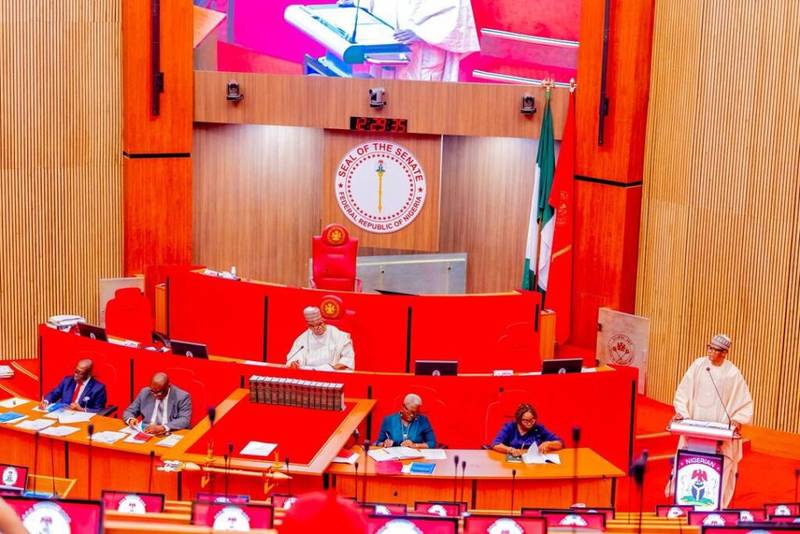
The Nigerian Senate has begun moves that could require major global social media companies, including Facebook and TikTok, to establish physical offices in Nigeria as part of efforts to strengthen regulatory oversight and deepen the platforms engagement with one of Africa's largest digital markets.
The proposal received broad support on Thursday at a public hearing organised by the Senate Committee on Information and Communications Technology and Cyber Security in Abuja.
The committee also considered a separate bill seeking to establish an Artificial Intelligence (AI) Academy in Omuo-Ekiti, Ekiti State, as lawmakers turned their attention to two legislative proposals aimed at strengthening Nigeria's digital economy and expanding the country's capacity in emerging technologies.
The social media bill, sponsored by Senator Ned Nwoko, representing Delta North, seeks to amend the Nigeria Data Protection Act, 2023, to make it mandatory for social media companies operating in Nigeria to maintain physical offices within the country's territorial boundaries.
The proposed requirement would affect major digital platforms operating in Nigeria and is aimed at ensuring that such companies have a direct and identifiable presence through which they can engage with regulators and other relevant authorities.
However, the proposal is still at the legislative stage and has not become law.
Speaking at the public hearing, the Chairman of the Senate Committee on ICT and Cyber Security, Senator Shuaib Salisu, representing Ogun Central, said the two bills were designed to strengthen Nigeria's digital economy and position the country to take advantage of rapid technological developments.
The President of the Senate, Godswill Akpabio, represented at the event by the Deputy Senate Leader, Senator Lola Ashiru, representing Kwara South, also described the proposals as strategic initiatives capable of supporting national development.
Akpabio's representative said the proposed requirement for social media companies to establish physical offices in Nigeria should not be viewed as an attempt to obstruct their operations.
Rather, he said, the objective was to promote accountability, improve regulatory engagement and ensure that global technology companies operating in the country contribute more meaningfully to the Nigerian economy.
Nwoko, while defending the bill, rejected suggestions that the proposed legislation was hostile to technology companies, innovation or foreign investment.
He said the measure was intended to encourage global digital companies to deepen their corporate presence in Nigeria and become more integrated into the country's economy.
“This Bill is neither punitive nor hostile to innovation. It is not designed to frustrate investment or discourage technology companies from operating in Nigeria,” Nwoko said.
“Rather, it seeks to deepen their engagement with Nigeria by encouraging them to become true corporate citizens of our country.”
The senator argued that several countries had benefited economically from hosting regional offices, engineering centres and operational hubs of global technology companies.
He cited the United Kingdom, the Netherlands, Spain, Singapore, India, the United Arab Emirates, South Africa, Brazil, Australia and Japan as examples of countries where major technology firms have established headquarters, regional offices or specialised operational centres.
According to Nwoko, such offices often perform functions ranging from engineering and artificial intelligence research to legal and regulatory compliance, public policy, advertising, trust and safety, cloud services, sales, customer support and product development.
He argued that Nigeria should seek to attract similar investments by creating an environment that encourages global technology companies to establish more substantial local operations.
“These countries did not attract such investments by accident. They recognised early that the digital economy is now as important as the traditional economy,” he said.
“By encouraging global technology companies to establish local operations, they have created employment, expanded tax revenues, strengthened regulatory engagement, promoted innovation and encouraged technology transfer to their citizens.”
Nwoko maintained that Nigeria, with its large and rapidly expanding digital market, should not be left behind as countries compete to attract investment and build capacity in the technology sector.
The debate comes against the backdrop of the growing influence of global social media platforms in Nigeria, where millions of citizens use digital services for communication, business, advertising, entertainment, education and political engagement.
Supporters of the proposed legislation argue that requiring major platforms to maintain a physical presence in Nigeria could make it easier for government agencies to engage directly with the companies on regulatory matters, data protection, consumer concerns and other issues.
They also believe that a stronger local presence could create opportunities for employment, investment, skills development and technology transfer.
However, the proposal is likely to attract further scrutiny as the legislative process continues, particularly over how the requirement would be implemented and which platforms would fall within its scope.
The public hearing also considered the proposed establishment of an Artificial Intelligence Academy in Omuo-Ekiti.
The bill, sponsored by Senator Yemi Adaramodu, representing Ekiti South, is aimed at promoting AI education, research and innovation in Nigeria.
The proposal reflects growing interest among lawmakers and policymakers in developing local expertise in artificial intelligence as the technology becomes increasingly important to sectors including finance, healthcare, education, manufacturing, cybersecurity and public administration.
The Senate's consideration of the two bills comes at a time when Nigeria is seeking to expand its digital economy and strengthen its ability to regulate emerging technologies while encouraging investment and innovation.
Following the public hearing, the Senate committee is expected to review memoranda and submissions presented by stakeholders before preparing its recommendations for consideration by the Senate.
The outcome of that process will determine the next stage of the proposed amendment to the Nigeria Data Protection Act and the bill seeking to establish the AI Academy.
For now, the proposal remains subject to the legislative process, including further consideration by the Senate before it can become law.
Written by
Our Reporter
SkyHigh NewsHub correspondent.