
Sanwo-Olu: Lagos Now Africa’s Second-Largest City Economy Worth $259.75bn
By OUR REPORTER · 21/06/2026 11:18 AM · 4 min read
Lagos State Governor, Babajide Sanwo-Olu, has declared that Lagos is strategically positioned to become Africa’s leading geoeconomic hub, citing the state's expanding economy, infrastructure investments and growing influence in trade, finance, technology and logistics.
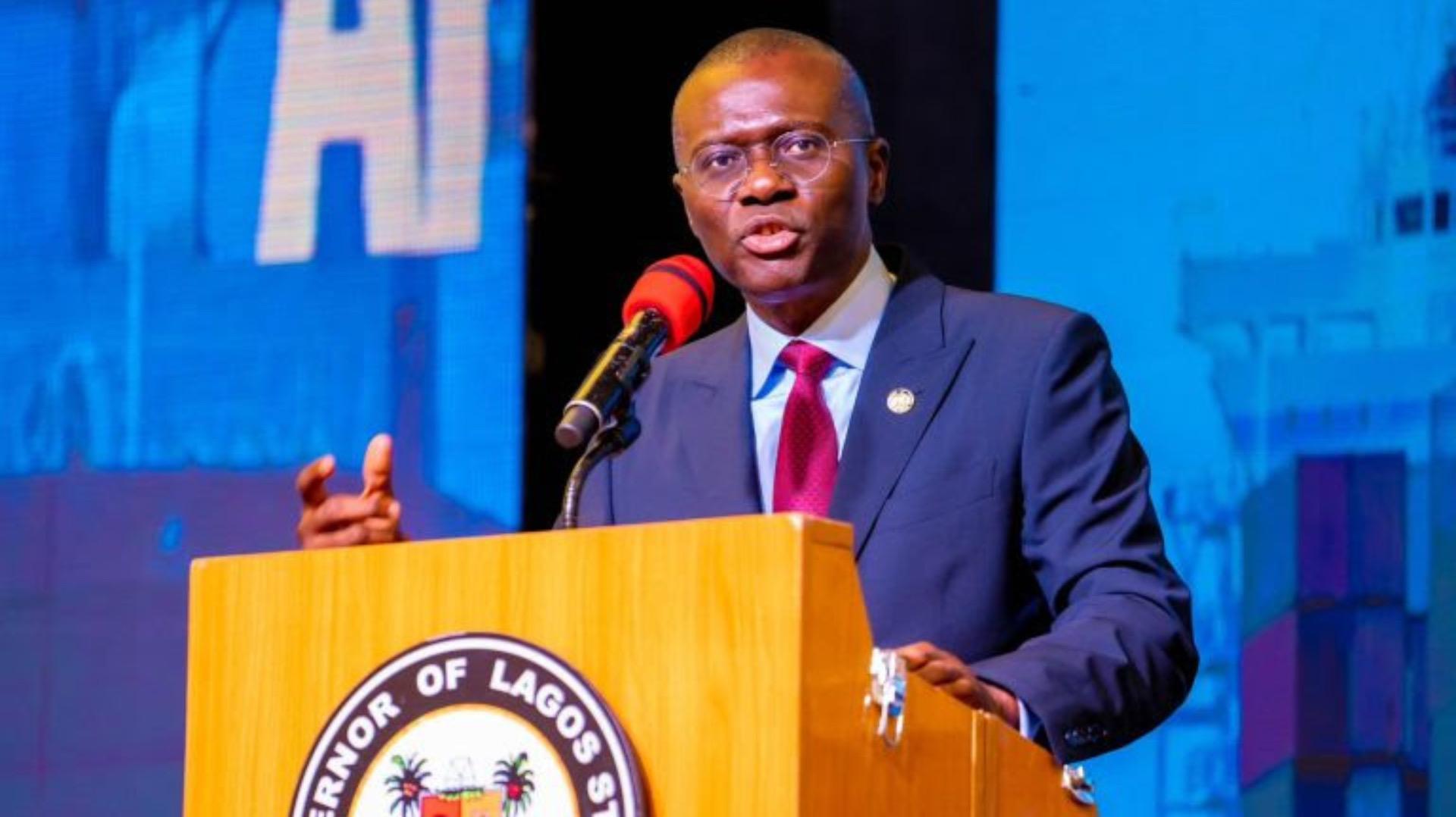
Speaking on Saturday at the Geo-Economic Optimization Summit Lagos 2026 hosted by the Citadel School of Government in Oregun, the governor said Lagos has evolved beyond its role as Nigeria’s commercial capital to become a major economic force with continental and global relevance.
Sanwo-Olu said Lagos contributes roughly one-third of Nigeria’s Gross Domestic Product and is currently Africa’s second-largest metropolitan economy after Cairo, with an output exceeding $259.75 billion on a purchasing-power-parity basis.
According to the governor, Lagos possesses the economic scale and strategic advantages required to compete with major global cities.
“If Lagos were a country, it would rank as Africa’s eighth-largest economy,” he said.
He noted that more than 90 per cent of the state’s economic output comes from a diversified mix of finance, technology, trade, logistics, creative industries and the blue economy.
The governor described geoeconomics as the deliberate use of economic tools and assets to project influence, noting that global power is increasingly determined by factors such as ports, supply chains, digital infrastructure and innovation rather than traditional diplomacy alone.
“Lagos is a sub-national economy that carries the weight of a nation. We contribute roughly a third of Nigeria’s Gross Domestic Product, and we are Africa’s second-largest metropolitan economy, behind only Cairo, with output in excess of $259.75 billion on a purchasing-power-parity basis.
“As Nigeria’s commercial and financial nerve centre and its busiest gateway for trade and investment, Lagos carries a responsibility that reaches far beyond its own borders. When Lagos works, Nigeria works the better for it,” he said.
Sanwo-Olu outlined Lagos’ growing geoeconomic influence across multiple levels, including its engagement with regional institutions such as the Odu’a Group, the Development Agenda for Western Nigeria (DAWN) Commission and the South-West Development Commission.
The governor, who also chairs the South-West Governors’ Forum, called for stronger regional cooperation among states, arguing that sustainable economic growth would be driven by collaboration rather than competition.
He urged political leaders to embrace regional integration as a pathway to greater prosperity.
“We must think regionally, act strategically and cooperate generously, for no single state captures the whole prize alone,” he said.
Sanwo-Olu highlighted several ongoing infrastructure projects aimed at strengthening Lagos’ position as an economic hub, including the operational Blue and Red Rail Lines, federal counterpart funding for the Green Line Rail Project and continued upgrades to the Lagos-Badagry Expressway.
He also pointed to recent electricity market reforms and the implementation of the Lagos State Electricity Law as critical steps towards addressing longstanding power challenges.
The governor further acknowledged federal support for major transport projects, including the 700-kilometre Coastal Highway and the over 1,000-kilometre Sokoto-Badagry Superhighway.
Sanwo-Olu reiterated his administration’s push for a constitutional special status designation for Lagos, arguing that the state's unique role in Nigeria’s economy and population burden justify additional recognition and support.
“We will continue to press the case for a special status designation for Lagos, grounded in our history as a former federal territory, in our strategic importance to the national economy and in the immense burdens we carry as home to a tenth of Nigeria’s people.
“We believe Lagos deserves that recognition and we will continue to seek a constitutional provision to guarantee it,” he said.
The governor assured investors that Lagos remains open for business and committed to strengthening partnerships with local and international stakeholders.
Also speaking at the summit, founder and board chairman of the Citadel School of Government, Pastor Tunde Bakare, described Lagos as a model for economic transformation and institutional continuity.
Bakare said the state's development trajectory demonstrates what is possible when strategic planning is sustained across successive administrations.
“Lagos is Nigeria’s most economically viable state and a model of progressive continuity in development planning and execution throughout the Fourth Republic so far,” he said.
According to him, Lagos offers a blueprint that could be replicated across Nigeria’s geopolitical zones to create multiple centres of prosperity capable of competing within regional and global markets.
“The Lagos story is one of ongoing geoeconomic success, demonstrating how strategic vision, institutional continuity and sustained investment can transform a subnational entity into a globally relevant economic hub,” Bakare added.
Executive Director of the University of Lagos Business School, Professor Sunday Adebisi, also described Lagos as the geoeconomic engine of West Africa, stressing the need to build stronger institutions capable of managing a rapidly expanding metropolitan economy.
“Lagos is no longer just Nigeria’s commercial capital; it is the geoeconomic engine of West Africa with global ambitions,” Adebisi said.
He noted that future growth would depend on strengthening governance systems, infrastructure, talent development and institutional partnerships.
Earlier, Executive Director of the Citadel School of Government, Omoaholo Omoakhalen, said the summit was conceived to generate ideas on how Nigeria could harness the economic potential of its regions and communities to build a more prosperous and globally competitive nation.
The maiden edition of the summit brought together policymakers, academics, business leaders and development experts to explore strategies for driving economic growth through regional cooperation, innovation and strategic planning.
Written by
Our Reporter
SkyHigh NewsHub correspondent.