
Reps Seek National Policy to Boost Nigeria’s Indigenous Drone Manufacturing
By OUR REPORTER · 22/07/2026 3:46 PM · 3 min read
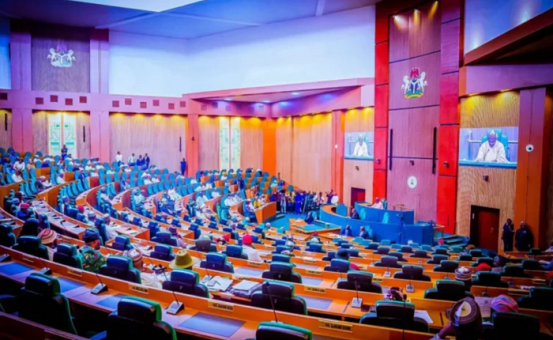
The House of Representatives has called for the development of a comprehensive national policy to transform Nigeria’s emerging drone manufacturing sector into a structured, state-supported strategic industry.
The lawmakers directed its Committees on Defence, National Security and Intelligence, Science and Technology, and Industry and Commerce to develop and adopt a National Drone Industrialisation Policy that would provide a clear roadmap for expanding indigenous production.
The resolution followed a motion sponsored by Ademurin Kuye (APC, Lagos) during plenary on Wednesday.
The House also urged the Federal Government to provide structured capital support to verified Nigerian drone manufacturers through the Bank of Industry, the Defence Industries Corporation of Nigeria (DICON) and other appropriate financing institutions.
The lawmakers said such support would enable local manufacturers to scale their operations, improve their technological capacity and meet military procurement standards.
The House further directed the relevant committees to collaborate with the Nigerian military and other agencies to identify and formalise technology transfer agreements with reputable international drone manufacturers.
Under the proposed framework, such agreements would be expected to include the training of Nigerian engineers, localisation of production and a gradual reduction in dependence on imported components.
The committees were also mandated to work with relevant government agencies to establish dedicated Defence Industrial Zones for drone manufacturing, research and maintenance.
The proposed zones are expected to be supported with fiscal incentives, infrastructure and appropriate regulatory frameworks to attract both local and foreign investors into the sector.
The House equally called for a review of existing laws governing defence procurement, local content, aviation and investment incentives.
The review, according to the lawmakers, should pave the way for legislative reforms that would create a more favourable environment for drone industrialisation, including tax exemptions and stronger protection for intellectual property developed by Nigerian engineers.
Presenting the motion, Kuye said Nigeria was facing persistent and evolving security challenges, including terrorism, banditry, kidnapping, insurgency and pipeline vandalism, which continue to place pressure on the operational capabilities of the Armed Forces and other security agencies.
He noted that unmanned aerial vehicles, commonly known as drones, had become indispensable in modern warfare, intelligence gathering, surveillance and counterinsurgency operations.
Kuye raised concern that non-state armed groups, including Boko Haram and the Islamic State of West Africa Province (ISWAP), were already deploying commercial drones in attacks and surveillance operations against Nigerian troops.
He said Nigeria had taken important early steps towards developing indigenous drone technology, citing the Tsaigumi UAV, developed by the Nigerian Air Force Institute of Technology (AFIT) in 2018.
However, he argued that the country's drone manufacturing ecosystem remained largely driven by private-sector initiatives, with limited access to capital and insufficient government support.
According to him, the sector lacks a comprehensive state policy, structured technology transfer arrangements, legislative incentives and dedicated defence industrial zones needed to support sustained growth.
Kuye said Nigeria possessed the engineering talent, technology entrepreneurship ecosystem, military-industrial partnerships and economic capacity required to become a major hub for drone technology in Africa.
He, however, stressed that achieving that ambition would require deliberate government policy, sustained financing and legislative backing.
The House's intervention is aimed at moving Nigeria's drone manufacturing industry beyond its current entrepreneurial phase and positioning it as a strategic component of the country's defence, security and industrial development architecture.
Written by
Our Reporter
SkyHigh NewsHub correspondent.