
CBN Faces Senate Heat Over Lending, Inflation and N48.7trn OMO Liabilities
By OUR REPORTER · 23/07/2026 6:41 AM · 4 min read
The Central Bank of Nigeria (CBN) has defended its monetary and foreign exchange reforms before the Senate, saying the policies have strengthened macroeconomic stability and restored investor confidence, even as lawmakers raised concerns over declining private-sector credit, inflation, bank charges and the apex bank's financial operations.
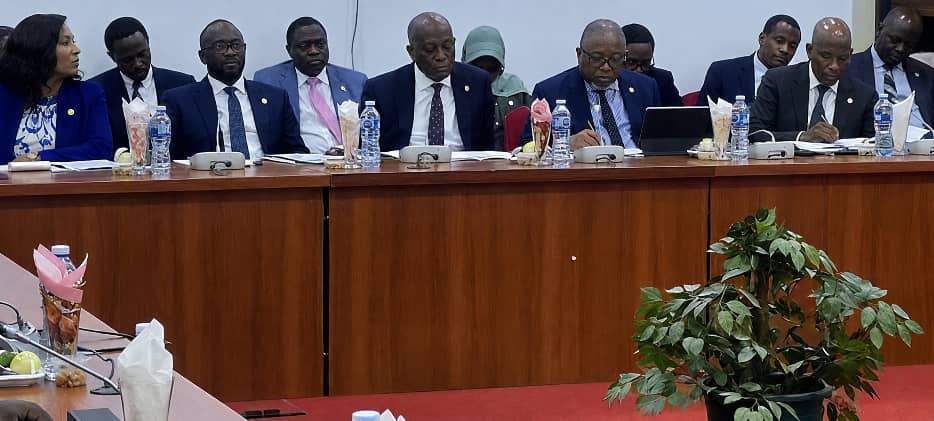
The concerns were raised on Wednesday during a statutory engagement between CBN Governor Olayemi Cardoso and the Senate Committee on Banking, Insurance and Other Financial Institutions.
The session, chaired by Senator Mukhail Adetokunbo Abiru, was held in line with the CBN Act, which requires the governor to brief the National Assembly twice a year. It was the committee's first formal engagement with the apex bank in 2026.
Cardoso, who appeared before the committee alongside the CBN's four deputy governors and other senior officials, said reforms implemented over the past three years had helped consolidate macroeconomic gains despite continuing global uncertainties.
“I am pleased to report that the first half of 2026 witnessed the consolidation of many of those gains,” Cardoso told lawmakers.
The CBN governor cited developments in inflation, exchange-rate stability, external reserves and banking-sector reforms as evidence of progress.
He said headline inflation, which rose from 15.06 per cent in February to 15.93 per cent in May amid geopolitical tensions in the Middle East, moderated slightly to 15.91 per cent in June.
Cardoso also said the bank's foreign exchange reforms had improved transparency, reduced speculative activities and boosted investor confidence.
According to him, the average exchange rate strengthened to N1,375.40 per dollar in the first half of 2026, while diaspora remittances through official channels rose from about $200 million to more than $600 million monthly.
He said the CBN was targeting monthly official diaspora remittances of $1 billion by the end of the year, adding that the country's external reserves had risen to $52.73 billion as of July 9.
On the banking sector, Cardoso disclosed that commercial banks had raised N4.65 trillion in fresh capital under the recapitalisation programme.
He said domestic investors accounted for 72.55 per cent of the funds raised, while foreign investors contributed 27.45 per cent.
According to the governor, 33 banks had met the new capital requirements, while discussions were continuing with the few institutions that had yet to comply.
“With recapitalisation now completed, our focus has shifted towards ensuring that stronger capital translates into improved governance, enhanced risk management and support for productive economic activities,” Cardoso said.
However, the Senate committee said the success of the recapitalisation exercise should ultimately be measured by its impact on the wider economy and ordinary Nigerians.
Abiru acknowledged improvements in key macroeconomic indicators since the committee's last engagement with the CBN in December 2025 but stressed that the reforms must deliver tangible benefits to businesses and households.
While commending the apex bank for stabilising the foreign exchange market and overseeing the bank recapitalisation programme, the senator warned that increasing banks capital base should not become an end in itself.
“Ultimately, the true measure of a stronger banking system lies not merely in larger balance sheets but in its capacity to mobilise savings efficiently and channel affordable credit to productive sectors of the economy,” he said.
The committee chairman identified agriculture, manufacturing, infrastructure, technology and small and medium-sized enterprises as key sectors that should benefit from the stronger capital position of Nigerian banks.
He expressed concern that lending to the private sector appeared to have moderated despite banks raising significant fresh capital.
“The expectation of businesses and indeed the Nigerian people is that stronger capital positions should naturally support increased lending to the economy rather than concentration in risk-free assets or short-term financial instruments,” Abiru added.
Lawmakers also questioned the CBN over several issues, including the number of banks yet to meet the recapitalisation threshold, excessive bank charges, failed electronic transactions, cybersecurity, financial inclusion and the availability of quality naira notes.
The proposed regulatory framework for financial holding companies was also brought under scrutiny.
Another major area of concern was the sharp increase in the CBN's liquidity sterilisation through Open Market Operations.
Lawmakers sought clarification on OMO liabilities, which reportedly increased from N24.3 trillion in 2024 to N48.7 trillion in 2025 as well as the costs associated with managing the liquidity.
The committee also questioned the CBN on rising operating expenses and the treatment of its operating surplus through the offset of the Federal Government's Ways and Means advances rather than cash remittances.
The lawmakers said the issues required greater clarification because of their implications for fiscal transparency, accountability and legislative oversight.
The engagement subsequently moved into a closed-door session, where Cardoso and his management team held further discussions with the committee on the issues raised during the public hearing.
The Senate's concerns underline the growing pressure on the CBN to ensure that the gains from its monetary, foreign exchange and banking-sector reforms translate into increased access to affordable credit and improved economic conditions for Nigerians.
Written by
Our Reporter
SkyHigh NewsHub correspondent.