
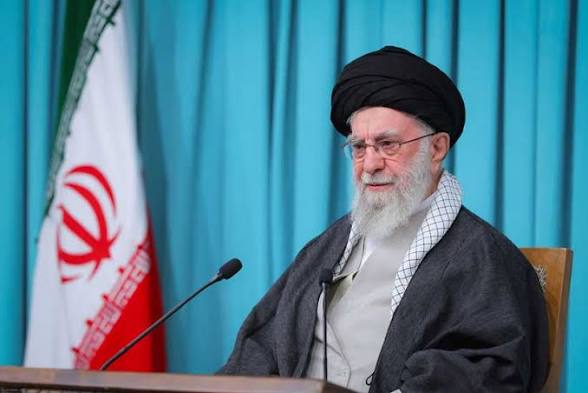
Four Months After Death, Iran Sets Date for Khamenei’s Funeral and Burial
By SKYHIGHNEWSHUB · 03/06/2026 5:45 PM · 2 min read
Iran is preparing for what could become one of the largest funeral gatherings in modern history as the remains of Ayatollah Ali Khamenei are set to be laid to rest nearly four months after his assassination in a joint United States-Israeli military strike.
Iranian authorities announced that the late Supreme Leader will be buried near the revered Imam Reza Shrine in Mashhad, fulfilling his long-standing wish to rest beside one of Shia Islam’s most venerated figures.
The burial is expected to take place around June 21 following a series of elaborate funeral ceremonies scheduled across the country.
According to Iranian state media and officials of the Islamic Revolutionary Guard Corps (IRGC), approximately 20 million mourners are expected to participate in the ceremonies, which will span Tehran, Qom and Mashhad.
Authorities have designated three full days for public viewings and farewell activities, with the main funeral ceremony in Tehran expected to last at least 24 hours before the body is transported through major religious centres.
The remains of Khamenei have not been seen publicly since February 28, when a coordinated US-Israeli strike reportedly destroyed his office-cum-residence in Tehran during the opening phase of a wider military confrontation involving Iran.
Several members of his family were also reportedly killed in the attack.
Officials disclosed that the funeral procession will begin in Tehran before moving to the holy city of Qom and finally Mashhad, where the burial will take place at the Imam Reza Shrine.
Observers say the scale of the funeral could rival or even surpass the historic 1989 funeral of Ayatollah Ruhollah Khomeini, founder of the Islamic Republic, which drew millions of mourners from across Iran and beyond.
Khamenei died at the age of 86 after more than three decades at the helm of the Islamic Republic, overseeing some of the most consequential periods in Iran’s modern history.
His death generated a mixture of grief, political uncertainty and intense public reaction across the country.
His son, Mojtaba Khamenei, was subsequently selected as his successor, though he has largely maintained a low public profile since assuming leadership responsibilities.
The funeral is expected to serve not only as a farewell to Iran’s longest-serving Supreme Leader but also as a defining moment in the country’s political and religious history.
Written by
Skyhighnewshub
SkyHigh NewsHub correspondent.