
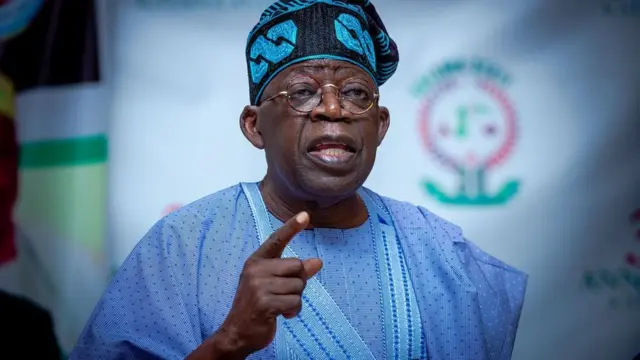
‘Democracy Must Be Felt in the Pocket’ — Tinubu Promises Economic Relief
By OZIOMA IWUH · 12/06/2026 8:11 AM · 5 min read
President Bola Ahmed Tinubu has defended the economic reforms introduced by his administration, insisting that the difficult decisions taken since assuming office in 2023 were necessary to stabilise Nigeria’s economy and lay the foundation for long-term growth and prosperity.
Speaking in his Democracy Day address on Thursday, the President acknowledged the economic hardship currently facing many Nigerians but maintained that early signs indicate that the reforms are beginning to yield results.
Tinubu said his administration inherited an economy weighed down by severe fiscal pressures, declining investor confidence and structural weaknesses that threatened the country’s economic future.
According to him, the government had to make difficult choices to prevent a deeper economic crisis and restore confidence in public financial management.
“The reforms we are undertaking were not chosen for ease, but for necessity,” the President said.
“Three years ago, our public finances were under severe strain, investment was discouraged and economic uncertainty threatened our future. We chose to act, embracing reforms to advance Nigeria’s economic freedom.”
Rising Revenues, Improved Transparency
The President argued that one of the most significant outcomes of the reforms has been an improvement in government revenues and fiscal transparency.
He said federation revenues have increased substantially since 2023, enabling state and local governments to receive more resources for infrastructure, education, healthcare and security.
According to Tinubu, measures introduced by the Federal Government have also reduced financial leakages and strengthened accountability in the management of public funds.
He maintained that greater fiscal discipline is helping to ensure that government resources are directed towards priority sectors and development projects.
The President described transparency and prudent management of public finances as critical pillars of his administration’s economic agenda.
Investor Confidence Returning
Tinubu also claimed that investor confidence in Nigeria is gradually returning, citing increased investments across key sectors of the economy.
He identified agriculture, manufacturing, energy, mining, transportation, technology and the creative industry as sectors attracting renewed interest from both local and foreign investors.
According to the President, the reforms have helped restore credibility to economic management and created a more predictable environment for business growth.
He noted that improving investor confidence remains essential to stimulating production, creating jobs and expanding economic opportunities for millions of Nigerians.
Non-Oil Exports Record Growth
Highlighting developments outside the oil sector, Tinubu said Nigeria’s drive toward economic diversification is beginning to show results.
The President disclosed that non-oil exports grew by 21 per cent over the last year, describing the development as evidence that efforts to reduce dependence on crude oil revenue are gaining traction.
He further revealed that more than 1,000 small and medium-scale enterprises have been certified for export, creating new opportunities for Nigerian businesses to access international markets.
According to him, expanding non-oil exports remains a key strategy for strengthening foreign exchange earnings and supporting sustainable economic growth.
Push for Agricultural Expansion
Tinubu also highlighted agriculture as a major component of his administration’s economic recovery plan.
He disclosed that the National Agricultural Development Fund is expected to deploy 10,000 tractors over a five-year period to boost food production and support mechanised farming.
The President said increasing agricultural productivity is central to efforts aimed at reducing food inflation, improving food security and creating employment opportunities in rural communities.
He stressed that government interventions in agriculture are designed to empower farmers, strengthen value chains and reduce Nigeria’s dependence on food imports.
Domestic Refining Capacity Expanding
On energy, Tinubu said Nigeria has made progress in expanding domestic refining capacity, reducing dependence on imported petroleum products and strengthening energy security.
While he did not provide specific figures, the President said improvements in local refining would contribute to long-term economic stability and help conserve foreign exchange previously spent on fuel imports.
He described the development as one of the strategic gains of ongoing reforms in the petroleum sector.
Power Sector Reforms
The President devoted significant attention to challenges in Nigeria’s electricity sector, which he described as one of the major obstacles to economic growth and industrial development.
According to Tinubu, the sector was characterised by inadequate power generation, weak transmission infrastructure, poor revenue collection and a metering deficit exceeding four million customers when his administration came into office.
To address these challenges, he highlighted the implementation of the Electricity Act, which grants states greater authority to generate, transmit and distribute electricity.
He also disclosed that the Presidential Power Sector Task Force has been authorised to raise a N4 trillion bond to settle verified legacy debts in the electricity value chain.
Tinubu further noted that the Rural Electrification Agency, with support from the World Bank and the African Development Bank, has expanded off-grid and mini-grid power projects to underserved communities, markets, hospitals and universities.
“Electricity is a democratic dividend we owe every Nigerian. We intend to deliver it,” the President said.
Acknowledges Hardship, Promises Relief
Despite highlighting what he described as positive economic indicators, Tinubu admitted that many Nigerians are still grappling with rising living costs and economic hardship.
He assured citizens that the Federal Government remains focused on reducing inflation, increasing food production, creating jobs and improving living standards.
According to him, the next phase of the administration’s economic programme will focus on accelerating growth while ensuring that the benefits of reforms are felt by ordinary Nigerians.
“We are moving from uncertainty to stability. The next phase is about accelerating growth and ensuring the benefits are felt in every home, every community and every region,” he said.
The President stressed that economic reforms would ultimately be judged by their impact on citizens lives, insisting that democracy must deliver tangible benefits through jobs, prosperity and improved opportunities.
“Democracy must be felt in the pocket,” Tinubu declared.
As Nigeria marks 27 years of uninterrupted democratic rule, the President said his administration remains committed to building an economy capable of delivering sustainable prosperity, expanding opportunities for young people and strengthening the country’s long-term development prospects.
Written by