
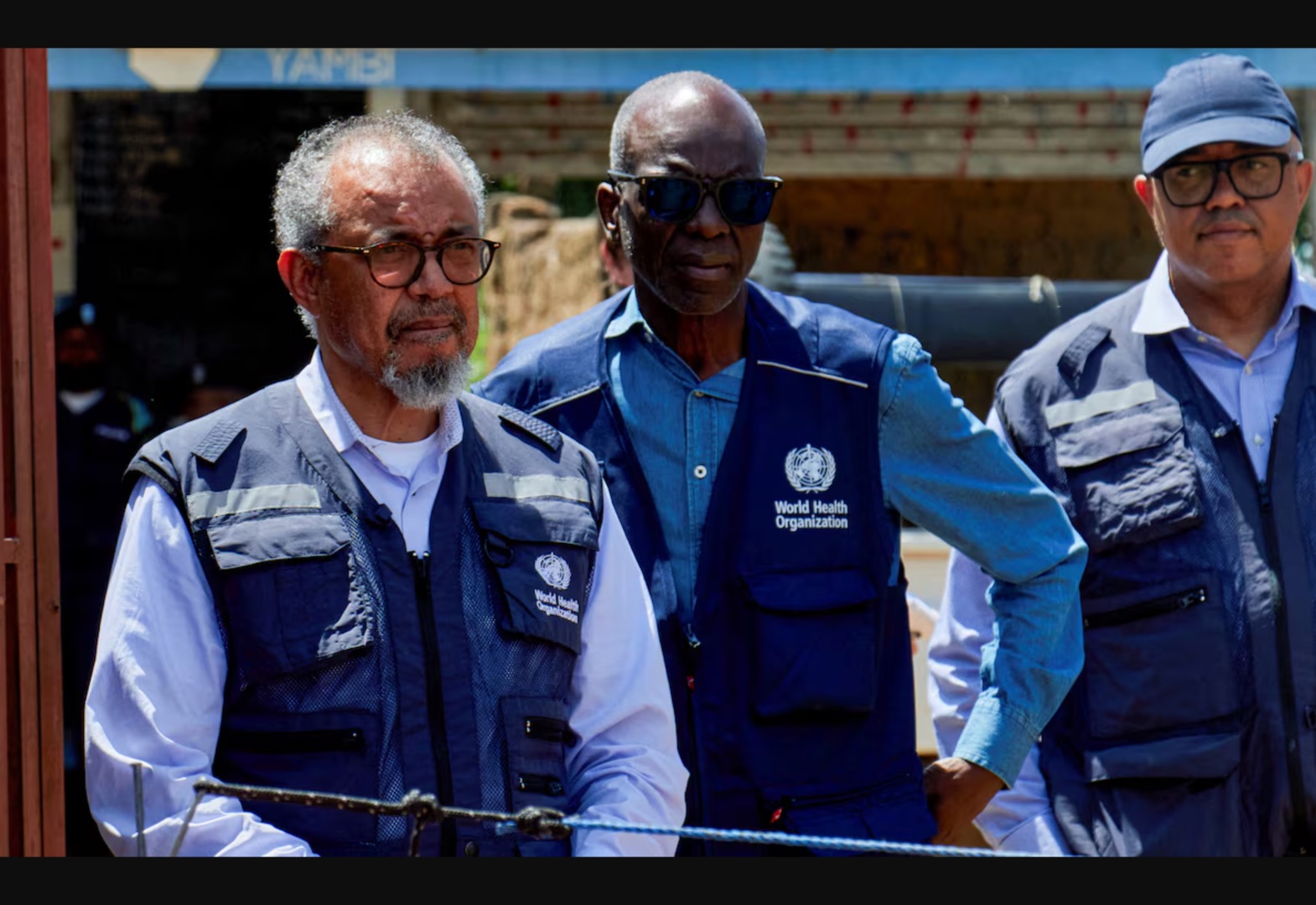
WHO Unveils $518m Emergency Response Plan to Contain Africa’s Growing Ebola Outbreak
By OUR REPORTER · 05/06/2026 5:21 PM · 3 min read
The World Health Organization (WHO) has launched an ambitious six-month emergency response plan valued at $518 million to contain the rapidly expanding Ebola outbreak in Central and East Africa, warning that the disease is spreading faster than current containment efforts.
WHO Director-General, Dr. Tedros Adhanom Ghebreyesus, unveiled the initiative on Friday alongside the Africa Centres for Disease Control and Prevention (Africa CDC), stressing that the outbreak poses a serious threat to public health across the continent if immediate action is not taken.
The intervention plan is designed to support response operations in the Democratic Republic of Congo (DRC) and Uganda, the two countries currently battling active outbreaks, while helping neighbouring nations strengthen preparedness measures, including enhanced border surveillance, rapid detection systems and emergency response capabilities.
“The outbreak is moving fast and we are still playing catch-up,” Tedros warned.
He noted that containing the virus would require more than medical intervention, stressing that sustained political commitment, adequate funding and community trust are essential components of a successful response strategy.
According to the Africa CDC, the outbreak remained undetected for several weeks, allowing the virus to spread before authorities could activate containment mechanisms.
Latest figures show that the Democratic Republic of Congo has recorded 381 confirmed Ebola cases and 62 deaths, while Uganda has reported 19 confirmed infections and two fatalities.
Health authorities disclosed that the outbreak involves the rare Bundibugyo strain of Ebola, a variant for which there is currently no approved vaccine or specific treatment.
Africa CDC Director-General, Dr. Jean Kaseya, described the situation as the most serious Bundibugyo outbreak ever recorded.
“This outbreak is very serious. If you compare it with previous Bundibugyo outbreaks, this is the most severe we have seen,” he said.
Kaseya revealed that donors had so far pledged approximately $315.8 million towards response efforts, significantly below the amount required to fully execute the emergency strategy.
The Africa CDC officially announced the DRC outbreak on May 15, while the WHO subsequently declared it a Public Health Emergency of International Concern.
Health experts have also raised concerns over diagnostic challenges associated with the outbreak. Commonly used Ebola testing methods reportedly failed to immediately detect the Bundibugyo strain, resulting in delays in identifying infected individuals.
Franklin Graham, President of humanitarian organisation Samaritan’s Purse, which is supporting response efforts in Congo’s Ituri Province, said testing delays were hampering containment measures.
“It’s taking several days to a week or more to get results. That is frustrating when you are trying to stop transmission,” he said.
Beyond medical challenges, health officials are grappling with community resistance and security threats.
Reports indicate that burial teams and treatment centres have come under attack in some affected areas, complicating efforts to trace contacts and isolate infections.
In response to growing security concerns, the WHO confirmed that it recently received three armoured vehicles from the United Nations peacekeeping mission in Congo to support field operations.
Health authorities warn that without swift intervention, the outbreak could spread further across the region, placing additional pressure on already fragile healthcare systems.
Written by
Our Reporter
SkyHigh NewsHub correspondent.