US Sanctions Lagos BDC Operator, Three Firms Over Alleged ISWAP Financing
By OUR REPORTER · 24/06/2026 7:41 AM · 3 min read
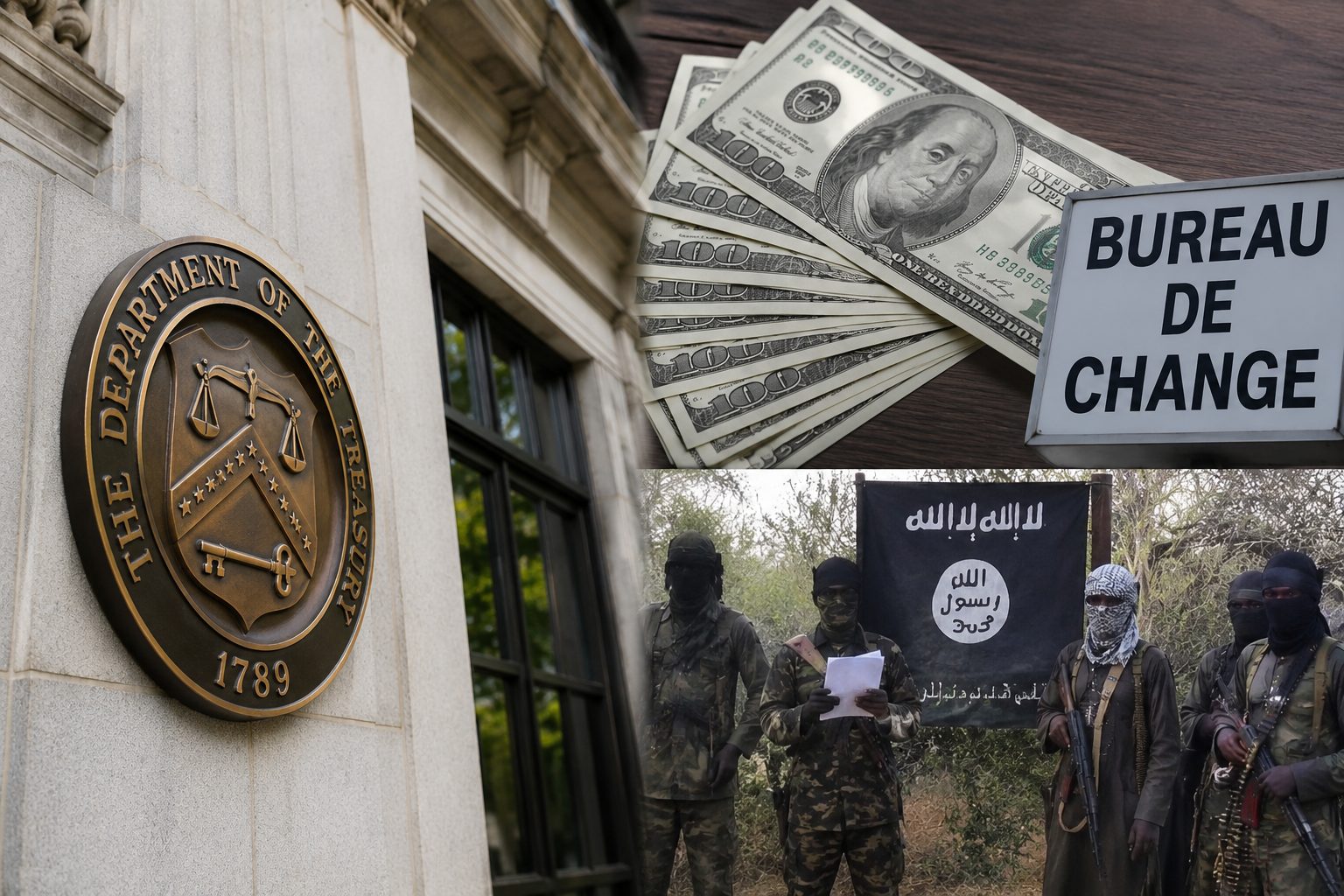
The United States government has imposed terrorism-related sanctions on a Lagos-based Bureau De Change (BDC) operator and three companies allegedly linked to him over accusations of facilitating financial transactions for the Islamic State West Africa Province (ISWAP), one of the deadliest extremist groups operating in the Lake Chad region.
The sanctions were announced by the U.S. Department of the Treasury's Office of Foreign Assets Control (OFAC), which accused Mukhtar Adamu Muhammad, also known as Mukhtar Muhammad, of serving as a financial facilitator for ISWAP.
Also sanctioned were Nine To Nine Exchange Bureau De Change Limited, Generation Currency Bureau De Change Limited and Manhattan Bureau De Change Limited, which U.S. authorities allege are owned, controlled or directed by Muhammad and were used to move funds on behalf of the terrorist organisation.
According to OFAC, Muhammad operated from Lagos and played a significant role in ISWAP's financial network by facilitating money transfers and other financial transactions that allegedly supported the group's activities.
The sanctions form part of a broader U.S. operation targeting individuals and entities accused of helping the Islamic State raise, transfer and conceal funds across Africa, Europe and the Middle East.
In addition to the Nigerian designations, the U.S. Treasury sanctioned France-based Miloud Abderrahmane and Syria-based Abdelhakim Boukich, both accused of acting as financial facilitators for ISIS.
OFAC also designated Bitcoin Xchange, a Syria-based money service business allegedly controlled by Boukich, as well as Spider Gayrimenkul Ve Genel Ticaret Limited Sirketi and Alkaram Danismanlik Gayrimenkul Ic Ve Dis Genel Ticaret Limited Sirketi, which authorities claim provided support to ISIS-linked financial networks.
According to the U.S. Treasury, Boukich and Bitcoin Xchange facilitated money transfers for ISIS associates in several countries, including the United States, South Africa, Norway, Belgiu and the Netherlands.
The sanctions place all assets and property belonging to the designated individuals and entities that fall under U.S. jurisdiction under immediate freeze. American citizens, companies and financial institutions are also prohibited from conducting transactions with them unless specifically authorised by OFAC.
The U.S. government further warned that foreign financial institutions and individuals that knowingly facilitate significant transactions or provide material support to the sanctioned persons could themselves face secondary sanctions.
ISWAP emerged in 2016 following a split within Boko Haram and has since become one of the most active extremist groups in the Lake Chad Basin, carrying out attacks across northeastern Nigeria and neighbouring countries.
The group has been responsible for repeated assaults on military formations, communities, aid workers and government facilities, contributing to one of Africa's longest-running security crises.
The latest sanctions also renew concerns about the use of informal financial channels and currency exchange businesses by terrorist groups seeking to evade regulatory oversight and international sanctions.
Nigeria has in recent years intensified efforts to combat terrorism financing through regulatory actions, asset freezes and investigations involving financial institutions, businesses and individuals suspected of supporting extremist networks.
Authorities have repeatedly identified terrorism financing as a critical enabler of insurgent activities.
During the administration of former President Muhammadu Buhari, dozens of suspects and hundreds of associates were investigated over alleged terrorism financing activities, while several companies and bureau de change operators were linked to ongoing probes.
The sanctions come as security agencies across Nigeria and international partners continue efforts to disrupt financial networks believed to sustain terrorist operations in the country and across the wider West African region.
While neither Muhammad nor the affected companies have publicly responded to the allegations, the designations are expected to further intensify scrutiny of financial transactions linked to regions affected by insurgency and organised crime.
The development also underscores growing cooperation between the United States and Nigeria in efforts to combat terrorism financing, disrupt illicit financial flows and weaken the operational capabilities of extremist organisations operating across the region.
Written by
Our Reporter
SkyHigh NewsHub correspondent.