
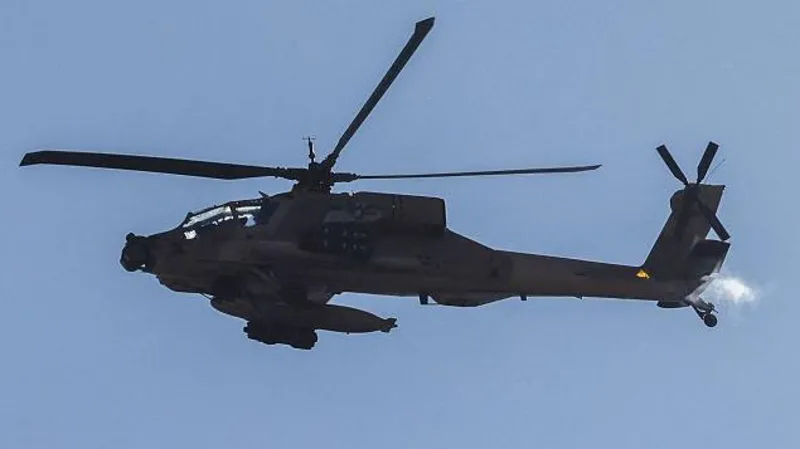
US Launches Strikes on Iran After American Helicopter Is Downed
By OUR REPORTER · 10/06/2026 6:41 AM · 3 min read
The United States and Iran have moved dangerously closer to a broader military confrontation after Washington launched a series of strikes against Iranian military installations in retaliation for the downing of an American Apache helicopter near the strategically vital Strait of Hormuz.
The latest exchange marks one of the most serious escalations between the two longtime adversaries in recent months and has intensified fears of a wider regional conflict at a time when diplomatic negotiations remain delicately poised.
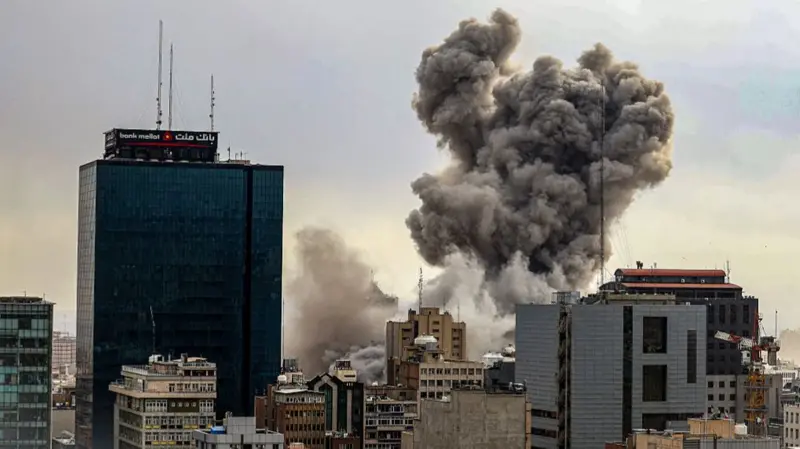
According to the United States Central Command (CENTCOM), American fighter aircraft struck Iranian air defence systems, radar installations and military command facilities located near the Strait of Hormuz, one of the world's most critical energy and shipping corridors.
US officials described the operation as a measured and proportional response to Monday’s incident in which an American Apache attack helicopter was brought down during a patrol mission in the Gulf region.
The helicopter's crew survived the incident and were successfully rescued in what military officials described as a complex recovery operation involving an unmanned maritime drone.
President Donald Trump defended the military response, insisting that the United States could not allow attacks on its forces to go unanswered.
“There were two pilots involved, both are safe and uninjured. Nevertheless, the United States must respond to this attack,” Trump said.
American officials allege that the helicopter was struck by an Iranian drone, though questions remain about whether the aircraft was deliberately targeted or accidentally caught in a broader military engagement.
Iran has not formally accepted responsibility for the attack.
However, Tehran reacted swiftly to the American strikes.
The Islamic Revolutionary Guard Corps (IRGC) announced that it had launched retaliatory attacks against multiple US military facilities across the Middle East, including installations in Bahrain and Jordan.
Authorities in Bahrain later confirmed that air defence systems had been activated to intercept incoming threats, while reports also emerged of attempted attacks in other parts of the Gulf region.
Iranian officials condemned the US operation as an act of aggression.
Foreign Minister Abbas Araghchi warned that Tehran would respond decisively to any military action against its territory.
“Despite its defeats on the battlefield, the United States opted to test our determination. Our armed forces will leave no attack or threat unanswered,” he declared.
Iranian media reported explosions in several southern locations, including Jask, Sirik and Qeshm Island, areas that host strategic military and maritime facilities.
Officials also claimed that civilian infrastructure, including water storage facilities and telecommunications assets, sustained damage during the strikes.
The latest confrontation unfolds against a complex diplomatic backdrop.
Despite the military escalation, both Washington and Tehran continue to publicly signal support for ongoing negotiations aimed at reducing regional tensions and reaching a broader security agreement.
President Trump expressed confidence that a diplomatic breakthrough remains achievable.
“We are in the final stages of what will be a very good deal,” he told reporters, suggesting that negotiations could produce results within days.
Yet analysts warn that every new military exchange increases the risk of miscalculation and could undermine efforts to secure a lasting settlement.
The Strait of Hormuz remains central to the dispute.
Roughly one-fifth of the world's oil supply passes through the narrow waterway, making any disruption a matter of global economic concern.
Shipping companies, energy markets and governments around the world are closely monitoring developments amid fears that continued hostilities could threaten international trade routes and destabilise energy supplies.
For now, both sides appear determined to project strength while simultaneously keeping diplomatic channels open.
Whether that delicate balance can be maintained in the coming days may determine whether the region moves toward de-escalation or slides into a broader conflict with far-reaching global consequences.
Written by