
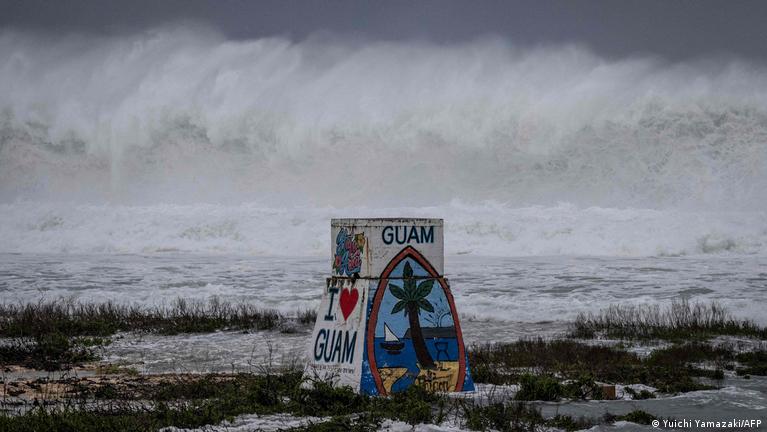
Super Typhoon Bavi Slams US Pacific Islands, Major Damage Reported
By OUR REPORTER · 06/07/2026 8:58 AM · 5 min read
A powerful super typhoon battered the United States Pacific territories of Guam and the Northern Mariana Islands on Monday, leaving reports of major damage, widespread power outages and dangerous flooding as authorities urged residents to remain sheltered.
Super Typhoon Bavi, carrying sustained winds of up to 180 miles per hour (290 kilometres per hour) equivalent to a Category 5 Atlantic hurricane made its strongest impact on the island of Rota before gradually moving westward, according to the US National Weather Service (NWS).
Meteorologists said the entire island of Rota briefly lay inside the eye of the storm as destructive winds and torrential rain swept across the territory.
Earlier on Monday, the National Weather Service issued an urgent warning to the island's roughly 1,500 residents, advising them to seek immediate shelter.
"Treat these imminent extreme winds as if a tornado was approaching and move immediately to an interior room or shelter NOW!" the agency said in a post on X.
Local authorities later confirmed receiving reports of significant destruction across the island, although communications difficulties initially hampered efforts to assess the full extent of the damage.
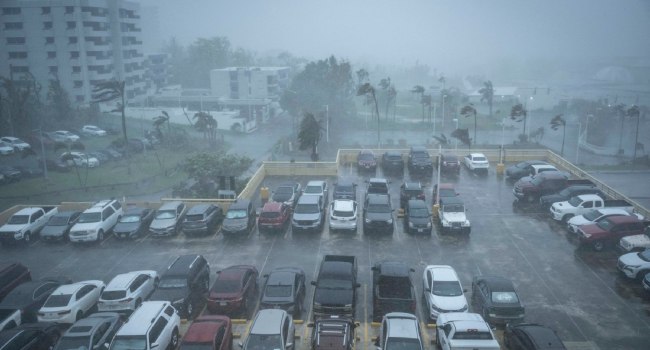
Public Information Officer at the Rota Municipal Operations Center, Lou Rosario, said emergency officials were already receiving distress reports from residents.
"We are hanging in there. We are experiencing heavy winds and flooding here. Some people are already reporting major damages," Rosario said.
He added that parts of the island had lost mobile phone services after a communications tower collapsed during the storm.
Before landfall, the National Weather Service had warned that a direct strike on Rota could leave much of the island uninhabitable for weeks, with extensive destruction to buildings, vegetation and critical infrastructure.
The agency cautioned that nearly all trees could be snapped or uprooted, while electricity outages might last for weeks or even months.
Although Rota suffered the worst conditions, neighbouring islands were also hit by powerful winds and heavy rainfall.
The island of Tinian, northern Guam and southern parts of Saipan experienced winds comparable to those of a Category 1 hurricane.
National Weather Service meteorologist Marcus Landon Aydlett said conditions were expected to gradually improve as the storm moved away from the region.
"Super Typhoon Bavi is leaving the area. Gradually, conditions are going to be improving," he said during a live weather briefing.
The Northern Mariana Islands and Guam, both US territories in the western Pacific, have a combined population of about 210,000 people.
Authorities warned that Guam could receive between eight and 12 inches (20 to 30 centimetres) of rainfall, raising the risk of flash floods in several communities.
Even after the centre of the storm moved away, officials warned that sustained winds of between 50 and 80 miles per hour, with stronger gusts, would continue for several hours.
"Residents should remain sheltered in place. NWS continues to describe this as an extremely dangerous and life-threatening situation," the agency said.
For many residents, the latest storm revived memories of previous destructive typhoons that have struck the region in recent years.
Edwin Santa Theresa, a health worker on Tinian, said residents had prepared as best they could before Bavi arrived.
"I think our main problem will be fuel because the supply is limited," he said.
He added that electricity to his home had only been restored a few days earlier following another typhoon in April before being knocked out again.
"I just hope that after this typhoon passes, electricity will be restored quickly."
On Saipan, resident Rowell Mariano said the April storm had caused even greater damage to his home.
"Our house was flooded because of the strong winds and heavy rain, and our ceiling was damaged. It was really traumatic for us," he said.
Hundreds of residents on Guam also sought refuge in hotels and emergency shelters as the storm intensified.
At the Guam Plaza Hotel, several hundred people remained indoors while strong winds rattled windows and heavy rain leaked into parts of the building.
General Manager Sudipta Basu said about 70 per cent of those staying at the hotel were local residents seeking temporary shelter.
"Our hotel is locally owned, so we cater to our local customers, and we are going to make sure they have shelter here," he said.

Businesses across Guam also shut their doors ahead of the storm.
Restaurant owner Pinky Cubacub said she spent about $500 boarding up her premises in an effort to minimise damage.
"I cannot afford to lose so many days. It hurts," she said.
The latest storm comes as scientists continue to warn about increasingly active tropical cyclone seasons.
The European Union's Copernicus Marine Service recently reported that the world's oceans experienced their hottest June on record, while the World Meteorological Organization has confirmed the return of El Niño conditions in the Pacific.
Warmer ocean temperatures provide more energy for tropical cyclones, allowing storms to strengthen more rapidly and produce heavier rainfall.
According to Aydlett, forecasters expect this year's Pacific typhoon season to be more active than in recent years.
"Our big concern for this being an El Niño year is that it's going to be a lot busier than we've seen in the last five or six years," he said.
AFP
Written by
Our Reporter
SkyHigh NewsHub correspondent.