
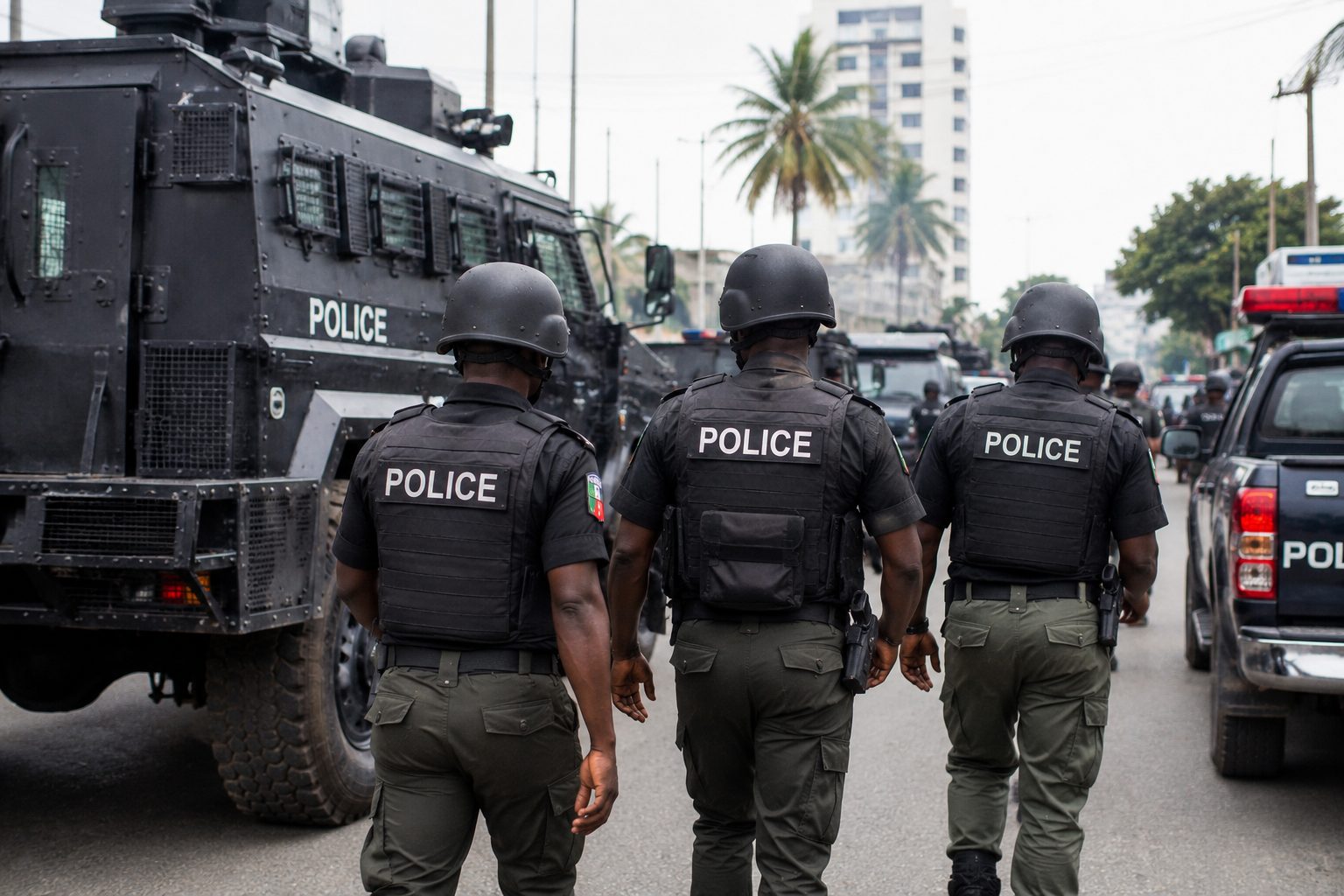
State Police: Replicating the Nigeria Police Force at the Subnational Level Will Not Resolve Nigeria's Insecurity Nightmare—It Will Instead Exacerbate It
By BISHOP C. JOHNSON · 24/06/2026 7:58 AM · 5 min read
The fundamental mistake currently being made in the ongoing debate over state police is the assumption that decentralization alone will solve Nigeria's security challenges. It will not. Merely creating thirty-six state police forces and the Federal Capital Territory Police without fundamentally rethinking the philosophy, structure, doctrine, training, oversight mechanisms, and operational capabilities of policing would simply amount to creating thirty-seven versions of the same institution that has struggled for decades to effectively secure the country.
The security environment confronting Nigeria today bears little resemblance to that which existed when the Nigeria Police Force was originally established. Contemporary threats are increasingly hybrid in nature. Criminal actors now operate simultaneously across physical, cyber, financial, informational, and psychological domains. Kidnappers coordinate operations using encrypted communications. Terrorist organizations exploit social media for recruitment and propaganda. Separatist groups use digital platforms to mobilize supporters. Cybercriminals steal billions through sophisticated online schemes. Foreign and domestic actors manipulate information ecosystems to inflame ethnic, religious, and political tensions. Organized criminal networks launder proceeds through informal financial systems while maintaining operational links across multiple countries.
Yet much of the existing policing model remains heavily dependent on physical checkpoints, reactive patrols, manual intelligence gathering, and conventional law enforcement methods designed primarily to respond to crimes after they have occurred. Such an approach is increasingly inadequate in an era where threats often emerge and evolve in cyberspace long before they manifest physically.
This is why the proposed state police architecture must not simply replicate the Nigeria Police Force at the state level. The current tendency to place the design process almost exclusively in the hands of serving and retired police officers risks reproducing the very institutional weaknesses Nigerians have long criticized. The expertise of police professionals is undoubtedly valuable, but effective state policing in a hybrid threat environment requires far broader participation.
The Armed Forces possess extensive experience in intelligence fusion, joint operations, strategic planning, and counterinsurgency. The Department of State Services brings expertise in intelligence collection, threat assessment, and counter-subversion operations. The National Intelligence Agency understands transnational threat networks and foreign influence activities. The Nigerian Communications Commission and cybersecurity professionals understand digital vulnerabilities and cyber-enabled crimes. The Nigerian Bar Association can contribute to legal safeguards and accountability frameworks. The Nigeria Labour Congress, civil society organizations, traditional institutions, religious leaders, academic experts, and community stakeholders all possess insights into the social dynamics that often generate insecurity.
A state police system designed through such a multidisciplinary process would be fundamentally different from the current policing model. It would be intelligence-led rather than checkpoint-driven. It would prioritize prevention over reaction. It would integrate cyber intelligence, financial intelligence, social intelligence, and community intelligence into a unified operational framework. Officers would be trained not merely as law enforcement personnel but as security professionals capable of identifying early warning indicators across multiple domains.
For example, a hybrid-era state police force should possess dedicated cybercrime units capable of monitoring online fraud networks, tracking digital radicalization, and supporting investigations involving cryptocurrency transactions. It should maintain data analysis centers capable of identifying crime patterns before they escalate into crises. It should employ social scientists, psychologists, technology specialists, forensic experts, and intelligence analysts alongside conventional police officers. It should develop partnerships with telecommunications providers, financial institutions, educational institutions, and local communities to build comprehensive threat awareness.
Equally important is accountability. One of the principal lessons of the #EndSARS movement was that policing without accountability inevitably erodes public trust. The tragedy of that period was not merely the actions of a few rogue officers but the broader perception that citizens lacked effective mechanisms for seeking redress when abuses occurred. Any future state police system must therefore incorporate independent civilian oversight structures with genuine investigative and disciplinary powers. Public confidence is not a luxury in modern security environments; it is a strategic necessity.
In a hybrid warfare environment, legitimacy itself becomes a security asset. Citizens who trust their security institutions are more likely to provide intelligence, cooperate with investigations, resist disinformation campaigns, and support law enforcement operations. Conversely, institutions perceived as corrupt, abusive, or unaccountable become vulnerable to manipulation by hostile actors seeking to undermine state authority.
Nigeria therefore faces a historic choice. The country can either create thirty-seven new police organizations modeled on structures that have struggled to adapt to contemporary realities, or it can seize this opportunity to design a genuinely modern policing system built specifically for the complex challenges of the twenty-first century.
The state police that Nigeria requires is not merely a decentralized version of the Federal Police. It must be a new institution altogether—one that understands cyber threats as well as street crime, values intelligence as much as enforcement, embraces technology without abandoning community engagement, and recognizes that security in the age of hybrid warfare demands capabilities extending far beyond traditional law enforcement.
If state police becomes nothing more than the replication of existing structures at the sub-national level, Nigeria may succeed in decentralizing policing while simultaneously decentralizing inefficiency. However, if properly designed, state police could become one of the most significant security reforms in the nation's history, providing the foundation for a resilient, adaptive, and citizen-centered security architecture capable of confronting the multidimensional threats of the modern era.
The ultimate objective should not simply be the creation of state police. Rather, the goal should be to build a modern, adaptive, and intelligence-driven policing system capable of operating effectively in an increasingly multidomain security environment where threats no longer conform to traditional patterns of crime and conflict. Today's security challenges are hybrid in nature, blending elements of terrorism, cybercrime, organized criminality, disinformation, economic sabotage, communal violence, and transnational networks that often operate across physical and virtual spaces simultaneously.
In this evolving environment, threats frequently emerge without frontlines, without uniforms, and often without warning. They are decentralized, networked, and highly adaptive, requiring a policing architecture that is equally flexible, technologically enabled, professionally trained, and deeply integrated with intelligence, community engagement, and national security structures. Simply replicating existing policing models at the state level will not address these realities. What Nigeria requires is a new policing philosophy designed for the complexities of twenty-first-century security challenges and the demands of hybrid warfare.
Capt. Bishop C. Johnson, US Army (Rtd.)
National Defense and Military Strategist
Written by
Bishop C. Johnson
SkyHigh NewsHub correspondent.