
“I Don’t See The Hunger Nigerians Complain About” — Onanuga Defends Tinubu’s Policies
By OUR REPORTER · 24/06/2026 10:39 AM · 3 min read
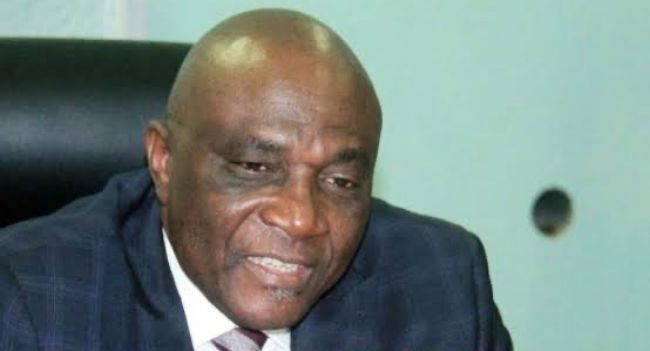
Presidential spokesman Bayo Onanuga has pushed back against claims of widespread hunger across Nigeria, saying he does not personally observe the level of hardship often portrayed by critics of President Bola Tinubu’s administration.
Speaking during an interview on Arise Television on Tuesday, Onanuga argued that many Nigerians are benefiting from policies introduced by the Federal Government, particularly in infrastructure development, education financing and access to affordable credit.
According to him, several projects executed under the Tinubu administration have already begun improving the daily lives of citizens.
Using road infrastructure as an example, Onanuga recounted a recent trip from Ibadan to Lagos, during which he was redirected through Ijebu-Ode because of traffic congestion on the main route.
He said he was surprised to discover a newly constructed concrete road along the corridor.
“One day I was traveling from Ibadan to Lagos and Google Maps told me that there’s a go-slow in the approach to Lagos, and I decided to take Ijebu-Ode via Shagamu. What struck me most was that I just found myself on a paved road, concrete road. I said, ‘Wow, when was this one built?’” he said.
According to him, the road project has changed perceptions among residents in the area.
“I found that our people, I mean, our Ijebu people, have stopped complaining. I said, ‘Oh, no wonder they now have a brand new road that’s not just an asphalt road, a concrete road,’” he added.
Onanuga also cited the ongoing coastal highway project as another example of government intervention improving quality of life.
The presidential aide, who lives in the Ajah area of Lagos, said the project has significantly reduced his commuting time.
“Anytime I go to Lagos, and I ask Google Maps to tell me how soon I will get home, Google Maps will tell me one hour, seven minutes. Before, it was two hours, 30 minutes and the reason for that is that we now have a coastal road that has shortened my travel time,” he said.
“Is that not beneficial? What are people talking about really?”
Beyond infrastructure, Onanuga highlighted the Federal Government’s student loan programme, arguing that it is helping families cope with the cost of higher education.
“If you are a parent and you have four children in university, and they’re able to access federal loans, which are interest-free, are they not benefiting?” he asked.
He also pointed to low-interest credit schemes available to civil servants, describing them as evidence that government reforms are yielding practical benefits.
“If you are a civil servant and you can access the credit card, very cheap loan at below interest, it is about seven per cent. Now people can access that loan at single digit. Are they not benefiting as well?” he said.
Onanuga argued that public discourse surrounding the economy has become heavily influenced by assumptions that often overlook positive developments.
According to him, narratives about widespread hunger gained momentum following a viral video involving President Tinubu during the early days of his administration.
“I think the President went to Lagos, he was coming from the Central Mosque, and somebody now did a voice-over saying ‘Ebi n pawa o,’ and that means we are hungry. Since then, people have been saying that,” he said.
While acknowledging that economic difficulties exist, Onanuga maintained that his own interactions with ordinary Nigerians do not reflect the scale of hardship frequently reported in public discussions.
“I’m a Nigerian. I have people working for me privately. I don’t see the level of hunger people are talking about because I see them, and I keep asking them questions: how are things, how are they adjusting, what are the problems?” he said.
His remarks come amid ongoing debates over the impact of economic reforms introduced by the Tinubu administration, including the removal of fuel subsidies and the unification of the foreign exchange market, policies that have contributed to higher living costs while the government argues they are necessary for long-term economic stability.
Written by
Our Reporter
SkyHigh NewsHub correspondent.