
Six in 10 Nigerian Children Suffer Abuse, UNICEF Calls for Urgent Action on Child Protection
By ATINUKE KOLAWOLE · 25/07/2026 12:34 PM · 4 min read
The United Nations Children's Fund (UNICEF) has raised fresh concerns over the state of child protection in Nigeria, revealing that six out of every 10 children experience some form of abuse, while only two in five children under the age of five have their births officially registered.
The agency also disclosed that two in every five young Nigerian women were married before the age of 18, warning that millions of children remain exposed to violence, exploitation and exclusion from essential services because of persistent weaknesses in the country's child protection system.
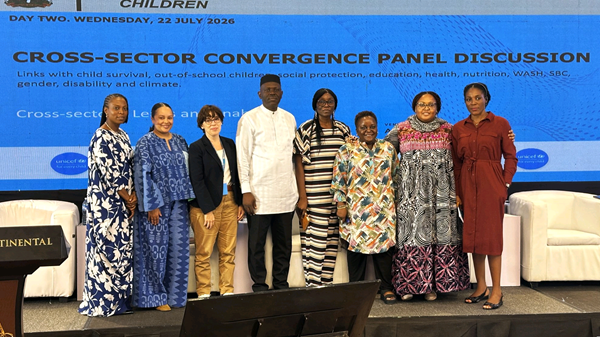
Speaking at the Child Protection Mid-Year Review and consultations for UNICEF's 2028–2032 Country Programme in Abuja, UNICEF Nigeria's Chief of Child Protection, Natalie McCauley, described the figures as a stark reminder that many Nigerian children continue to face serious threats to their safety and future.
"These figures are not merely statistics. They represent children whose safety, identity, education, health and future opportunities are at risk," McCauley said.
She urged governments, development partners and other stakeholders to adopt more targeted, evidence-based interventions, cautioning that national averages often conceal severe disparities affecting children in underserved communities.
McCauley acknowledged that government-led initiatives supported by UNICEF delivered notable gains in 2025.
According to her, nearly 120,000 vulnerable children received child protection services during the year, while community child protection structures were expanded and the frontline child protection workforce strengthened.
She added that efforts to improve birth registration accelerated, while more than 1,000 children were diverted from detention through non-custodial justice measures designed to protect children's rights.
Despite those achievements, she warned against complacency.
"A national result can conceal deep subnational disparities. A target can be achieved while the child in a remote community, the adolescent girl facing multiple risks, the child with a disability, the child on the move, or the child affected by conflict remains beyond the reach of services.
"Our task today is therefore not only to ask, 'What did we deliver?' but also, 'Who did we not reach and why?'"
McCauley said UNICEF's 2026-2029 Strategic Plan represents the organisation's final push towards achieving the child-related Sustainable Development Goals (SDGs) by 2030.
Globally, UNICEF aims to protect 350 million children from violence by 2029, a target she said can only be achieved through stronger partnerships, better targeting of resources and scaling up interventions that have proven effective.
She stressed that governments should prioritise strengthening existing public institutions instead of creating parallel systems.
"For Child Protection, this means we must be more disciplined about our choices. We cannot attempt to do everything, everywhere, in the same way.
"We must identify the deprivations that are most severe, the locations where risks are concentrated, the solutions that have evidence of effectiveness, and the partnerships and financing required to take those solutions to scale."
According to her, protecting children is not separate from development but fundamental to achieving it.
Children exposed to violence, abuse, child marriage or lacking legal identity are significantly less likely to access education, healthcare and other essential public services.
"Protection is therefore not an add-on to development; it is one of the conditions that makes development possible," she said.
McCauley argued that child protection requires stronger collaboration across sectors, noting that children's challenges rarely occur in isolation.
She illustrated the point by describing how a single child may simultaneously face multiple disadvantages.
"A child does not experience life in sectors. The same girl may be out of school, at risk of child marriage, without a birth certificate, affected by malnutrition and living in a household under severe economic pressure."
She said no single ministry, agency or development organisation could address such overlapping vulnerabilities alone.
Instead, she called for improved coordination among government institutions, civil society organisations, development partners and local communities to identify children still being left behind and address persistent bottlenecks, including shortages of trained social workers and weak referral systems.
She urged stakeholders to focus on scalable, sustainable solutions that will shape UNICEF's next country programme covering 2028 to 2032.
"The measure of our success will not be the number of plans we produce or meetings we hold.
"It will be whether a child at risk is identified before harm occurs; whether every child is counted at birth; whether a girl can remain in school and choose her future; and whether families and communities have the support they need to protect their children."
Nigeria has one of the world's largest child populations, with more than 100 million children, according to UNICEF estimates. The country continues to face significant child protection challenges, including child marriage, violence against children, child labour, trafficking, conflict-related displacement and low birth registration rates.
Written by
Atinuke Kolawole
SkyHigh NewsHub correspondent.