
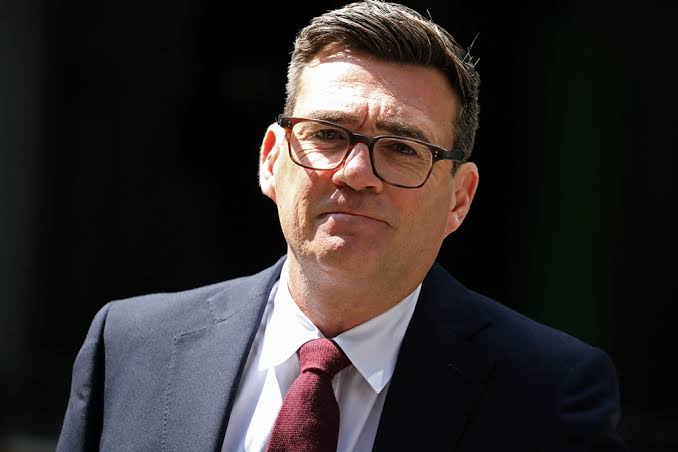
New UK PM Andy Burnham Unveils Electricity Tax Cut After Cabinet Overhaul
By OUR REPORTER · 21/07/2026 10:34 AM · 4 min read
Britain's new Prime Minister, Andy Burnham, has reportedly unveiled a cut in the tax burden on household electricity bills as his first major policy decision, promising immediate relief for families grappling with the rising cost of living.
Burnham, who reportedly assumed office on Monday after succeeding Keir Starmer, announced the measure as he prepared to chair his first Cabinet meeting, signalling what he described as a new direction for his administration.
The policy would remove the five per cent value-added tax (VAT) currently applied to domestic electricity bills from October, with the government estimating that the move would save the average household about £45 a year.
The government reportedly plans to fund the initial cost of the tax reduction by abandoning plans to introduce digital identity cards.
Speaking ahead of his first Cabinet meeting, Burnham said the priority was to give households some immediate relief as they continued to face pressure from elevated living costs.
“Give people some breathing space now, some help with the cost of living,” he said.
Business Secretary Jonathan Reynolds described the decision as a significant announcement at the beginning of the new government's tenure, saying it demonstrated the administration's determination to ease the financial pressure facing households.
The reported tax cut forms part of a broader economic agenda Burnham has outlined since taking office, with the new prime minister promising to restore stability, strengthen public services and introduce a long-term plan for Britain's economic future.
Burnham formally became prime minister after reportedly meeting King Charles III at Buckingham Palace. In his first address outside 10 Downing Street, he pledged to rebuild public confidence in government and pursue reforms aimed at reshaping Britain's economy and political system.
“We need to regain stability,” Burnham said. “We will create a new political model and build a new economy.”
The new prime minister also promised to pursue an ambitious programme of re-industrialisation, transfer more decision-making powers away from Westminster and strengthen public services.
He said his administration would soon unveil a long-term development strategy for the country.
“I will bring forward a new plan for Britain, a 10-year plan,” Burnham declared.
Homelessness is also expected to feature prominently on the new government's agenda.
Burnham said tackling rough sleeping would be among his administration's earliest priorities, reviving an issue he championed during his time as Mayor of Greater Manchester.
“My first instruction will be to end rough sleeping,” he said.
The new prime minister has also moved quickly to reorganise his government, reportedly dismissing several ministers who served under his predecessor and appointing allies to key positions.
Former Defence Secretary John Healey was reportedly appointed Chancellor, while Ed Miliband was named Foreign Secretary.
Angela Rayner also returned to the Cabinet, while Wes Streeting was appointed Defence Secretary. Shabana Mahmood retained her position as Home Secretary.
The reshuffle is expected to give Burnham greater control over the direction of his government as he seeks to implement his economic and political agenda.
The new administration faces a series of significant challenges, including weak economic growth, high public debt, persistent inflationary pressures, rising welfare costs, irregular migration and uncertainty in global energy markets.
Burnham's government is also expected to face intense political scrutiny as opposition parties question its mandate and call for a fresh general election.
The prime minister, however, has insisted that his government will focus on economic stability and long-term reforms rather than being distracted by political pressure.
On the international front, Burnham reportedly held his first telephone conversation with United States President Donald Trump shortly after taking office.
The two leaders discussed bilateral relations and defence cooperation, with Trump describing the conversation as productive.
“We had a very good conversation,” Trump wrote on Truth Social. “He has got a big job ahead of him, but he will be able to do it and, of course, the U.S.A. will be there to help!”
According to Downing Street, Burnham also spoke with Ukrainian President Volodymyr Zelensky and reaffirmed Britain's continued support for Ukraine.
French President Emmanuel Macron reportedly congratulated Burnham on becoming prime minister and called for renewed cooperation between Britain and the European Union.
The early moves by Burnham suggest that his government intends to combine immediate cost-of-living measures with a broader programme of economic restructuring and political reform.
The proposed electricity VAT cut, which is expected to take effect in October, will be closely watched as the government attempts to demonstrate that its first policy decisions can deliver tangible benefits to households.
For Burnham, the challenge will be to translate his promises of stability, economic renewal and stronger public services into concrete policies while navigating the difficult economic and political environment inherited by his administration.
Written by
Our Reporter
SkyHigh NewsHub correspondent.