
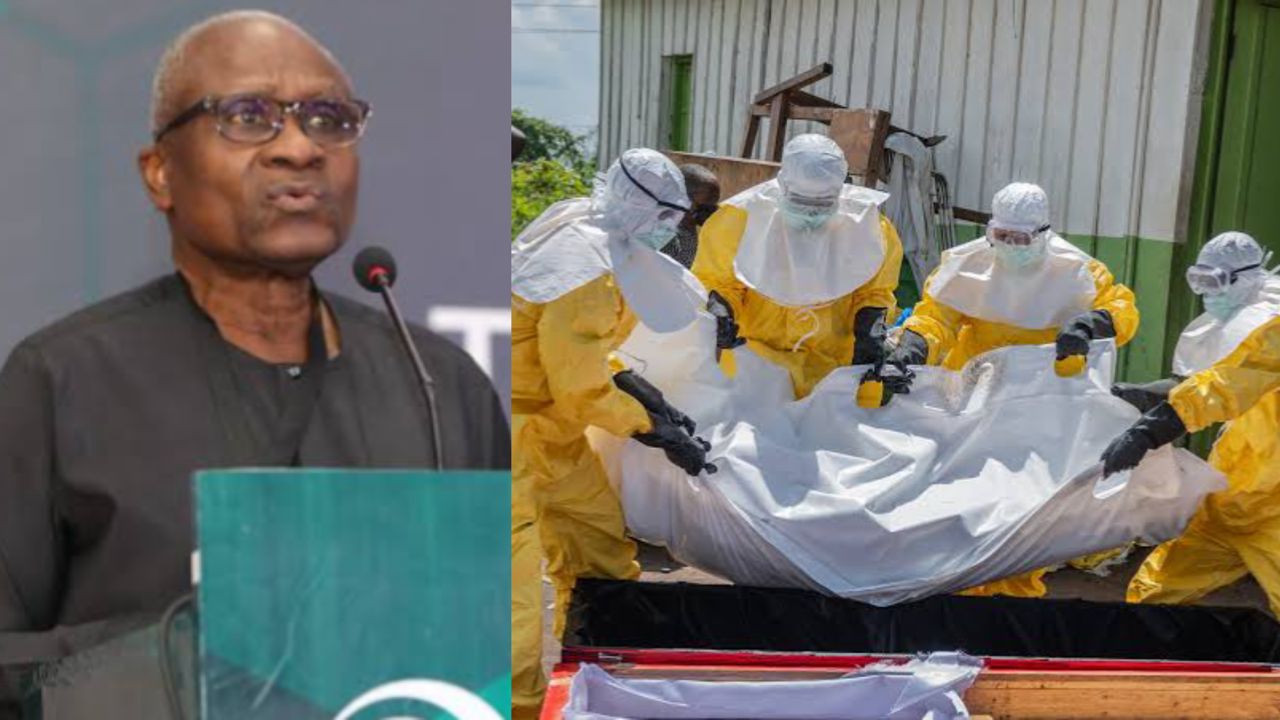
NCDC Places Lagos, Abuja, Rivers, Kano, Others on High Ebola Alert
By OZIOMA IWUH · 29/05/2026 12:32 PM · 3 min read
The Nigeria Centre for Disease Control and Prevention (NCDC) has placed several states, including Lagos, the Federal Capital Territory, Rivers and Kano, on high Ebola preparedness alert following growing concerns over regional outbreaks in parts of Africa.
The agency said Nigeria currently has no confirmed case of Ebola Virus Disease linked to the ongoing outbreak, but warned that increasing infections in the Democratic Republic of Congo and Uganda have significantly raised the country’s risk of disease importation.
In a statement issued on Thursday, the Director-General of the NCDC, Dr. Jide Idris, disclosed that the agency had conducted a fresh dynamic risk assessment which classified Nigeria’s overall risk level as high because of extensive international travel, cross-border movements and regional trade activities.
According to him, the World Health Organisation’s declaration of Ebola as a Public Health Emergency of International Concern underscores the seriousness of the threat and the urgent need for intensified preparedness measures across Nigeria.
Dr. Idris explained that Ebola symptoms closely resemble other endemic diseases common in Nigeria, including malaria and Lassa fever, increasing the possibility of delayed diagnosis and wider transmission if preventive systems are not strengthened.
The NCDC categorised Lagos, the FCT, Rivers, Kano, Enugu, Borno, Akwa Ibom, Cross River, Taraba and Adamawa as high-risk states because of the presence of international airports, porous land borders and active migration or commercial routes.
The agency also listed Ogun, Nasarawa, Kaduna, Plateau, Kogi, Niger, Jigawa, Katsina, Bauchi, Ebonyi, Abia and Bayelsa among moderate-risk states requiring sustained surveillance and preparedness activities.
Dr. Idris stated that all states and the FCT must maintain Ebola readiness while tailoring response strategies to their individual risk levels under the NCDC’s preparedness classification framework.
He noted that preparedness efforts are aimed at ensuring rapid detection, isolation and management of suspected Ebola cases while protecting healthcare workers and maintaining essential medical services.
According to the NCDC boss, health authorities in DR Congo and Uganda have already recorded 1,077 suspected Ebola cases and 247 deaths, with people between the ages of 14 and 45 most affected.
He said the outbreak currently has a case fatality rate of 24.6 per cent.
The agency further warned that no approved vaccines or specific targeted treatments currently exist for the Bundibugyo strain of the Ebola virus responsible for the latest outbreak.
Dr. Idris stressed that existing Ebola vaccines and monoclonal antibody treatments were primarily designed for the Zaire ebolavirus strain and may not provide reliable protection against the current variant.
He explained that outbreak containment would depend heavily on early detection, rapid isolation of suspected cases, strict infection prevention protocols, aggressive contact tracing, safe burials and strong community engagement.
The NCDC also disclosed that suspected Ebola cases had been reported in India, while Canada recently suspended travel applications from residents of the Democratic Republic of Congo, Uganda and South Sudan due to the outbreak situation.
Uganda, according to the agency, has also introduced border closure measures to limit the spread of infections.
Dr. Idris revealed that the NCDC had activated its national Emergency Operations Centre in alert mode and was already coordinating preparedness activities with federal and state institutions across the country.
He urged state governments and commissioners for health to immediately strengthen public health coordination systems, conduct rapid risk assessments and ensure both public and private health facilities are prepared to identify and manage suspected Ebola cases effectively.
The NCDC also advised healthcare providers to maintain high suspicion levels, ensure safe separation of suspected patients, promptly report unusual cases through approved channels and identify functional isolation facilities capable of handling emergency outbreaks.
Written by
Ozioma Iwuh
SkyHigh NewsHub correspondent.