
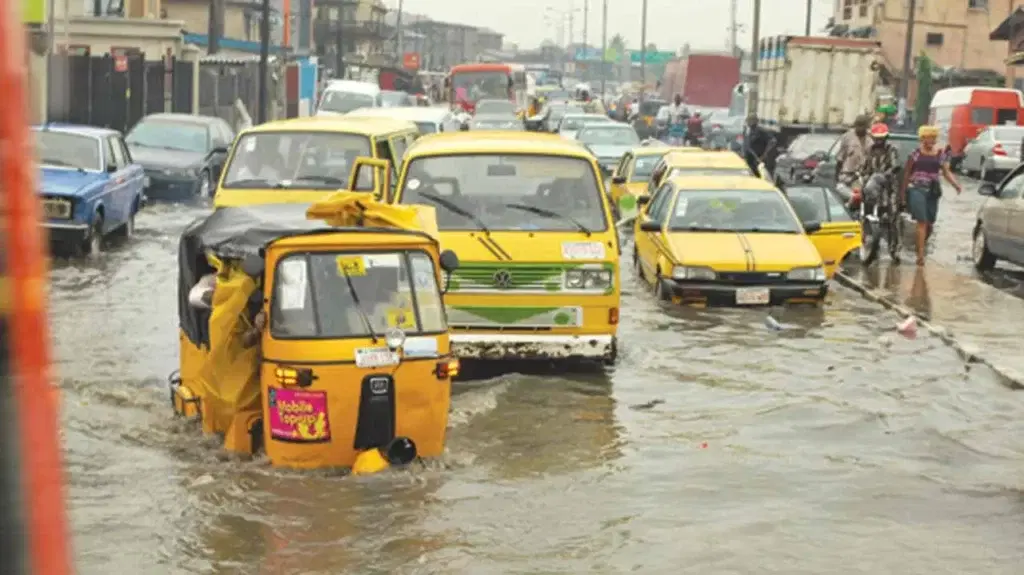
Lagos Warns Residents Against Dumping Refuse, Says Flash Flooding Is Unavoidable
By SKYHIGHNEWSHUB · 01/07/2026 1:23 PM · 3 min read
The Lagos State Government has urged residents to stop dumping refuse on roads and into drainage channels, warning that such practices worsen flash flooding in a city already vulnerable because of its coastal geography.
The Commissioner for the Environment and Water Resources, Tokunbo Wahab, said on Wednesday that while flash floods cannot be completely prevented in Lagos, the government is committed to minimising their impact through sustained investment in drainage infrastructure, flood control projects and environmental management.
Speaking on Channels Television's The Morning Brief, Wahab explained that Lagos unique geographical location makes temporary flooding during periods of heavy rainfall inevitable.
"Must we always get flooded? I will tell you no. But can we realistically, as a coastal state, avoid flash flooding? I will tell you no.
"So, what do we do? There must be a balance. We must mitigate the impact of our realities," he said.
The commissioner stressed that residents have a crucial role to play in reducing flood risks by disposing of waste responsibly.
According to him, refuse dumped indiscriminately on roads and into drainage channels is often washed into drains during rainfall, blocking waterways and preventing the free flow of stormwater, thereby worsening flooding in many parts of the state.
Wahab said Lagos must confront the environmental realities associated with being a coastal city instead of ignoring them.
"People tried to run away from the elephant in the room. And what is the elephant? The elephant in the room is: Lagos is a coastal state, and we're exposed to the vagaries of climate change; we can't run away from it," he said.
He explained that some parts of the state are located below sea level, making them particularly susceptible to flash flooding whenever heavy rainfall coincides with high tides.
According to him, rising sea levels caused by climate change often create what experts describe as tidal lock, preventing stormwater from flowing into the sea and causing temporary flooding.
"Some parts of Lagos are below sea level, and once there's climate change, there's excessive rain. There's excessive heat, and there's tidal lock because there's a sea level rise.
"Once the sea level is up, your stormwater naturally will not discharge. It will hold back for maybe one or two hours. And that's why we say to Lagosians: please, don't panic. This water will recede within one or two hours," Wahab said.
He added that the state government has continued to invest in resilient drainage infrastructure across Lagos to strengthen flood management and improve the city's ability to cope with extreme weather events.
"On our part, we've provided resilient infrastructure statewide, and we're still providing the same," he stated.
The commissioner reiterated that while flash flooding remains a reality in a coastal city like Lagos, sustained government investment and responsible environmental practices by residents are essential to reducing its impact.
His comments come after widespread flash flooding affected several parts of Lagos over the past two weeks following heavy rainfall.
In response, Governor Babajide Sanwo-Olu approved the immediate dredging and maintenance of 28 additional primary drainage channels as part of ongoing efforts to improve flood control and minimise the impact of future downpours across the state.
Channels
Written by
SkyhighNewshub
SkyHigh NewsHub correspondent.