
Lagos Dismisses Reports of Highest HIV Infections, Explains 10,430 Figure
By OUR REPORTER · 02/07/2026 7:50 PM · 3 min read
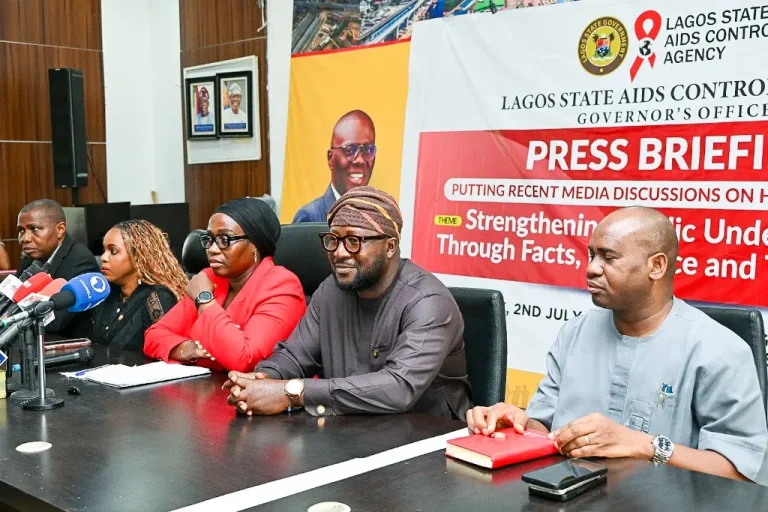
The Lagos State Government has dismissed viral reports claiming the state recorded more than 10,000 new HIV infections, clarifying that the widely circulated figure refers to newly diagnosed HIV-positive cases, not people who contracted the virus during the reporting period.
The clarification was made by the Chief Executive Officer of the Lagos State AIDS Control Agency (LSACA), Dr. Folakemi Animashaun, during a media briefing at the Bagauda Kaltho Press Centre in Lagos.
According to Animashaun, the figure of 10,430, which has been widely reported, represents individuals who tested positive for HIV during the reporting period, many of whom may have been infected years earlier but were only recently diagnosed.
"The number widely reported refers to newly diagnosed HIV-positive cases, not necessarily new infections that occurred within the year," she said.
"These are two very different public health indicators."
She explained that Lagos, Nigeria's most populous state and a major healthcare referral centre, naturally records higher testing volumes and receives patients from across the country, resulting in higher numbers of HIV diagnoses than many other states.
"Stronger surveillance systems and wider access to healthcare services invariably result in higher case detection and should not be misconstrued as evidence of worsening epidemic control," she added.
To illustrate the state's progress, Animashaun disclosed that Lagos conducted 504,800 HIV tests in 2025, identifying 11,940 HIV-positive cases, representing a positivity rate of 2.4 per cent.
She said the trend has continued to improve in 2026, with 179,229 HIV tests conducted in the first quarter alone, resulting in 3,390 positive diagnoses and a lower positivity rate of 1.9 per cent.
"The declining positivity rate despite expanded testing is a significant epidemiological indicator that reflects improving epidemic control," she said.
Animashaun also revealed that 147,904 people are currently receiving antiretroviral therapy in Lagos, with 97 per cent achieving viral suppression, describing the outcome as one of the strongest HIV treatment performances in Nigeria.
She said the state has also recorded notable progress in preventing mother-to-child transmission of HIV, with the positivity rate among infants undergoing Early Infant Diagnosis falling from 5.1 per cent in 2020 to 1.5 per cent in 2025.
As part of efforts to strengthen long-term sustainability, Animashaun announced that Lagos has commenced direct procurement of antiretroviral medicines, making it the first state government in Nigeria to independently fund the purchase of HIV treatment drugs.
She said the first batch of state-funded antiretroviral medicines is expected to arrive before the end of August 2026.
According to her, the initiative is aimed at reducing dependence on donor-funded programmes and ensuring uninterrupted access to treatment amid changing global health financing.
Animashaun added that Lagos is also exploring local production of HIV commodities in collaboration with the Joint United Nations Programme on HIV/AIDS (UNAIDS), while drawing lessons from Kenya to strengthen the state's supply chain.
She urged residents not to panic over the reports but to continue accessing HIV testing, prevention and treatment services.
"There is no cause for panic. Know your HIV status, rely on verified public health information, and reject every form of stigma and discrimination," she said.
She stressed that HIV remains both preventable and manageable, noting that early diagnosis and sustained treatment enable people living with the virus to lead healthy and productive lives.
"Lagos is not defined by the number of people it tests. Lagos is defined by the strength of its response," Animashaun said.
Written by
Our Reporter
SkyHigh NewsHub correspondent.