
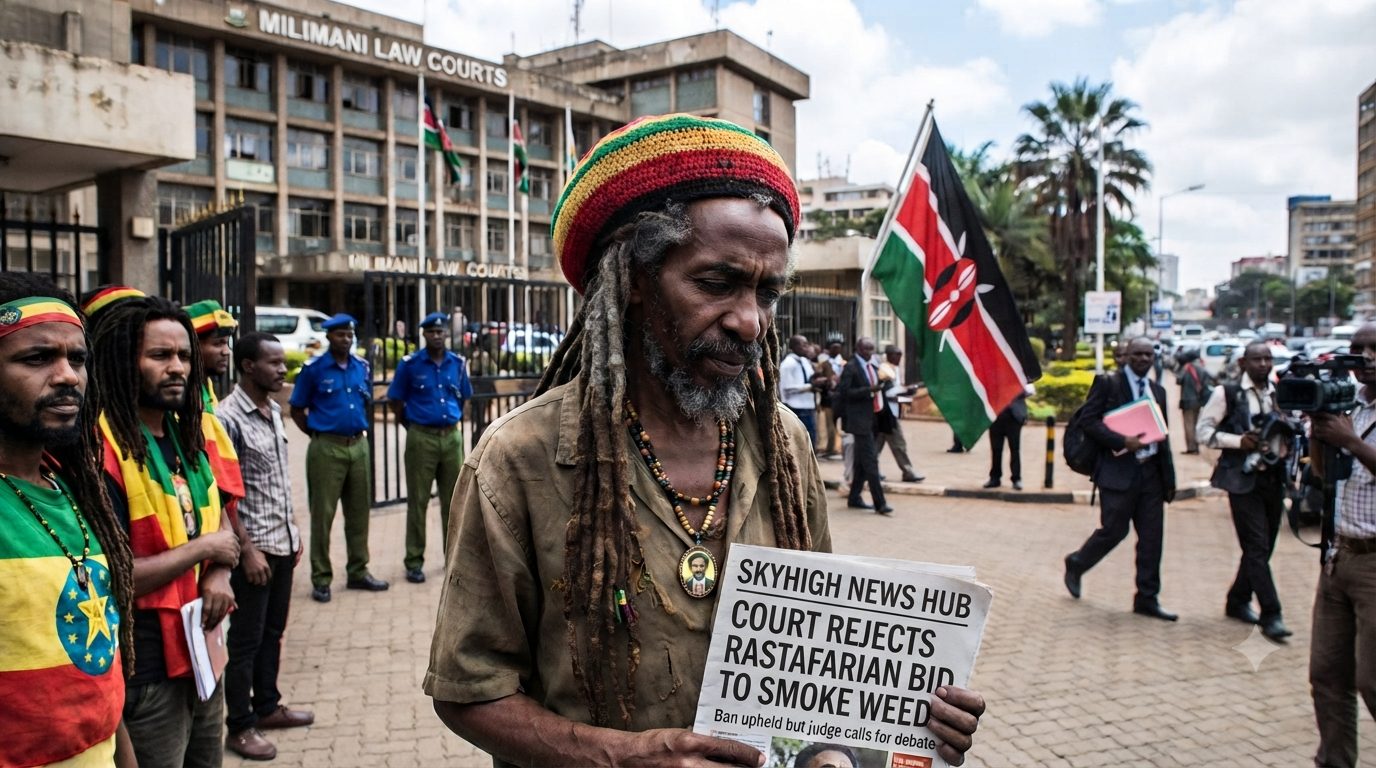
Kenyan Court Rejects Rastafarians Bid To Smoke Marijuana For Religious Worship
By OUR REPORTER · 15/07/2026 10:50 AM · 2 min read
A Kenyan High Court has dismissed a petition seeking legal permission for members of the Rastafarian community to use marijuana as part of their religious worship, ruling that the country's anti-drug laws do not violate their constitutional right to freedom of religion.
The decision ends a long-running legal challenge in which Rastafarians argued that cannabis forms an essential part of their spiritual practices and meditation.
In its judgment delivered on Wednesday, the court held that the petitioners failed to demonstrate that Kenya's existing narcotics laws unlawfully restricted their religious freedoms.
The judge consequently dismissed the case in its entirety, leaving in place the country's strict prohibition on the possession and use of marijuana.
Although the court upheld the law, it also questioned whether Kenya's current approach to cannabis regulation remains sustainable.
The judge noted that widespread recreational use of marijuana across the country suggested that existing legislation may no longer reflect present-day realities.
"The status quo appears untenable," the judge observed, adding that Kenya should begin "frank conversations on cannabis and which direction we should take."
Under Kenya's Narcotic Drugs and Psychotropic Substances Control Act of 1994, possession of cannabis is punishable by up to 10 years' imprisonment as well as substantial financial penalties.
Members of the Rastafarian community have long argued that the legislation is frequently used by law enforcement authorities to harass followers of the religion because of their ceremonial use of marijuana.
Rastafarianism regards cannabis as a sacred herb used during worship, meditation and spiritual reflection.
The movement, which originated in Jamaica during the 1930s, places strong emphasis on Pan-African identity, spirituality, natural living and vegetarianism.
In Kenya, the faith has historical significance because many followers wear dreadlocks—a hairstyle also associated with members of the Mau Mau movement that fought British colonial rule during Kenya's struggle for independence in the 1950s and 1960s.
Kenyan courts have previously recognised certain aspects of Rastafarian religious practice.
In 2019, a court ruled that a school violated the constitutional rights of a Rastafarian student after expelling her because she wore dreadlocks, finding that the action amounted to religious discrimination.
Although there are no official figures on the size of Kenya's Rastafarian population, observers say the movement has continued to grow, particularly among younger Kenyans.
The ruling is expected to reignite debate over cannabis policy in Kenya, where calls for reform have increased in recent years despite the country's tough anti-drug laws.
The case also highlights the continuing tension between public drug control policies and constitutional protections for religious freedom, an issue courts in several countries have increasingly been asked to address.
Written by
Our Reporter
SkyHigh NewsHub correspondent.