
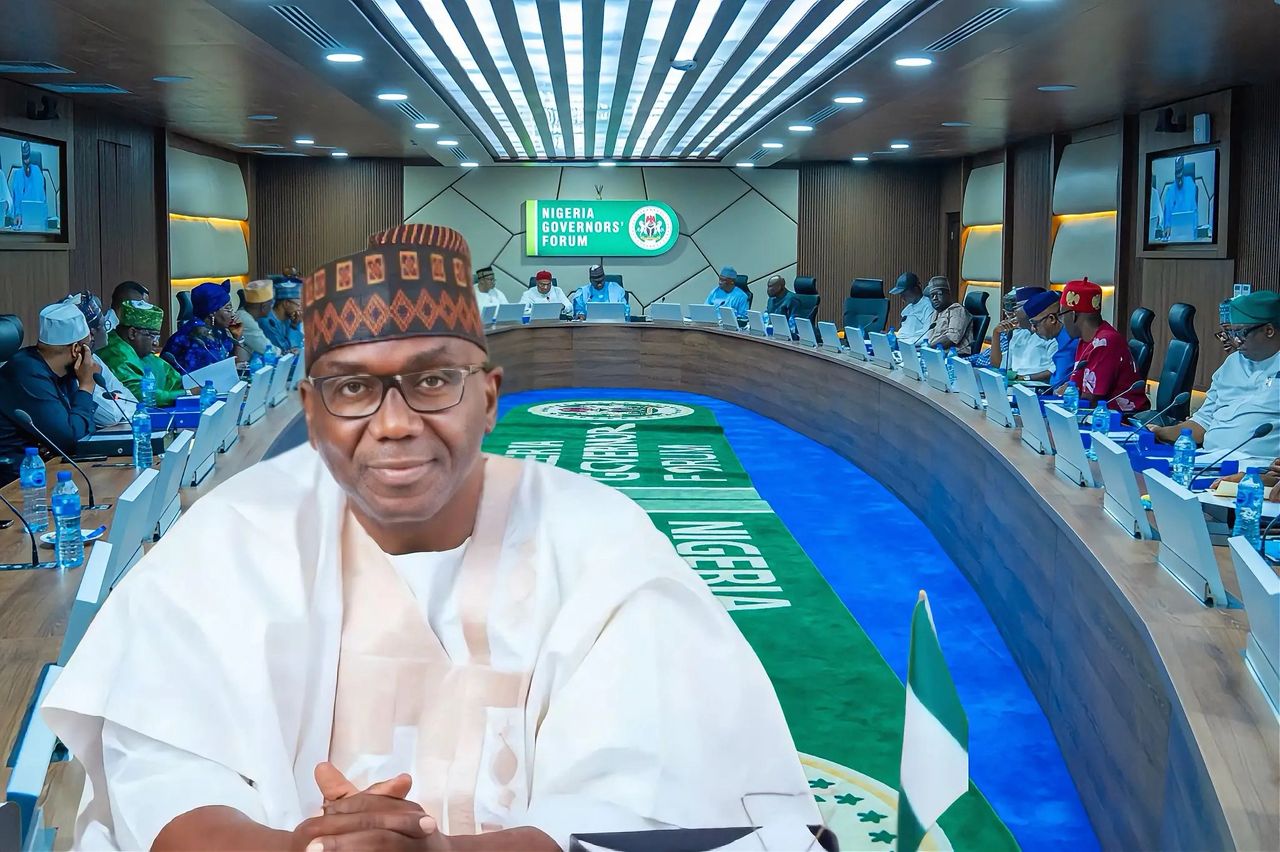
Governors Renew Push for State Police, Back Constitutional Amendments to Tackle Insecurity
By OZIOMA IWUH · 19/06/2026 7:39 AM · 5 min read
Nigeria’s 36 state governors have renewed their support for the establishment of state police, insisting that any new policing structure must be firmly rooted in the Constitution, respect federal principles and safeguard the rights of citizens.
The governors, under the umbrella of the Nigeria Governors Forum (NGF), also pledged continued collaboration with relevant stakeholders as consultations intensify on proposed constitutional amendments aimed at creating state police across the country.
The position was reached at the forum’s second meeting held in Abuja, where governors deliberated on a range of national issues, including security, power sector reforms, nutrition and agricultural development.
In a communique issued after the meeting, NGF Chairman and Governor of Kwara State, AbdulRahman AbdulRazaq, said governors received presentations from the NGF Secretariat and a delegation of state attorneys-general on ongoing efforts to support the establishment of state police.
According to him, the governors reviewed emerging legal frameworks and constitutional proposals designed to guide the implementation of state policing.
“The Forum received a presentation from the NGF Secretariat and a delegation of the Attorneys-General of the states on efforts to support establishing State Police in Nigeria,” the communique stated.
“It noted a dedicated consultation with the Attorneys-General to review the proposed constitutional amendments and frameworks.
“Governors emphasised the need for the State Police to be constitutionally sound and aligned with federalism and citizens rights. The Forum noted the collaborative effort and added that the consultation outcomes would strengthen the states collective position.”
The renewed push comes amid worsening security concerns across several parts of the country, including terrorism, banditry, kidnapping and communal violence. The latest development follows significant progress in the National Assembly, where lawmakers recently advanced constitutional amendment proposals seeking to decentralise policing.
On June 11, the House of Representatives overwhelmingly approved a bill seeking to establish state police, with 289 of the 290 lawmakers present voting in support of the proposal. The legislation also passed second reading in the Senate on the same day, marking one of the most substantial steps toward restructuring Nigeria’s policing architecture in recent years.
The governors had earlier, in April, endorsed the proactive development of a state police framework by the NGF Secretariat in preparation for the constitutional amendment process.
According to the forum, the framework outlines critical requirements for implementation, including governance structures, financing arrangements, personnel standards, digital systems and oversight mechanisms.
Proposed Constitutional Framework
The proposed amendments seek to formally establish two separate policing institutions in Nigeria the Federal Police and State Police.
Under the proposal, state police organisations would only become operational after the enactment of enabling laws by state Houses of Assembly and certification that they meet national minimum standards prescribed by the National Assembly.
The framework also seeks to clearly define the responsibilities of both federal and state policing institutions. While state police would handle internal security matters within their jurisdictions, the Federal Police would retain responsibility for national security functions and crimes falling under federal authority.
The proposal contains safeguards aimed at preventing undue federal interference in state policing operations.
Under the draft provisions, the Federal Police would only be permitted to intervene in state policing matters under specific circumstances, including a complete breakdown of law and order, a formal request by a governor or situations where a state police organisation becomes unable to function effectively. Any such intervention would require prior approval from the National Police Council.
The proposed amendments also establish new oversight structures, including a reconstituted National Police Council and separate State Police Service Commissions responsible for appointments, discipline and operational standards. Governors and commissioners of police would have clearly defined roles, while mechanisms are included to prevent arbitrary removal of senior officers.
The proposal further allows the Federal Government to provide grants and financial support to state police organisations, subject to recommendations by the National Police Council and approval by the National Assembly.
Governors Reaffirm Commitment to Power Sector Reforms
Beyond security, the governors reiterated their commitment to ongoing electricity sector reforms aimed at improving access to reliable and affordable power across the country.
The forum received a presentation on the proposed National Solar Super-Grid (NSSG) Initiative, a large-scale programme designed to expand electricity access through decentralised solar power generation connected to a national high-voltage transmission network.
Governors said the initiative has the potential to support industrial growth, improve energy security, strengthen state electricity markets and accelerate economic development.
“The Forum noted the initiative’s potential to support industrialisation, improve energy security, strengthen state electricity markets and accelerate economic growth,” the communique stated.
The governors pledged continued collaboration with stakeholders to ensure reforms in the electricity sector translate into improved service delivery for Nigerians.
Support for National Nutrition Programme
The NGF also reaffirmed support for the National Nutrition 774 (N-774) Initiative, a federal programme aimed at improving nutrition outcomes and reducing child malnutrition nationwide.
Governors received a briefing from the Federal Ministry of Budget and Economic Planning on progress made under the initiative and pledged continued support for policies targeted at improving child welfare.
The forum also welcomed ongoing work on the proposed National Nutrition Bill and called for broader stakeholder engagement to strengthen Nigeria’s nutrition governance framework.
In addition, governors received presentations from the World Bank on the proposed Country Partnership Framework (CPF) 2026–2032, the Nigeria Sustainable Agricultural Value-Chains for Growth (AGROW) Programme and initiatives focused on early childhood development.
The governors expressed support for continued collaboration with the Federal Government, development partners and other stakeholders to ensure successful implementation of programmes designed to improve agricultural productivity, strengthen food security and promote economic growth.
They also approved state-specific interventions and emphasised the need for stronger coordination across critical sectors including health, education, nutrition, water and sanitation, social protection and family support services.
The resolutions underscore the governors growing focus on security reform, economic development and social welfare as Nigeria prepares for broader constitutional debates and policy reforms ahead of the 2027 general elections.
Written by
Ozioma Iwuh
SkyHigh NewsHub correspondent.