
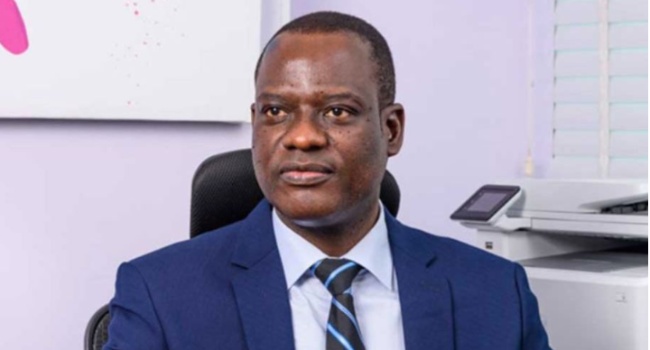
FG Targets Domestic Capital to Drive Economic Growth, Finance Minister Oyedele Says
By BLESSING ISAAC · 25/07/2026 7:39 PM · 3 min read
The Federal Government has intensified efforts to mobilise domestic capital to finance Nigeria's long-term development, with the Minister of Finance and Coordinating Minister of the Economy, Mr. Taiwo Oyedele, declaring that sustainable economic transformation will depend largely on unlocking the country's internal financial resources rather than relying excessively on external funding.
Speaking at the 6th Annual General Assembly of the Association of Nigerian Development Finance Institutions (ANDFI) in Abuja, Oyedele said Nigeria possesses substantial domestic savings, institutional assets and private capital that can be harnessed to support infrastructure, industrialisation, agriculture, housing, innovation and other priority sectors.
The conference, themed "Unlocking Domestic Capital for Development Financing," brought together development finance institutions, policymakers and financial sector stakeholders to discuss strategies for strengthening Nigeria's development financing architecture amid increasingly difficult global funding conditions.
According to the minister, while foreign investment remains important, lasting economic development must be anchored on a strong domestic financial system capable of mobilising local resources into productive investments.
"Our focus is to build an economy where confidence leads capital. By strengthening macroeconomic stability, deepening our financial markets and empowering development finance institutions to catalyse private investment, we are unlocking Nigeria's enormous domestic potential to finance inclusive and sustainable growth," Oyedele said.
The minister argued that domestic capital should not be viewed as an alternative to foreign investment but as the foundation upon which sustainable international investment is built.
He explained that investors are naturally attracted to economies characterised by credible institutions, predictable policies and stable macroeconomic conditions.
According to him, the Federal Government's ongoing economic reforms under the Renewed Hope Agenda are aimed at creating those conditions by restoring fiscal discipline, strengthening public finances and improving macroeconomic management.
Oyedele said those reforms are already beginning to deliver measurable results, including improved investor confidence, stronger external reserves, better government revenue performance and renewed international confidence in Nigeria's economy.
To deepen domestic financing, the minister outlined five strategic priorities that will guide government policy.
These include expanding investment opportunities available to Nigerian households, increasing institutional investment through pension and insurance assets, strengthening credit enhancement mechanisms, broadening local currency financing through Nigeria's capital market and building stronger development finance institutions capable of mobilising substantially larger volumes of private investment.
He noted that achieving these objectives would require stronger collaboration between government, financial institutions, regulators and private investors.
Oyedele said development finance institutions must move beyond their traditional lending roles to become strategic catalysts for investment and economic transformation.
Rather than simply providing loans, he said such institutions should focus on structuring bankable projects, reducing investment risks, supporting policy reforms and creating financing ecosystems capable of attracting significant private sector participation.
He stressed that stronger development finance institutions would play a critical role in closing Nigeria's infrastructure financing gap while accelerating industrial development and enterprise growth.
The minister reaffirmed the Federal Government's commitment to working closely with development finance institutions, financial regulators, investors and development partners to strengthen Nigeria's financing ecosystem.
He said improved access to long-term capital would support enterprise expansion, create quality jobs, accelerate industrialisation and promote inclusive economic growth across the country.
"Our objective is to build a financing ecosystem that supports enterprise growth, creates quality jobs, accelerates industrialisation and delivers inclusive prosperity for all Nigerians," he said.
Nigeria continues to face significant financing requirements to bridge infrastructure deficits and stimulate private sector growth. Although foreign direct investment remains an important source of capital, policymakers have increasingly emphasised the need to mobilise domestic resources, including pension funds, insurance assets, capital market investments and private savings to finance long-term development.
Written by