
FG Seeks Bigger Private Capital, Development Finance to Deliver $1 Trillion Economy
By OUR REPORTER · 02/07/2026 4:51 PM · 2 min read
The Federal Government has intensified its push towards building a $1 trillion economy, declaring that public funding alone cannot finance Nigeria's long-term development ambitions and calling for stronger partnerships with development finance institutions and private investors.
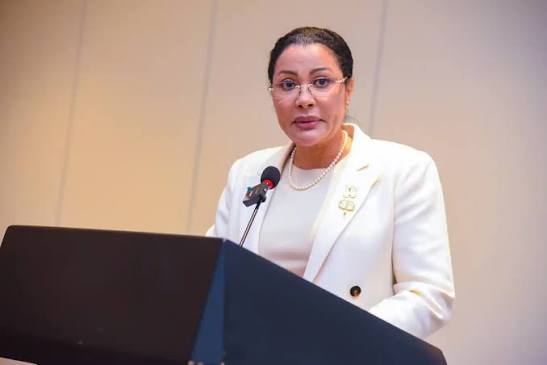
The Minister of State for Budget and Economic Planning, Dr. Doris Uzoka-Anite, made the call on Thursday at the Bank of Industry (BOI) Development Partners Roundtable and the presentation of the bank's 2025 Annual Development Impact Report (ADIR) in Abuja.
She said Nigeria must reposition its development finance institutions to attract greater domestic and international investment into productive sectors of the economy, noting that sustained economic growth depends on mobilising private capital alongside public resources.
According to Uzoka-Anite, the Federal Government's ongoing economic reforms are designed to create an investment-friendly environment that supports enterprise development, expands industrial production and creates jobs.
She stressed that achieving Nigeria's target of becoming a $1 trillion economy would require stronger institutions, improved project preparation, sustained investment and closer collaboration between government, development partners and the private sector.
"The aspirations of the Renewed Hope Agenda, the National Development Plan, and Nigeria Agenda 2050 cannot be financed through annual budgets alone," she said.
The minister explained that the government is building a coordinated financing ecosystem that combines public finance, domestic and international capital, development finance institutions, commercial financing, climate finance and other innovative funding mechanisms to unlock investment opportunities across critical sectors.
She urged development partners to align their financing with Nigeria's pipeline of bankable projects, saying every public investment should be structured to attract additional private capital and accelerate economic growth.
Also speaking, the Minister of State for Industry, Trade and Investment, Senator John Enoh, described the Bank of Industry as a strategic institution driving the implementation of Nigeria's industrial policy through financing for manufacturers, Micro, Small and Medium Enterprises (MSMEs), youth-led businesses and other productive sectors.
Enoh disclosed that the recently launched Nigerian Industrial Policy is already being implemented through a performance-driven framework, with the first 90-day implementation report showing progress in industrial cluster development, MSME support, skills acquisition and export competitiveness.
"Development finance must ultimately be measured by the results, by the jobs it creates, by the industries it builds, and the lives it improves," the minister said.
Managing Director and Chief Executive Officer of the Bank of Industry, Dr. Olasupo Olusi, said the institution has shifted from measuring success by the volume of loans disbursed to assessing the real development impact of its interventions.
According to him, the 2025 Annual Development Impact Report reflects the bank's commitment to accountability, transparency and evaluating how its financing has improved businesses, communities and the broader Nigerian economy.
Olusi reaffirmed BOI's commitment to strengthening strategic partnerships and aligning its financing activities with Nigeria's national development priorities to promote industrialisation, inclusive economic growth and shared prosperity.
Written by
Our Reporter
SkyHigh NewsHub correspondent.