
FG Rejects Claims of ₦8tn Off-Budget Spending, Says IMF Report Misrepresented
By OZIOMA IWUH · 05/07/2026 1:59 PM · 3 min read
The Federal Government has dismissed reports alleging that it spent more than ₦8 trillion outside the approved national budget, insisting that the claims are a misrepresentation of the International Monetary Fund’s (IMF) 2026 Article IV Consultation Report and a misunderstanding of Nigeria’s public finance structure.
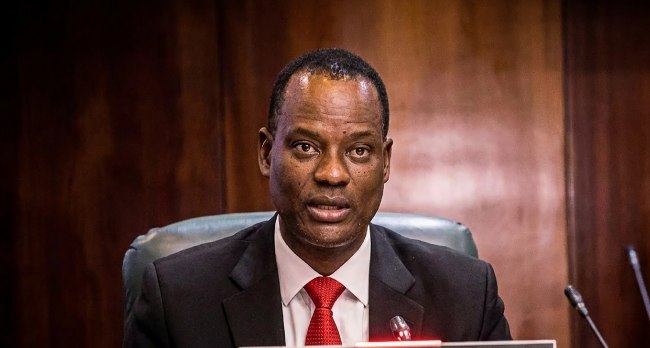
In a statement issued on Sunday, the Minister of Finance and Coordinating Minister of the Economy, Mr. Taiwo Oyedele, said at no point does the Federal Government operate outside constitutional provisions or engage in what he described as a “shadow budget.”
He stressed that all government expenditure is conducted strictly within the framework of the Constitution and laws passed by the National Assembly, particularly referencing Sections 80 to 83 and 162 of the 1999 Constitution (as amended), which govern public finance management in Nigeria.
According to him, public funds can only be withdrawn and spent through duly enacted Appropriation Acts, Supplementary Appropriation Acts and other statutory approvals issued by the legislature.
“The Federal Government does not operate a shadow budget or expend public funds outside the constitutional and statutory framework established for public finance,” Oyedele said.
The minister explained that the country’s spending structure also includes multi-year capital projects that span several budget cycles, which are implemented under approved legal provisions and capital rollover arrangements. He warned that such projects should not be wrongly interpreted as expenditure outside the budget.
He further argued that claims suggesting that trillions of naira were spent without legislative approval were inaccurate, adding that no credible evidence had been provided to support allegations of unlawful expenditure or unapproved projects.
Oyedele also clarified that Nigeria’s fiscal framework includes statutory transfers, first-line charges, and intervention mechanisms established by law, all of which are captured within the country’s financial architecture and subjected to oversight.
These, he said, include allocations to development commissions and agencies, cost of revenue collection by designated agencies, capital expenditure for certain federal agencies and the Federal Capital Territory, as well as special interventions for security, infrastructure, disaster response, and debt servicing obligations.
According to him, these categories of spending are legal, publicly documented in fiscal reports, and regularly audited, stressing that differences in how they are presented under international reporting standards should not be mistaken for irregular spending.
The minister also rejected suggestions that the IMF’s observation implied an expansion of Nigeria’s fiscal deficit, explaining that deficit calculations depend on the relationship between total revenue and total expenditure, not the financing structure of approved spending.
He said the IMF’s assessment focused more on the presentation, timing and comprehensiveness of Nigeria’s fiscal reporting rather than any illegality in government expenditure.
Oyedele noted that the administration was already implementing reforms aimed at improving budget transparency and aligning Nigeria’s fiscal reporting framework with global standards.
He recalled that President Bola Tinubu, during the presentation of the 2026 Appropriation Bill to the National Assembly in December 2025, had called for the harmonisation of multiple and overlapping budgets into a single consolidated framework to improve fiscal clarity.
Reaffirming the government’s commitment to transparency, accountability, and prudent fiscal management, the minister said ongoing reforms had strengthened revenue administration, treasury operations and the digitalisation of government financial processes.
He added that these reforms had received recognition from international financial institutions, credit rating agencies, investors and global financial observers.
While welcoming public scrutiny of government finances, Oyedele urged commentators to rely on verified facts and a proper understanding of Nigeria’s constitutional and fiscal systems, warning against misinterpretations that could distort public perception.
“Mischaracterising technical observations as evidence of unlawful expenditure neither advances informed public discourse nor strengthens democratic accountability,” he said.
Written by
Ozioma Iwuh
SkyHigh NewsHub correspondent.