
FG Fixes December 2028 Deadline To End Analogue TV Broadcasting
By OUR REPORTER · 15/07/2026 10:22 AM · 3 min read
The Federal Government has fixed December 2028 as the deadline for Nigeria's complete transition from analogue television broadcasting to digital broadcasting, marking the final phase of the country's long-awaited Digital Switch Over (DSO) programme.
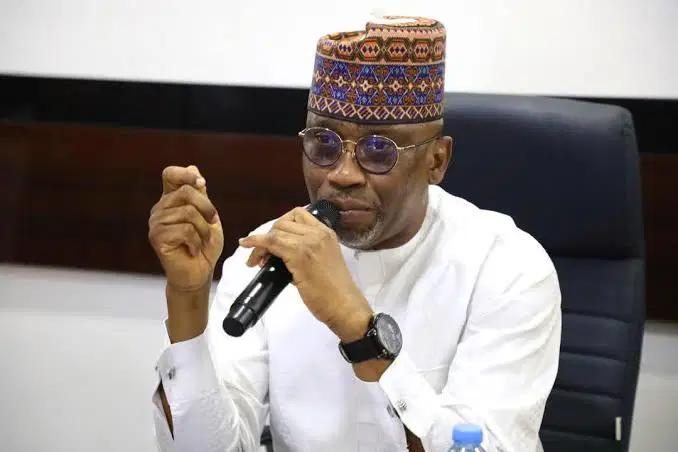
Director-General of the National Broadcasting Commission (NBC), Charles Ebuebu, disclosed the timeline during an interview with the News Agency of Nigeria (NAN) in Abuja.
According to him, the December 2028 target represents the country's final analogue switch-off, with several stages of implementation scheduled before then to ensure a smooth nationwide migration.
"We put a timeline for analogue switch-off. Before that time, a lot of things will be put in place. This is just phase one," Ebuebu said.
He explained that the transition would be implemented in phases, extending beyond free-to-air television broadcasting.
According to the NBC boss, subsequent phases will focus on pay television services, the development of broadcast studios and the establishment of designated production centres to support Nigeria's growing creative industry.
Ebuebu also disclosed that the commission is making progress with its audience measurement project, describing it as a critical component of the country's digital broadcasting ecosystem.
He said a proof-of-concept exercise had already been completed in about 7,000 households in Lagos, while implementation has commenced in Abuja.
The NBC plans to unveil details of the remaining phases after wider consultations with industry stakeholders, including the Broadcasting Organisation of Nigeria (BON), to ensure broad support for the implementation process.
Ebuebu said one of the major benefits of completing the digital transition is the release of radio frequency spectrum currently occupied by analogue television signals.
He described the spectrum as a strategic national asset that can be reassigned to other sectors of the economy, including telecommunications, digital applications and financial technology services.
According to him, consultants will conduct an independent valuation before the spectrum is allocated.
"I won't put a sum to it, but it is valued at upwards of about 50 billion dollars. Consultants will determine its actual value before allocation," he said.
Industry experts have long argued that digital broadcasting uses spectrum more efficiently than analogue transmission, allowing governments to redeploy the freed frequencies to support broadband expansion and other digital services.
On the fate of analogue broadcasting equipment that will become obsolete after the switch-off, the NBC Director-General said the commission is developing a policy based on expert recommendations and international best practices.
He explained that equipment capable of further use would be repurposed, while obsolete infrastructure that cannot be recycled would be transferred to the government for proper disposal to prevent environmental hazards associated with industrial waste.
Ebuebu also reiterated that Nigeria's Digital Switch Over policy requires broadcasters to concentrate on content production, while signal transmission will be handled by licensed signal distributors, including the Nigerian Communications Satellite (NIGCOMSAT).
He said the separation of broadcasting and transmission functions is designed to improve efficiency, reduce operational costs and strengthen the country's digital broadcasting ecosystem.
The Digital Switch Over programme is expected to modernise Nigeria's television industry, improve picture and sound quality for viewers, expand opportunities for content creators and unlock new economic value through the commercial use of the digital spectrum.
NAN
Written by
Our Reporter
SkyHigh NewsHub correspondent.