
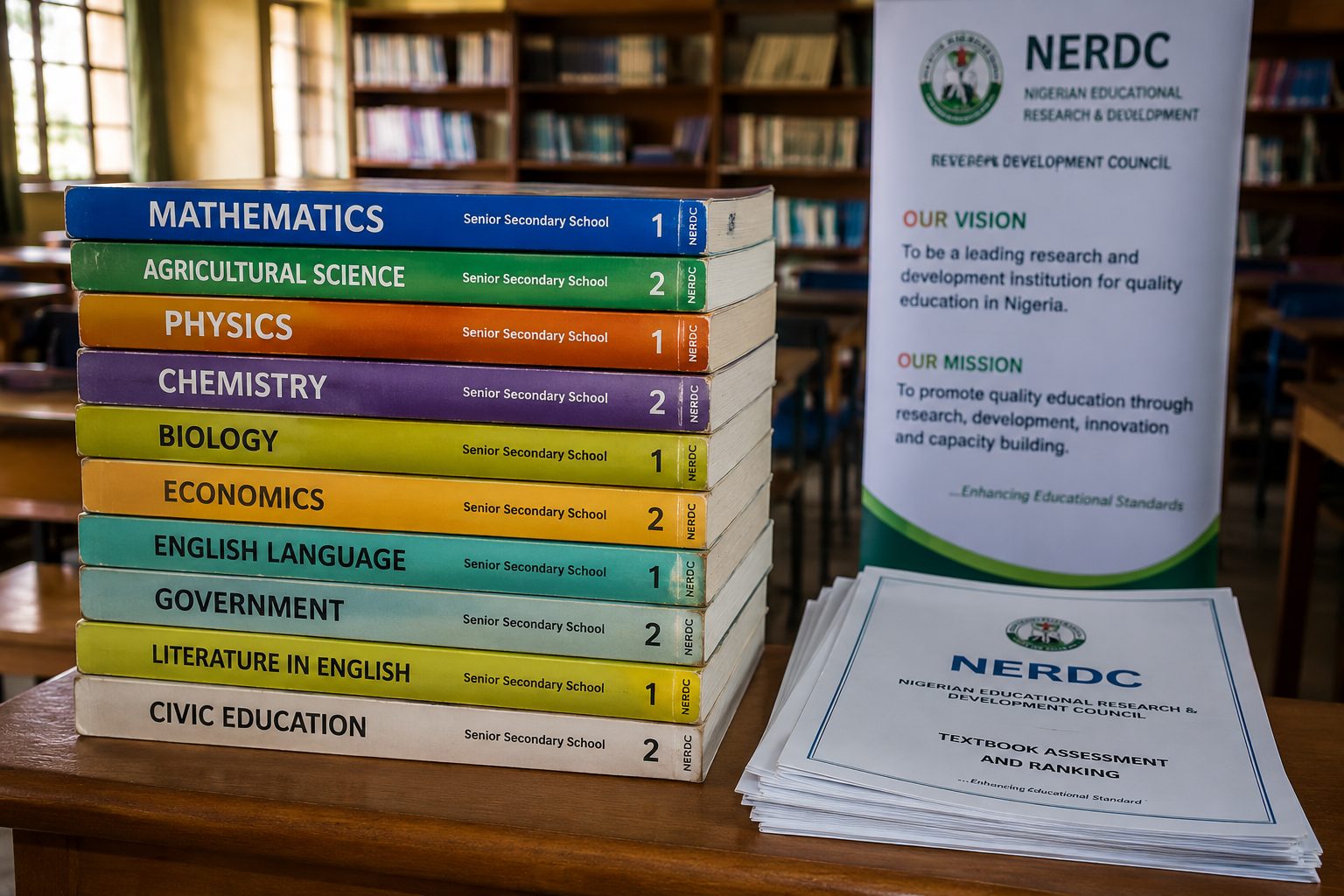
FG Cuts Textbook Assessment, Ranking Fees Ahead of September Policy
By OUR REPORTER · 22/07/2026 11:05 AM · 3 min read
The Federal Government has reduced the fees charged for the assessment and ranking of textbooks as it prepares to commence implementation of the National Textbook Ranking Policy in September 2026.
The reduction, approved through the Nigerian Educational Research and Development Council (NERDC), is aimed at easing the financial burden on publishers and authors while encouraging compliance with the government's new framework for improving the quality and standardisation of textbooks used in Nigerian schools.
The new fee structure takes effect immediately and comes ahead of the full implementation of the policy introduced by the Minister of Education, Dr. Tunji Alausa, as part of efforts to strengthen quality assurance and address concerns over the proliferation of instructional materials in schools.
In a statement issued on Wednesday, the Executive Secretary of NERDC, Prof. Salisu Shehu, announced that the assessment fee had been reduced from N2,000 to N1,500 per page.
The ranking fee for each textbook title has also been reduced from N1 million to N750,000.
The revised charges apply to publishers and authors submitting textbooks for assessment and ranking under the new national framework.
Shehu further disclosed that publishers who had already paid the former assessment rate of N2,000 per page would be entitled to refunds for the excess amount paid.
According to him, details of the refund process would be communicated in due course.
The NERDC executive secretary urged publishers, authors and other stakeholders in the book industry to comply with the revised fee regime as the government moves towards the September deadline for the implementation of the new policy.
He said the policy would fundamentally change the process through which textbooks are approved for use in Nigerian classrooms.
“Under the policy, only textbooks that have been assessed, approved and ranked by NERDC will be approved for use in Nigerian classrooms from September 2026, while unranked textbooks will no longer be permitted,” Shehu said.
The policy is expected to introduce an additional layer of quality control into the selection of textbooks for schools across the country.
Under the existing system, textbooks may be assessed and approved for use, but the Federal Government says the new ranking process will go further by evaluating approved materials and identifying those considered most suitable for particular subjects and levels of education.
The Minister of Education said the initiative was designed to address the proliferation of textbooks in schools and ensure that teachers and learners have access to instructional materials that meet established quality and curriculum standards.
Alausa stressed that NERDC would continue to carry out its statutory responsibility of assessing and approving textbooks for use in Nigerian schools.
However, he said approval alone would no longer be sufficient once the new policy takes effect.
“Instead, every approved textbook will undergo a structured national evaluation and ranking process by expert committees to determine the most suitable and highest-quality books for each subject and level of education,” the minister said.
The Federal Government is optimistic that the policy will provide a more systematic approach to textbook selection while giving schools, teachers and parents clearer guidance on the instructional materials considered most appropriate for classroom use.
The ranking framework is also expected to encourage publishers and authors to improve the quality, accuracy and curriculum relevance of educational content submitted for use in schools.
With the September 2026 implementation date approaching, publishers and authors are now expected to adjust to the revised assessment and ranking requirements as the government moves to standardise the quality of textbooks available to Nigerian learners.
The reduction in fees is expected to provide some relief to stakeholders in the publishing industry while ensuring that the transition to the new ranking regime does not create unnecessary financial barriers for authors and publishers seeking to have their books considered for use in schools.
Written by
Our Reporter
SkyHigh NewsHub correspondent.