
Ekiti Decides 2026: Key Voter Statistics, Battleground LGAs and What Could Determine Saturday’s Governorship Election
By OUR REPORTER · 18/06/2026 2:49 PM · 6 min read
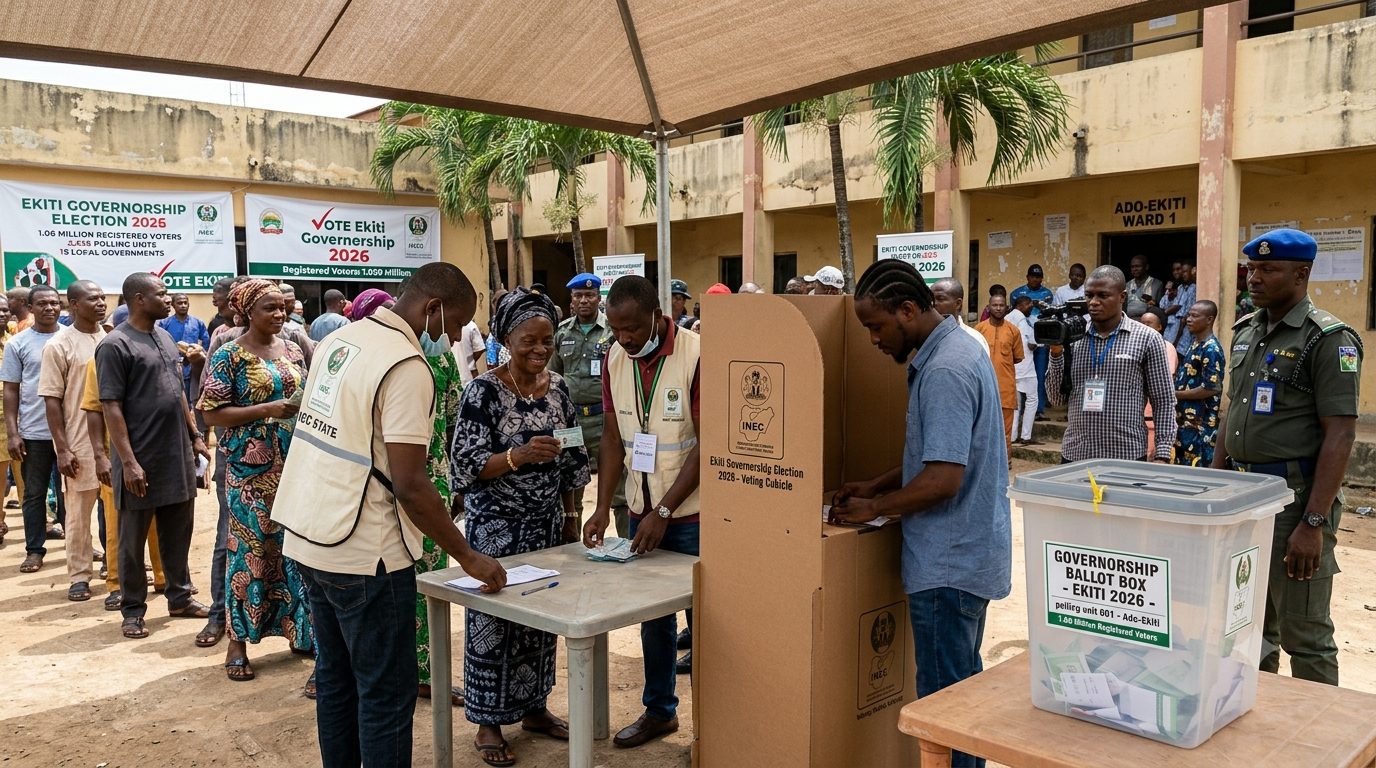
Ekiti State heads to the polls on Saturday, June 20, 2026, in an election that will determine who governs the state for the next four years and could offer an early indication of the political mood ahead of the 2027 general elections.
At the centre of the contest is incumbent Governor Biodun Oyebanji of the All Progressives Congress (APC), who is seeking re-election amid a field of candidates from 13 political parties.
While governorship elections in Ekiti have historically attracted national attention because of the state's politically conscious electorate, this year's contest is being viewed as particularly significant because it comes less than a year before political parties intensify preparations for the next general election cycle.
According to figures released by the Independent National Electoral Commission (INEC), a total of 1,059,360 registered voters are eligible to participate in the election. Voting will take place across 2,445 polling units located in 177 wards spread across the state's 16 local government areas.
Understanding Ekiti's Political Map
Ekiti State is divided into three senatorial districts, each carrying its own political significance and electoral influence.
Ekiti Central is traditionally regarded as the state's political powerhouse and includes Ado-Ekiti, Irepodun/Ifelodun, Ijero, Ekiti West and Efon local government areas. As the home of the state capital, the district often plays a decisive role in determining the outcome of statewide elections and remains one of the most politically influential regions in Ekiti.
Ekiti North, comprising Ikole, Oye, Moba, Ido-Osi and Ilejemeje local government areas, has historically recorded some of the highest voter turnout figures in the state. Political parties often view the district as a crucial battleground because of its voting strength and consistent participation in elections.
Ekiti South, which consists of Ikere, Gbonyin, Ekiti East, Ekiti South-West, Emure and Ise/Orun local government areas, is frequently described by political observers as the state's principal battleground district. The area has often produced closely contested outcomes and remains central to the calculations of major political parties.
The Local Governments That Could Shape the Result
Although all 16 local government areas will contribute to the final outcome, attention is expected to focus on a handful of strategic voting centres.
Ado-Ekiti remains the single largest political bloc in the state and has historically played a major role in determining the direction of governorship elections. Candidates who secure convincing victories in the state capital often gain a significant statewide advantage.
Ikere is regarded as the second-largest political base in Ekiti and has frequently played a kingmaker role in previous elections because of its sizeable voting population.
Oye is another key local government to watch. Home to important academic communities and politically active voters, it remains one of the most influential areas in Ekiti North.
Ikole, one of the largest local governments in the northern district, has traditionally recorded strong voter turnout and remains crucial to any winning electoral strategy.
Ido-Osi is widely regarded as a swing area where both the APC and opposition parties have historically competed aggressively for votes.
Ijero also remains strategically important and is capable of influencing statewide margins because of its political significance within Ekiti Central.
APC Enters Poll With Structural Advantage
Political analysts believe Governor Oyebanji enters Saturday's election with several advantages. Beyond the incumbency factor, the governor enjoys support from former governors and influential political stakeholders across the state. The APC is also widely perceived as benefiting from broad acceptance across major party factions, reducing the internal divisions that have affected some political parties in previous elections.
The ruling party's campaign has further been strengthened by endorsements from prominent APC leaders at both state and national levels. These factors, combined with an extensive grassroots structure, have positioned the APC as the party many observers believe has the advantage going into election day.
The Opposition's Challenge
For opposition parties, the task is considerably more complex. Political observers argue that any realistic path to an upset would require exceptionally strong turnout in major voting centres such as Ado-Ekiti and Ikere, alongside impressive performances across much of Ekiti South.
The opposition would also need to significantly reduce APC margins in Ekiti North, where the ruling party is widely considered to have substantial grassroots strength. Without gains in those strategic areas, analysts believe it may prove difficult for opposition candidates to overcome the APC's organisational advantage.
A State Known for Independent Voters
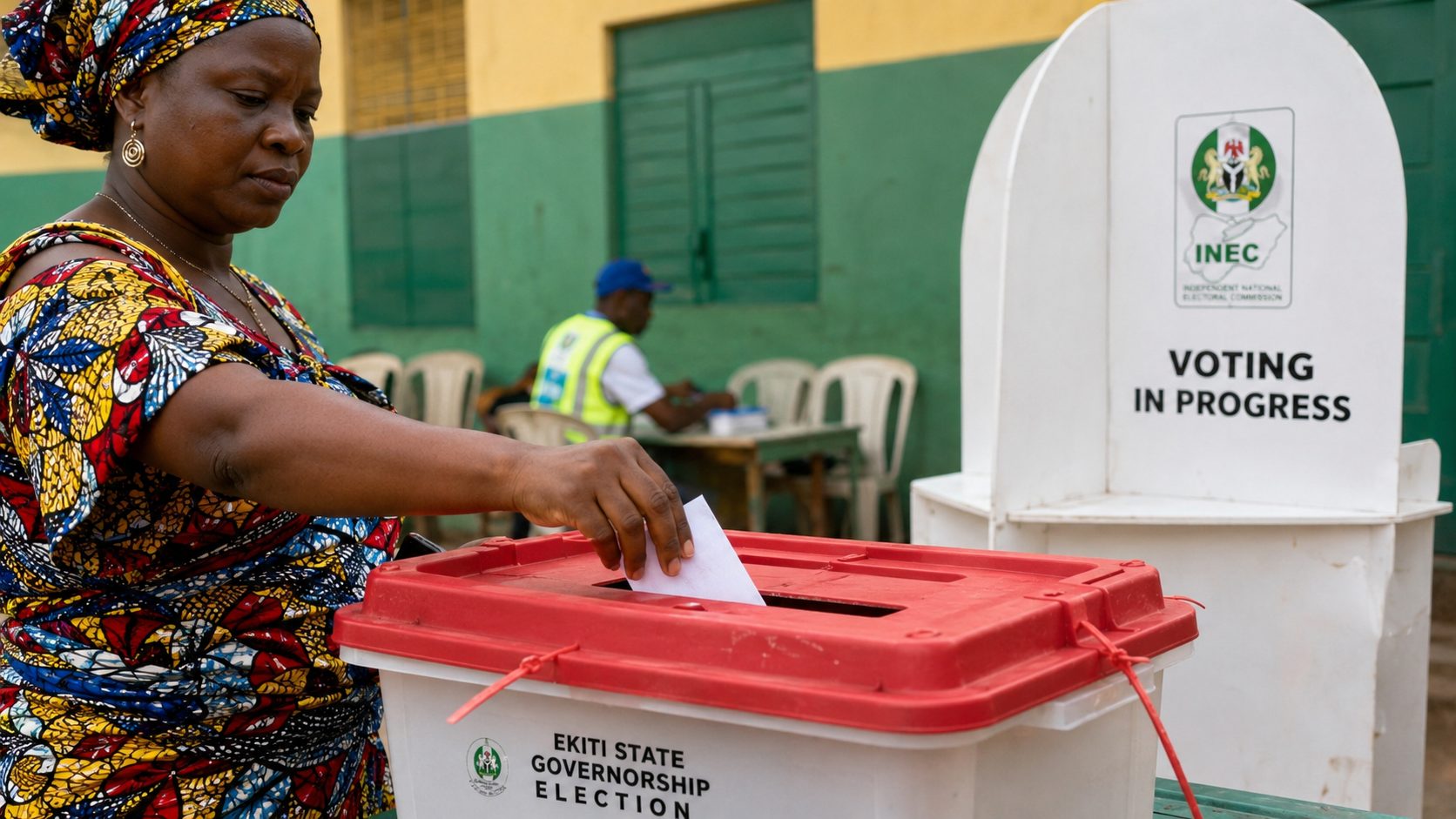
Ekiti has long cultivated a reputation as one of Nigeria's most politically aware states. Its electorate is known for independent voting behaviour and has historically demonstrated a willingness to vote across party lines whenever voters feel dissatisfied with an incumbent administration or political establishment.
This tradition has often made elections in the state difficult to predict. At the same time, recent electoral trends have shown that incumbents who enjoy broad public approval frequently benefit from a continuity advantage, particularly when opposition parties struggle to build a united front.
Another important factor is voter turnout.
Historically, governorship elections in Ekiti have attracted participation levels significantly lower than the total number of registered voters, making voter mobilisation one of the most important determinants of success.
Issues Driving Voter Decisions
As campaigning enters its final phase, several issues continue to dominate political discussions across the state. Infrastructure development and road projects remain central concerns for many voters, particularly in rural communities. Education and teachers welfare have also featured prominently in campaign conversations, reflecting Ekiti's longstanding reputation as a centre of educational excellence.
Other issues attracting voter attention include agriculture and rural development, youth employment, security, local government administration and the broader debate over continuity versus change.
Election-Day Numbers to Watch
Political observers and election reporters will be paying close attention to vote patterns emerging from several key local government areas.
Ado-Ekiti, with 60,921 voters in the referenced voting bloc, remains the state's largest and most influential electoral centre.
Ikere follows with 28,698 voters, while Ikole accounts for 28,483. Oye has 26,066, Irepodun/Ifelodun 25,325, Ijero 25,269 and Ido-Osi 23,487.
How candidates perform in these areas could provide early indications of the eventual winner.
Four Indicators That Could Decide the Election
One of the first indicators analysts will watch is turnout in Ado-Ekiti. A strong turnout in the state capital could significantly influence the overall direction of the race. Attention will also focus on APC margins in Ekiti North. If the ruling party secures comfortable victories across Ikole, Oye, Moba and Ido-Osi, observers believe the election could effectively be decided early.
The opposition's performance in Ikere is another key variable. Political analysts say opposition parties need a strong showing there to remain competitive.
Finally, voting patterns across Ekiti South may prove decisive. The district has the capacity to either narrow the statewide margin or widen it substantially, depending on how voters respond.
More Than a Governorship Election
Saturday's contest is not merely about choosing Ekiti's next governor. For political parties, strategists and observers across the country, it is also a test of organisational strength, voter mobilisation capacity and political relevance ahead of the much larger battles expected in 2027.
With more than one million registered voters, 13 political parties in the race and national attention focused on the state, the outcome will likely resonate far beyond Ekiti's borders. Whether voters choose continuity or an alternative path, the election is expected to provide one of the clearest political signals yet on the road to the next general election cycle.
Written by
Our Reporter
SkyHigh NewsHub correspondent.