
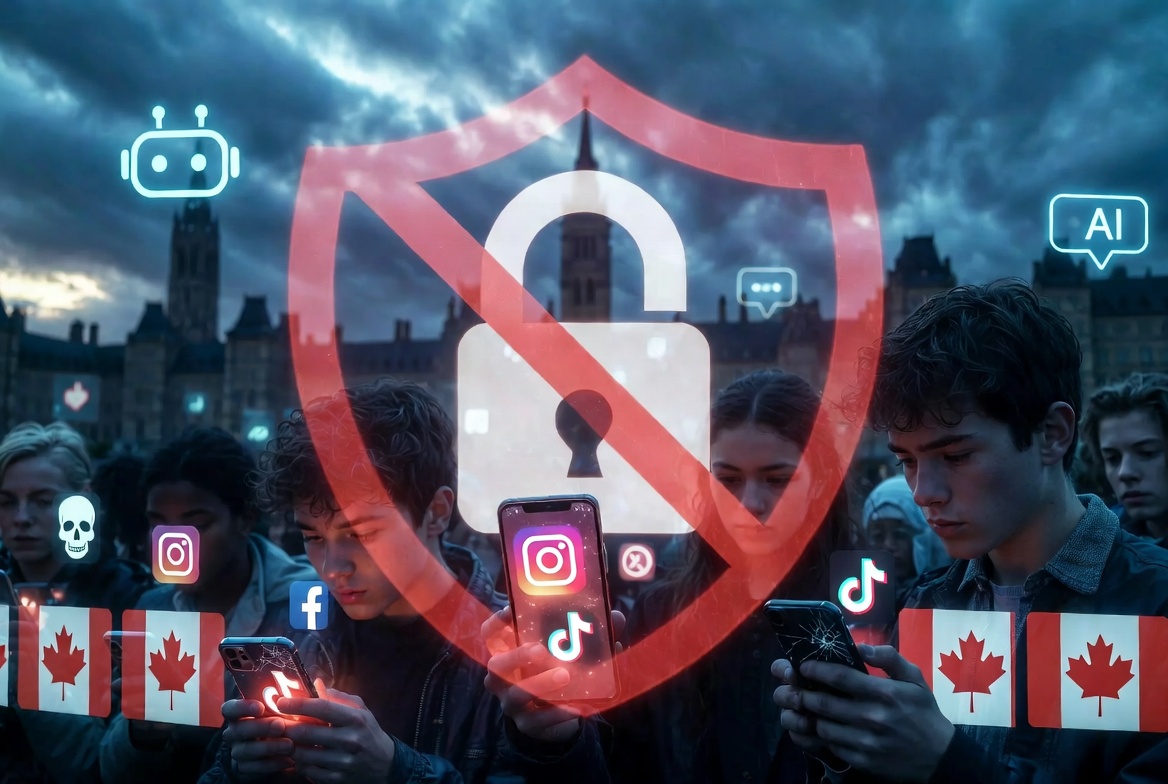
Canada Moves To Ban Under-16s From Social Media, Tightens Online Safety Rules
By OUR REPORTER · 11/06/2026 7:51 AM · 3 min read
The Canadian government has introduced legislation that could bar children and teenagers under the age of 16 from accessing social media platforms, marking one of the country's most ambitious attempts to tackle online harms and protect young people in the digital space.
The proposed legislation, known as the Safe Social Media Act, was presented before the House of Commons by Culture Minister Marc Miller. The bill comes amid mounting concern from parents, educators, child protection advocates and policymakers over the growing impact of social media and artificial intelligence on young users.
If passed, the law would place Canada among a growing list of countries seeking stricter controls on children's access to social media, following similar measures introduced in Australia and proposals currently being considered in the United Kingdom and other jurisdictions.
Unlike Australia's blanket approach, however, Canada's proposal contains a unique provision that could allow technology companies to continue offering services to minors if they can demonstrate that adequate safeguards have been implemented to minimise potential harm.
Government Says Child Safety Is Priority
Speaking ahead of the bill's introduction, Minister Miller stressed that stronger intervention had become necessary due to increasing concerns about online dangers facing children and teenagers.
According to him, protecting young Canadians from harmful online content remains a major priority for the government.
The proposed legislation would establish new rules governing social media platforms, online content moderation and artificial intelligence tools, while creating an independent regulator responsible for monitoring compliance and enforcing sanctions where necessary.
AI Regulation Included In New Measures
Beyond social media restrictions, the legislation also seeks to regulate AI-powered chatbots and digital platforms that may expose users to harmful material.
The bill outlines several categories of content considered harmful, including materials that encourage violence, promote hatred, facilitate bullying or expose children to dangerous activities.
The proposed Digital Safety Commission of Canada would be empowered to investigate violations and ensure technology companies comply with safety obligations.
Companies found in breach of the law could face severe penalties, including fines of up to 10 million Canadian dollars or three per cent of their global annual revenue, whichever is higher.
Pressure Mounts Following Online Safety Incidents
Calls for stronger online safety legislation have intensified in Canada following a number of troubling incidents linked to digital platforms.
The issue gained additional urgency after investigations revealed that a suspect involved in a deadly school attack in British Columbia had used artificial intelligence tools to discuss violent subjects prior to the incident.
The development sparked renewed debate about the responsibilities of technology companies and the need for stronger safeguards against harmful online behaviour.
Debate Over Free Speech Concerns
Despite broad support from child welfare advocates, the proposal has also generated criticism from some free speech organisations.
Critics argue that existing criminal laws already address many forms of harmful behaviour and warn that the legislation could expand government influence over online expression.
Supporters, however, insist the bill focuses primarily on protecting vulnerable users rather than restricting legitimate speech.
Global Trend Toward Stricter Regulation
Canada's proposal reflects a wider international movement toward tighter regulation of social media platforms.
Australia recently became the first country to implement a nationwide social media ban for users under 16, although authorities there continue to grapple with enforcement challenges.
The United Kingdom is also considering similar restrictions, while Greece is preparing to introduce age-based access controls for social media users.
Child protection advocates believe Canada now has an opportunity to become a global leader in online safety regulation, particularly as world leaders prepare to discuss artificial intelligence and child protection issues at the upcoming G7 summit.
Written by