
APC Tightens Grip on Senate Despite Defections, Expands Majority to 88 Seats
By OZIOMA IWUH · 05/07/2026 5:50 AM · 3 min read
The All Progressives Congress (APC) has further consolidated its dominance in the Senate, increasing its membership to 88 lawmakers following the swearing-in of four newly elected senators after recent by-elections.
The development strengthens the ruling party's overwhelming majority in the 109-member Red Chamber, widening the gap between the APC and opposition parties as political alignments continue ahead of the 2027 general elections.
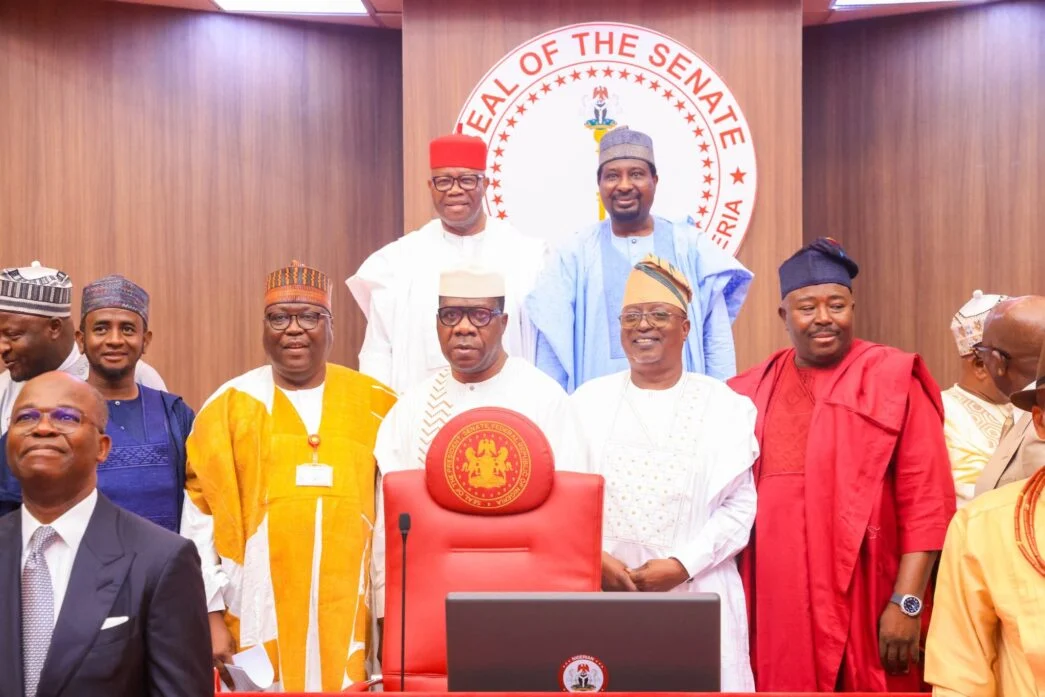
The new senators were inaugurated by Senate President Godswill Akpabio, who administered the oath of office after the by-elections conducted to fill vacant seats.
The lawmakers are Ikeje Asogwa representing Enugu North, Dayo Faduyile representing Ondo South, Danladi Envulu-Anza representing Nasarawa North, and Olaka Nwogu of the People's Democratic Party (PDP) representing Rivers South-East.
Three of the four seats were won by the APC, increasing the party's strength in the Senate from 85 to 88 members.
The latest development comes despite a recent wave of defections from the ruling party following disagreements over the conduct of APC primaries ahead of the 2027 elections.
Among those who left the party is former Inspector-General of Police Abubakar Adamu, who exited the APC after failing to secure the party's governorship ticket in Nasarawa State.
Also leaving the ruling party were Senators Shehu Buba (Bauchi South) and Sama'ila Dahuwa (Bauchi North), who defected to the Peoples Redemption Party (PRP) and the National Democratic Congress (NDC) respectively after losing their return tickets.
Similarly, Senator Garba Maidoki of Kebbi South dumped the APC for the African Democratic Congress (ADC) after reportedly being screened out of the party's senatorial primary. Maidoki had joined the APC from the PDP in May 2025 alongside Senators Adamu Aliero and Yahaya Abdullahi.
The defectors cited alleged imposition of candidates, lack of internal democracy and injustice within the ruling party as reasons for their decisions.
Despite those losses, the APC's overall numerical strength has continued to rise, largely driven by victories in by-elections and political realignments within the Senate.
The opposition, meanwhile, has seen its representation decline significantly since the inauguration of the 10th National Assembly in June 2023.
The PDP, which began the current Senate with 36 seats, now has five senators, while the Labour Party has dropped from eight seats to one. The New Nigeria Peoples Party (NNPP) no longer has representation in the Senate, while the Social Democratic Party (SDP) also has no senator.
The African Democratic Congress (ADC), which had no representation at the inauguration of the Senate, now has nine senators, while the Accord Party and the National Democratic Congress (NDC) each have one senator. The All Progressives Grand Alliance (APGA) has retained its single seat.
The newly inaugurated senators emerged from by-elections conducted to replace lawmakers whose seats became vacant following deaths and appointments.
Asogwa won the Enugu North senatorial election with 162,360 votes, succeeding the late Senator Okey Ezea. Faduyile secured the Ondo South seat with 68,474 votes after Senator Jimoh Ibrahim was appointed Nigeria's Permanent Representative to the United Nations.
Envulu-Anza won the Nasarawa North seat with 45,362 votes, replacing the late Senator Godiya Akwashiki, while Nwogu polled 47,961 votes to emerge senator for Rivers South-East, succeeding the late Senator Barry Mpigi.
With the inauguration of the four lawmakers, all 109 seats in the Senate are now occupied.
The APC's current strength of 88 senators, up from 59 seats at the inauguration of the 10th Senate in 2023, further reinforces the party's legislative dominance as preparations for the 2027 elections gather momentum.
Written by
Ozioma Iwuh
SkyHigh NewsHub correspondent.