
AI Matches Human Champions, Scores Perfect 100% at International Maths Olympiad
By OUR REPORTER · 23/07/2026 8:07 AM · 3 min read
Artificial intelligence has reached another major milestone in advanced mathematical reasoning, with AI models developed by Chinese technology companies Huawei and Xiaohongshu reportedly achieving perfect scores on the problems set for this year’s International Mathematical Olympiad (IMO).
The breakthrough marks the first time AI systems have been reported to achieve full marks under the IMO’s official judging process, traditionally regarded as one of the toughest tests of mathematical problem-solving for young people worldwide.
Huawei and Xiaohongshu separately announced that their AI systems scored 100 per cent on the six problems presented to human contestants at this year’s competition in Shanghai.
Xiaohongshu, the Chinese technology company known internationally as RedNote, said its AI model, dots-note-3.0, achieved the perfect result in its first participation in the competition.
“We are delighted with this result, because achieving a perfect score at the IMO is extremely challenging,” the company said in a statement.
It added that, until now, “no large language model had ever achieved a perfect score under the IMO’s official judging process.”
Huawei, meanwhile, said its AI system, Celia, demonstrated what it described as comprehensive problem-solving capabilities across multiple areas of mathematics.
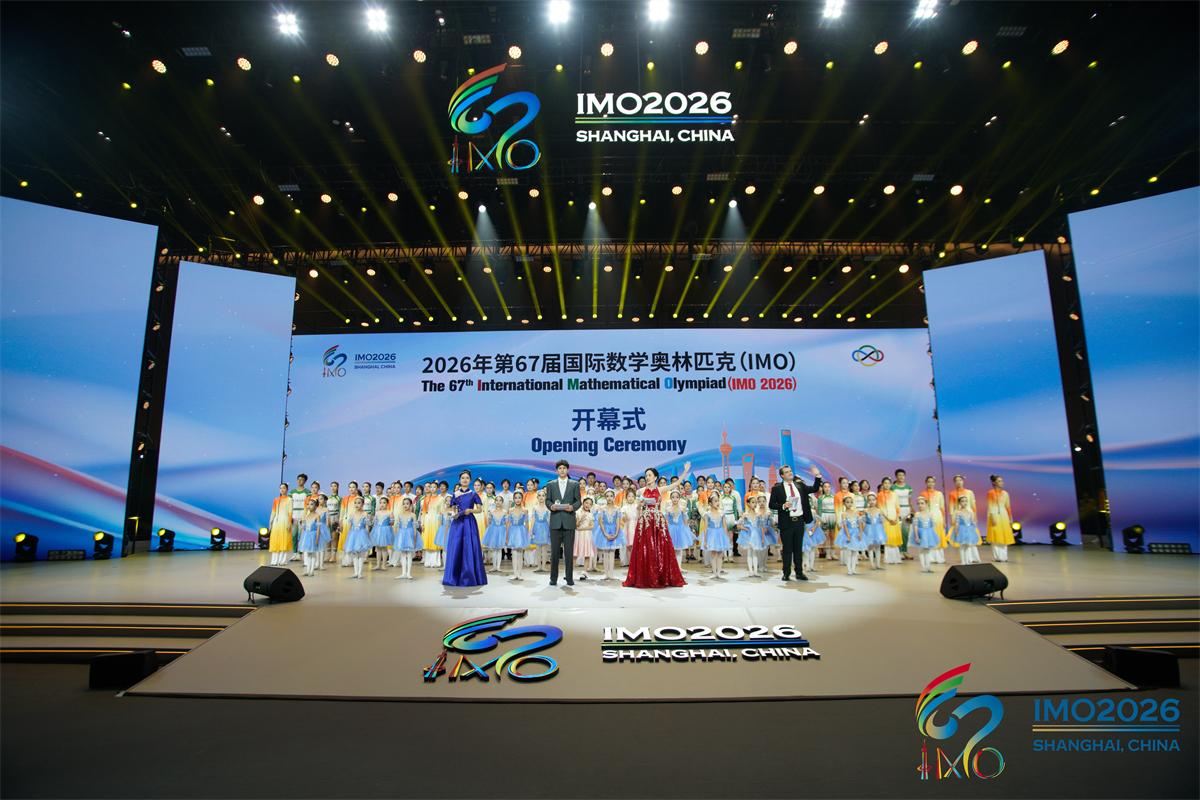
The 2026 IMO brought together 666 contestants from different countries, all aged under 20, to compete in the prestigious annual mathematics competition.
According to the official IMO scoreboard, only seven human contestants achieved full marks in this year's contest, underscoring the difficulty of the feat accomplished by the AI models.
The technology companies were given access to the competition problems only after the human participants had completed their examinations. Their AI systems were then required to solve the problems and submit their answers within the prescribed time limits.
Xiaohongshu said its AI system operated without human assistance during testing, with no form of human intervention permitted. The solutions were subsequently submitted to IMO organisers for evaluation.
The development represents a rapid advance in AI's ability to tackle complex mathematical problems.
At the 2024 IMO, Google's AI system reportedly achieved a silver-medal-level performance after solving four of the six problems over a period of two to three days.
In 2025, AI systems developed by major technology companies, including Google and OpenAI, reached gold-medal-level performances for the first time. However, they still fell short of the five human contestants who achieved perfect scores that year.
This year's reported results suggest that the gap between the most advanced AI systems and elite human mathematical competitors may now be narrowing significantly.
Deedy Das, a partner at US-based investment firm Menlo Ventures, said he independently tested this year's IMO problems on four advanced AI models.
According to Das, models from OpenAI, Anthropic, Axiom Math and China's Moonshot AI all achieved 42 points out of a possible 42 in his test.
“The frontier of AI has officially moved well past IMO math,” Das wrote in a post on LinkedIn.
The latest development is likely to intensify debate about the pace of progress in artificial intelligence and its implications for education, research and scientific discovery.
While the IMO remains a competition designed for young human mathematicians, the ability of AI systems to achieve perfect or near-perfect results on its notoriously difficult problems represents a significant benchmark for machine reasoning.
The results also raise broader questions about whether AI is moving beyond pattern recognition and language generation towards increasingly sophisticated forms of abstract reasoning and problem-solving.
Written by
Our Reporter
SkyHigh NewsHub correspondent.