
US Ends HIV Funding For South Africa Amid Deepening Diplomatic Rift
By SKYHIGHNEWSHUB · 19/06/2026 5:51 PM · 3 min read
The United States government has announced plans to phase out funding for HIV and Aids programmes in South Africa, linking the decision to what it described as Pretoria’s failure to address concerns raised by Washington over the treatment of the country’s white-minority Afrikaner community.
The move marks a significant escalation in deteriorating relations between the two countries and could have major implications for South Africa’s HIV response, which supports the largest population of people living with the virus anywhere in the world.
South Africa’s Department of Health said it had not received formal notification of the funding withdrawal but insisted that preparations had already been underway to reduce reliance on foreign support.
“South Africa has long been working on a self-reliance plan,” health officials said in response to reports of the decision.
According to official estimates, more than eight million South Africans are living with HIV.
For years, the United States has been one of the largest contributors to South Africa’s HIV and Aids programmes through the President’s Emergency Plan for AIDS Relief (PEPFAR), a flagship initiative launched in 2003 to combat the global HIV epidemic.
Before funding reductions began in 2025, PEPFAR was providing approximately $400 million annually to support prevention, testing, treatment and healthcare services across South Africa.
The programme accounted for roughly one-fifth of the country’s overall HIV spending.
However, relations between Washington and Pretoria have become increasingly strained since President Donald Trump returned to office.
Shortly after his inauguration, Trump signed an executive order accusing the South African government of implementing policies that discriminate against certain groups and contribute to violence against white landowners.
The South African government has consistently rejected those allegations, arguing that its policies are designed to address economic inequalities that persist decades after the end of apartheid.
Washington’s concerns have also extended beyond domestic policies.
US officials have criticised South Africa’s diplomatic positions on several international issues, including its case against Israel at the International Court of Justice and its growing ties with Iran.
In its justification for ending assistance, the White House said it could no longer support a government engaged in what it described as “unjust and immoral practices.”
Trump has repeatedly claimed that white South Africans face systematic persecution and has alleged that a “white genocide” is taking place in the country, claims strongly denied by the South African government and widely disputed by researchers and analysts.
The administration has since established a refugee programme specifically for Afrikaners, descendants of mainly Dutch and French settlers who arrived in southern Africa centuries ago.
A US State Department official confirmed that a gradual withdrawal of PEPFAR funding would begin immediately.
According to the official, the decision reflects South Africa’s “failure to make demonstrable progress on policy requests by the administration.”
The official added that Washington believes South Africa has the economic capacity to finance its own public health programmes.
“South Africa is a middle-income country and is more than capable of supporting its own health programmes,” the official said.
Despite concerns over the loss of funding, South African health authorities sought to reassure patients that antiretroviral treatment programmes would continue.
Officials noted that life-saving HIV medications are financed separately from PEPFAR support and are largely funded by the South African government.
The latest development represents another setback in efforts to repair relations between the two countries.
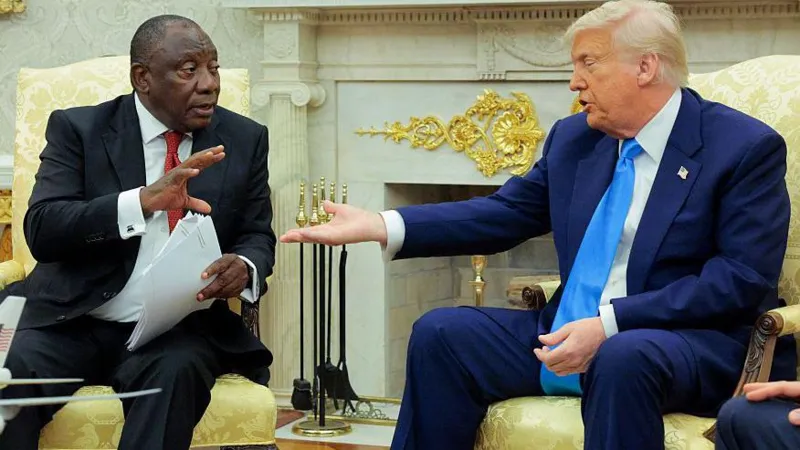
Attempts to ease tensions, including a high-profile meeting between President Cyril Ramaphosa and President Trump at the White House last year, failed to bridge growing differences over race relations, foreign policy and economic governance.
Analysts say the funding withdrawal highlights how diplomatic disputes are increasingly shaping international development assistance, with health programmes becoming entangled in broader geopolitical disagreements.
While South Africa insists it can absorb the impact of the cuts, public health experts warn that any disruption to HIV prevention and support services could place additional pressure on a healthcare system already serving millions of patients.
BBC
Written by
SkyhighNewshub
SkyHigh NewsHub correspondent.