
Uganda Shuts DR Congo Border As Deadly Ebola Outbreak Spirals
By OUR REPORTER · 28/05/2026 8:13 AM · 2 min read
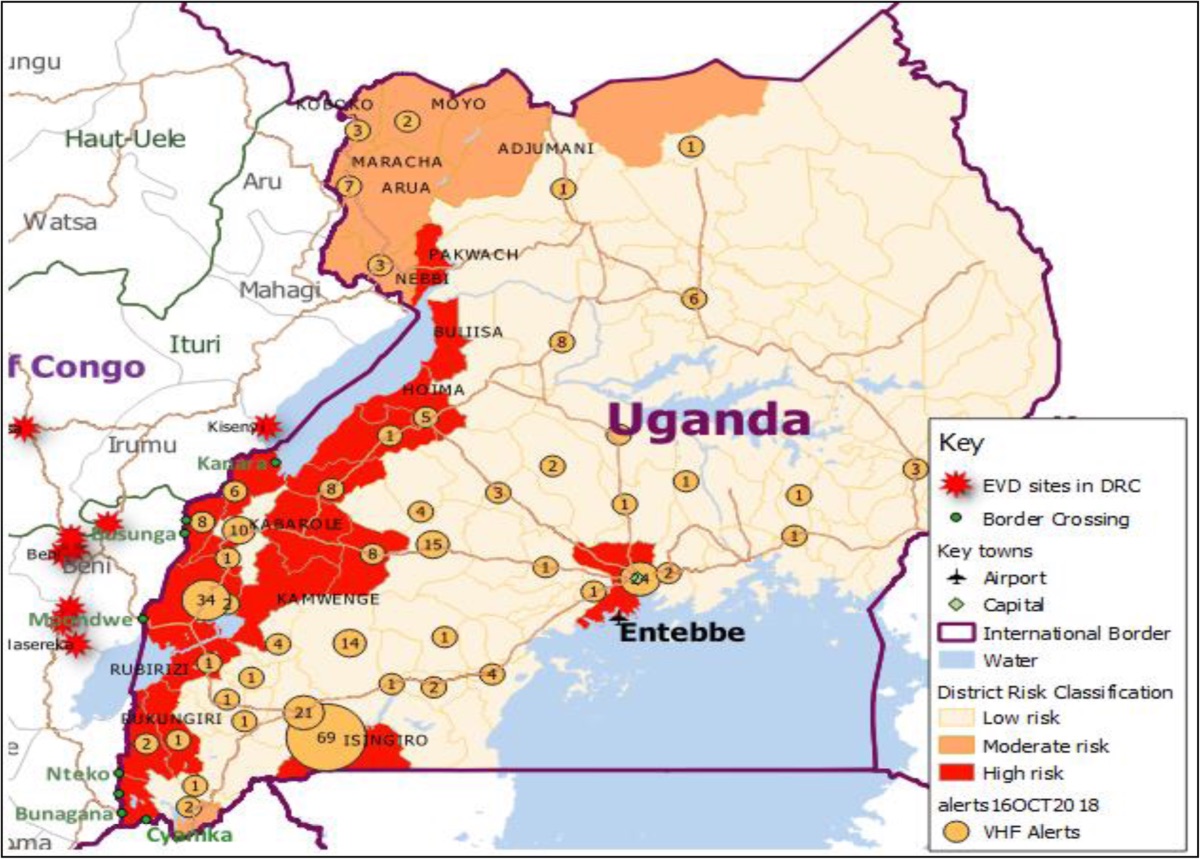
Uganda has shut its border with the Democratic Republic of Congo in a renewed effort to contain the spread of Ebola as suspected cases linked to the worsening outbreak approach 1,000 across the region.
Health authorities announced that the decision became necessary because of the growing threat of cross-border transmission between both countries, where daily movement of people and goods remains high.
The border closure follows Uganda’s recent confirmation of its first Ebola case connected to the latest outbreak.
According to officials, the patient travelled from Congo into Uganda seeking medical treatment before later dying in Kampala after developing severe Ebola symptoms.
Under the new emergency restrictions, only essential travellers including approved healthcare workers, humanitarian personnel, security officials and cargo transporters will be permitted to cross the border. Authorities said every individual allowed entry into Uganda would undergo strict health screening procedures.
Ugandan officials also announced mandatory 21-day isolation and monitoring measures for travellers arriving from Congo as part of intensified containment efforts. While communities near the border are expected to continue normal economic activities, schools, markets and public facilities have been directed to comply with strict preventive guidelines including temperature checks and surveillance measures.
The World Health Organization said the Democratic Republic of Congo has now recorded more than 100 confirmed Ebola cases, while several hundreds more remain suspected, alongside a growing number of deaths linked to the outbreak.
Uganda has also reported multiple confirmed infections, including cases involving healthcare workers directly involved in response operations. Health experts disclosed that the current outbreak is linked to the Bundibugyo strain of Ebola, a rare and highly dangerous variant first identified in Uganda in 2007.
Medical authorities warned that there is currently no approved vaccine or specific treatment for the Bundibugyo strain, making rapid containment efforts critical.
The WHO has since classified the outbreak as a Public Health Emergency of International Concern because of the speed of transmission and the increasing cross-border threat.
International response efforts have intensified in recent weeks, with global health agencies and partner countries mobilising nearly $500 million to support emergency operations across affected areas. Funding commitments have reportedly come from the World Bank, the United States, the European Union and several international humanitarian organisations.
The United Nations has also released emergency intervention funds to support surveillance, treatment centres, public awareness campaigns and cross-border monitoring efforts.
Health officials continue to urge residents in affected regions to report symptoms early, avoid physical contact with infected persons and cooperate fully with medical teams working to contain the outbreak.
Authorities fear that without stronger regional coordination and swift containment measures, the outbreak could spread further across Central and East Africa.
Written by
Our Reporter
SkyHigh NewsHub correspondent.