
Tinubu Launches $3.05bn Poverty Reduction Plan to Expand Healthcare, Education and Community Support
By OUR REPORTER · 17/07/2026 6:16 AM · 5 min read
President Bola Ahmed Tinubu has launched a $3.05 billion package of social investment and development programmes aimed at reducing poverty, strengthening community resilience and expanding access to quality healthcare, education and economic opportunities across Nigeria.
The intervention, unveiled on Thursday, brings together five interconnected programmes designed to improve living conditions at the grassroots while reinforcing the Federal Government's broader economic reform agenda under the Renewed Hope programme.
The initiatives include the Nigeria Community Action for Resilience and Economic Stimulus Additional Financing (NG-CARES), the Solutions for Internally Displaced Persons and Host Communities (SOLID) initiative and the Human Capital Opportunities for Prosperity and Equity (HOPE) programme, which comprises HOPE Gov, HOPE PHC and HOPE Edu.
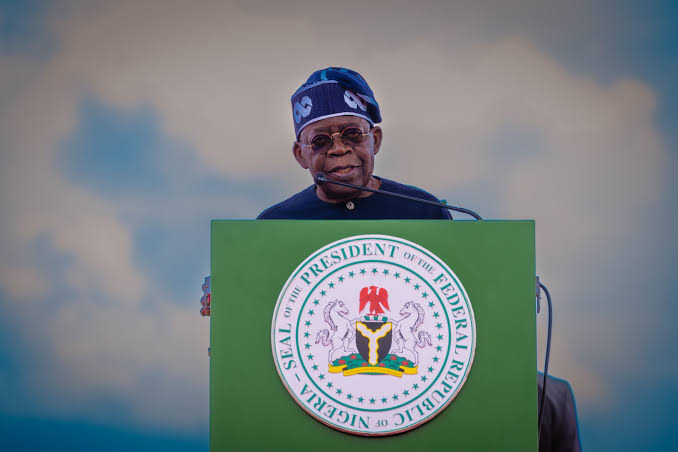
President Tinubu, represented at the launch by the Minister of Finance and Coordinating Minister of the Economy, Taiwo Oyedele, said the programmes are intended to ensure that recent macroeconomic reforms translate into measurable improvements in the daily lives of Nigerians.
"This is not just a set of programmes; these are promises kept," the President said.
"Under our Renewed Hope Agenda, we pledged to reform our economy, secure the nation and invest in our people. Today, we are acting on that commitment by protecting vulnerable Nigerians, empowering communities and strengthening the human capital that will drive Nigeria's future."
According to the President, the interventions are designed to function as a single integrated strategy rather than isolated projects.
He said improving livelihoods, expanding healthcare, strengthening education, supporting displaced communities and improving governance are interconnected priorities that will collectively drive sustainable poverty reduction.
"These five programmes are not separate efforts. They represent one coordinated national strategy for poverty reduction, human capital development and community resilience," Tinubu stated.
The largest component, NG-CARES Additional Financing, will receive approximately $1.25 billion from the World Bank to expand support for vulnerable households, smallholder farmers, micro, small and medium-sized enterprises (MSMEs), and community infrastructure projects.
The programme builds on the existing NG-CARES initiative introduced to cushion the socioeconomic effects of the COVID-19 pandemic and subsequent economic shocks.
The SOLID initiative, backed by $300 million, is designed to improve conditions for internally displaced persons (IDPs) and their host communities by bridging humanitarian assistance with long-term development interventions.
The remaining $1.5 billion will fund the three components of the HOPE programme, focusing on governance reforms, primary healthcare and education.
Minister of Health and Coordinating Minister of Social Welfare, Prof. Muhammad Ali Pate, said the HOPE PHC component, valued at $570 million, is expected to improve access to quality healthcare services for about 40 million Nigerians.
According to him, the programme will strengthen primary healthcare delivery, reduce maternal and under-five mortality, improve access to medicines and medical equipment, and enhance health system performance through performance-based financing.
Pate disclosed that more than 3,000 Primary Healthcare Centres have already been upgraded to Level 2 facilities, while another 1,000 centres are nearing completion.
He added that over 69,000 frontline health workers have received training, with 60,000 already provided with uniforms and essential work kits.
Minister of Education Dr. Tunji Alausa said the HOPE Edu programme would significantly expand the Nigeria Education Sector Renewal Initiative.
Valued at $562 million, the programme is supported by the World Bank and the Global Partnership for Education and is expected to reach nearly 30 million children across Nigeria's 36 states and the Federal Capital Territory.
The initiative will support approximately 65,000 public schools, provide assistance for 500,000 teachers, finance school infrastructure, encourage innovation in teaching and learning, and strengthen foundational literacy and numeracy.
"Education remains the single biggest investment any responsible government can make in its people," Alausa said.
Minister of Budget and Economic Planning Senator Atiku Bagudu described the interventions as a comprehensive government response to rising poverty and the increasing cost of living.
He noted that global economic disruptions, including the Russia-Ukraine conflict and instability in the Middle East, have contributed to inflationary pressures and rising energy costs affecting economies worldwide.
According to Bagudu, the newly launched programmes are intended to cushion those impacts while strengthening Nigeria's long-term human capital development.
Minister of Humanitarian Affairs and Poverty Reduction Dr. Bernard Doro said the initiatives demonstrate the Federal Government's commitment to ensuring that no Nigerian is excluded from development, regardless of location or displacement status.
The World Bank welcomed the initiative, describing the programmes as strategic investments in Nigeria's future.
The bank's Country Representative, Matthew Burges, said the interventions would strengthen education and healthcare systems while improving institutional capacity to deliver essential public services.
"Through the HOPE series, we are investing in stronger education and health systems supported by more effective institutions capable of delivering measurable results for Nigerians," Burges said.
Representing the Nigeria Governors' Forum, Ondo State Governor Lucky Aiyedatiwa pledged the commitment of state governments to work closely with the Federal Government and development partners to ensure effective implementation.
The National Assembly also expressed support for the programmes.
Representing Senate President Godswill Akpabio, Senator Mohammed Sani Musa said lawmakers would provide the necessary legislative backing and oversight to facilitate successful implementation.
The launch comes as the Federal Government seeks to balance difficult economic reforms, including fuel subsidy removal and foreign exchange liberalisation with targeted social interventions designed to cushion vulnerable Nigerians from the effects of rising living costs.
For millions of Nigerians facing economic hardship, the effectiveness of these interventions will likely be judged not by the scale of funding announced but by tangible improvements in livelihoods, access to quality public services and job creation at the community level.
Written by
Our Reporter
SkyHigh NewsHub correspondent.