
Stocks Sink, Oil Climbs Amid Rising Middle East Tensions And Inflation Concerns
By OUR REPORTER · 11/06/2026 10:07 AM · 2 min read
Global financial markets came under renewed pressure on Thursday as escalating tensions between the United States and Iran, combined with concerns over future U.S. interest rate hikes, unsettled investors and pushed oil prices higher.
Asian stocks recorded broad losses after a volatile week in global markets, while energy prices continued their upward march amid fears that instability in the Middle East could disrupt crude oil supplies.
Investor sentiment had briefly improved following the release of U.S. inflation data showing consumer prices in May rose largely in line with expectations.
However, inflation remained at its highest level in more than three years, driven in part by rising energy costs linked to the ongoing conflict involving Iran.
The data reinforced concerns that the U.S. Federal Reserve could be forced to raise interest rates later this year, especially after stronger-than-expected employment figures highlighted the resilience of the American labour market.
Analysts noted that while the inflation figures were not significantly worse than anticipated, they remain elevated enough to keep monetary tightening firmly on the policy agenda.
Technology stocks bore the brunt of the market reaction, leading declines on Wall Street. The Nasdaq and S&P 500 both suffered sharp losses as investors reassessed the outlook for borrowing costs and economic growth.
The weakness spread quickly to Asia.
Major indices in Tokyo, Hong Kong, Shanghai, Seoul, Singapore, Sydney and Taipei all traded lower as investors reduced exposure to risk assets.
Beyond monetary policy concerns, developments in the Middle East added another layer of uncertainty.
Fresh U.S. strikes on Iranian targets and Tehran’s subsequent retaliation against American interests in the region heightened fears that the conflict could expand further.
Particular attention remains focused on the Strait of Hormuz, a critical global shipping route through which a significant portion of the world's oil exports passes.
Reports of attacks on oil tankers and threats to maritime traffic have fuelled worries about supply disruptions.
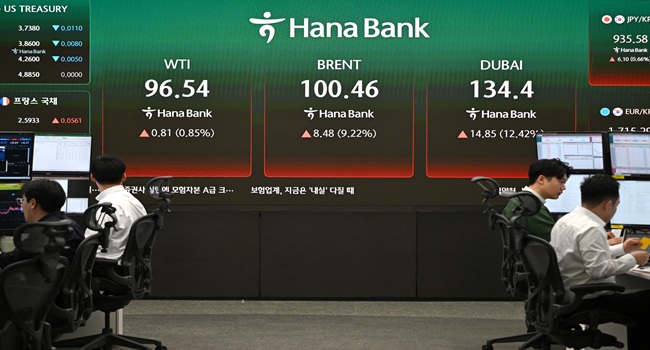
As a result, crude oil prices extended recent gains, with Brent crude approaching $95 per barrel while West Texas Intermediate climbed above $91.
Market observers say continued instability in the region could place additional pressure on inflation globally, complicating efforts by central banks to bring prices under control.
Investors are now closely watching the Federal Reserve’s upcoming policy meeting for clues on the direction of interest rates, while also monitoring developments in the Middle East that could further influence commodity prices and global economic conditions.
Written by