
South-South Still Faces Major Development Challenges Despite Fueling Nigeria’s Economy – Speaker Abbas
By OUR REPORTER · 08/07/2026 7:58 PM · 3 min read
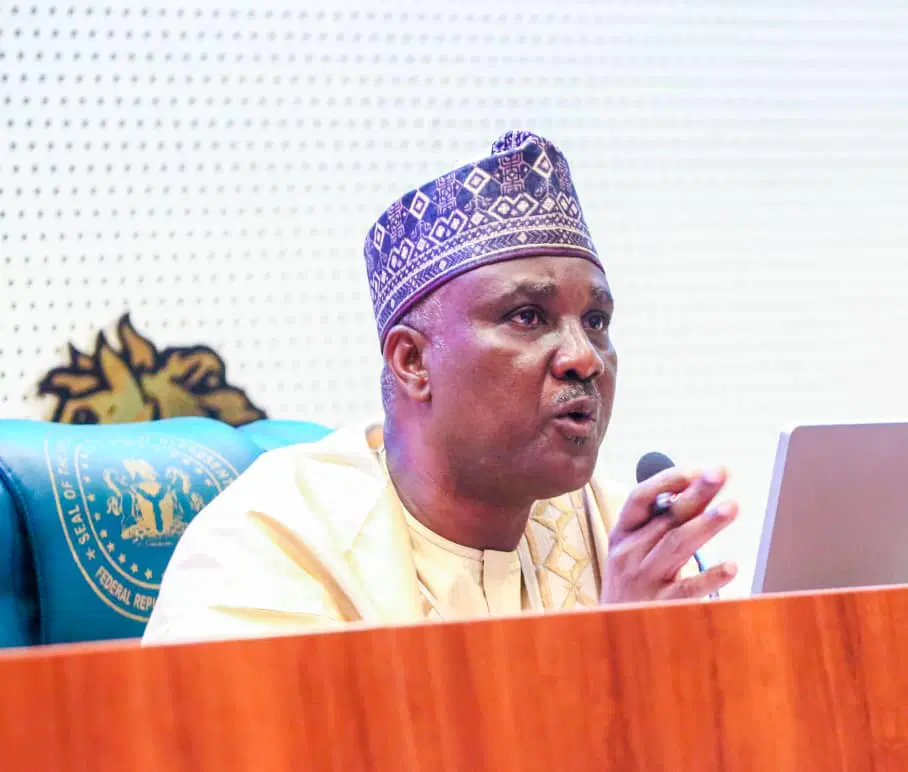
Speaker of the House of Representatives, Abbas Tajudeen, has said the South-South geopolitical zone continues to face severe developmental challenges despite remaining the backbone of Nigeria's oil and gas industry and contributing significantly to national revenue and economic growth.
Abbas made the remarks on Wednesday during a public hearing on a bill seeking to amend the South-South Development Commission (SSDC) Act to strengthen the Commission's funding framework and improve its capacity to deliver development projects across the region.
He identified environmental degradation, poor infrastructure, ecological challenges, youth unemployment and other socio-economic problems as major obstacles confronting the region.
According to the Speaker, institutions created to address these challenges cannot succeed without adequate funding and institutional capacity.
"The region has, for decades, remained the backbone of Nigeria's oil and gas industry, contributing immensely to national revenue and economic growth, yet continues to grapple with significant environmental degradation, infrastructure deficits, ecological challenges, youth unemployment and other socio-economic concerns that demand coordinated and sustained intervention," Abbas said.
He explained that the proposed amendment seeks to introduce additional statutory funding sources for the South-South Development Commission, bringing its funding structure in line with those of other regional development commissions.
Abbas described the establishment of the SSDC as a major legislative milestone that reflects the National Assembly's recognition of the South-South's strategic importance to Nigeria's economy.
He added that every proposal involving new financial obligations must undergo careful legislative scrutiny to ensure it is equitable, fiscally responsible, transparent and sustainable.
"It is therefore understandable that proposals aimed at strengthening the Commission's financial base continue to generate considerable public interest. Nevertheless, every proposal that imposes new financial obligations or alters existing statutory arrangements must undergo rigorous legislative scrutiny," he said.
The Speaker also reiterated the commitment of the 10th House of Representatives to building what he described as a "People's House" through greater public participation in the legislative process.
He announced that the House is preparing to hold an Open Week aimed at deepening citizens engagement with Parliament, improving public understanding of legislative activities and strengthening confidence in democratic institutions.
"We firmly believe that the legitimacy and quality of legislation are enhanced when citizens are active participants rather than mere spectators. Public hearings represent practical expressions of participatory democracy, accountability and inclusive governance," Abbas stated.
Chairman of the House Committee on South-South Development Commission, Julius Pondi, said the proposed amendment would expand the Commission's revenue base through additional funding sources, including contributions from extractive industries, agricultural processing companies, allocations from the Ecological Fund and a share of Value Added Tax (VAT) revenues.
Pondi noted that although the South-South remains Nigeria's foremost oil and gas-producing region and a major centre for maritime activities, commerce and industrial development, it continues to bear the environmental and socio-economic consequences of decades of intensive resource extraction.
He said the proposed funding review is intended to place the Commission on a stronger financial footing, enabling it to respond more effectively to the development needs and expectations of the people of the South-South.
The committee chairman, however, stressed that lawmakers remain mindful of the broader fiscal implications of the proposal and would consider the views of governments, regulatory agencies, investors, businesses, host communities and other stakeholders before taking a final legislative decision.
Written by
Our Reporter
SkyHigh NewsHub correspondent.