
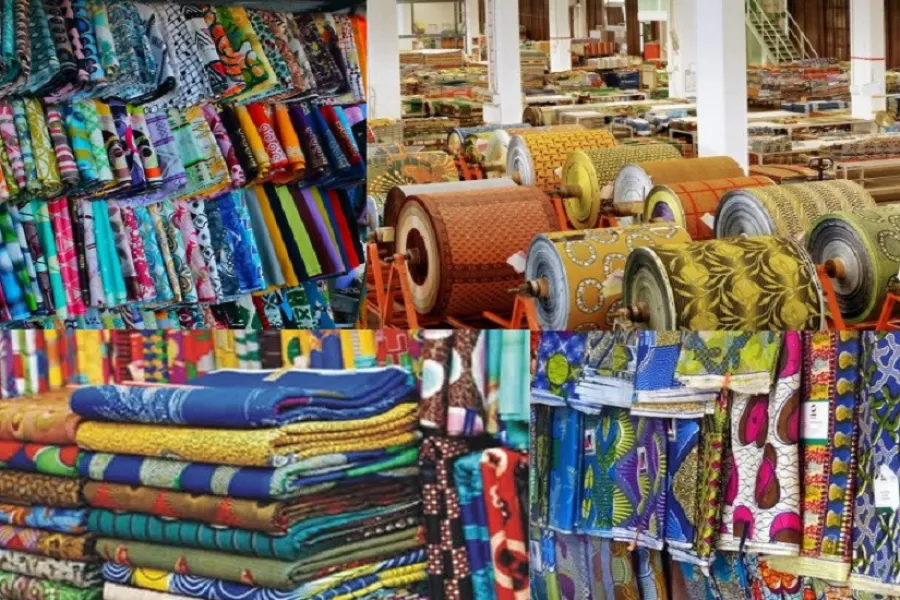
Senate Demands Total Ban On Textile Imports To Revive Nigeria’s Manufacturing Sector
By OUR REPORTER · 09/06/2026 7:49 PM · 3 min read
The Senate has called on the Federal Government to impose a complete ban on the importation of foreign textile materials as part of a broader strategy to revive Nigeria’s once-thriving textile industry and stimulate domestic industrial production.
The resolution followed extensive deliberations on a motion sponsored by Senator Sunday Katung, representing Kaduna South Senatorial District, who warned that the country’s textile sector has suffered decades of decline despite its historic importance to Nigeria’s economy.
The motion, titled “Urgent Need to Revive the Textile Industries in Nigeria with Particular Reference to the Kaduna-Kano Axis,” received overwhelming support from lawmakers across party lines.
Presenting the motion, Senator Katung recalled that Nigeria’s textile industry was once one of the largest employers of labour in the country and a major contributor to economic growth.
He noted that the establishment of Kaduna’s first large-scale textile mill in 1957 marked the beginning of an industrial revolution that transformed the sector into a major pillar of national development.
According to him, supportive government policies during the 1960s and 1970s encouraged investment and protected local manufacturers from excessive foreign competition.
The result was rapid expansion across the country.
By the late 1970s and throughout the 1980s, Nigeria had approximately 167 textile mills employing more than 500,000 workers directly, making the sector the second-largest employer after the Federal Government.
However, the senator lamented that the industry has since deteriorated dramatically due to multiple challenges, including inconsistent government policies, poor electricity supply, obsolete machinery, inadequate financing and the influx of cheaper imported textiles.
Many factories that once dominated the Kaduna-Kano industrial corridor have either shut down completely or operate far below capacity.
Lawmakers argued that the decline has contributed significantly to rising unemployment, particularly among young Nigerians, while weakening the country's manufacturing base.
Several senators described the textile sector as a strategic industry capable of generating large-scale employment, supporting agricultural production and reducing Nigeria’s dependence on imported goods.
As part of its resolutions, the Senate urged the Federal Government to implement policies that would encourage local textile manufacturing and protect domestic producers from unfair competition.
The lawmakers specifically called for increased funding to the Bank of Industry to provide financial support for struggling textile companies and potential investors.
The Senate also urged the Federal Ministry of Agriculture to intensify efforts to promote cotton cultivation, describing cotton production as the foundation upon which the textile value chain depends.
According to lawmakers, revitalising cotton farming would not only support textile manufacturers but also create additional opportunities for farmers and rural communities.
The upper chamber stressed that rebuilding the textile industry requires a comprehensive approach that integrates agriculture, manufacturing, financing, infrastructure and market protection.
Senators expressed confidence that a successful revival of the sector could stimulate economic growth, reduce import dependence and create sustainable jobs for thousands of Nigerians.
The Senate subsequently adopted the motion and called on relevant government agencies to develop actionable strategies aimed at restoring the industry to its former position as a major driver of Nigeria’s economy.
Written by