
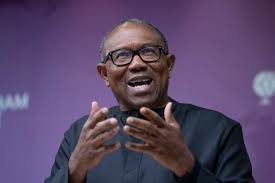
Peter Obi Intervenes in South Africa, Holds High-Level Talks with Top Ministers Over Xenophobic Tensions
By OUR REPORTER · 23/05/2026 5:15 PM · 3 min read
Mr. Peter Obi, a prominent opposition figure and the newly declared sole presidential candidate for the Nigeria Democratic Congress (NDC) ahead of the 2027 general elections, has directly waded into the volatile diplomatic and migration dispute involving Nigerian expatriates and state authorities in South Africa.
Obi, who arrived in Cape Town on Friday to participate in a high-profile international governance summit, moved swiftly to address the growing operational anxieties of the local Nigerian diaspora. After holding an emotional town hall interaction with the Nigerian community on Friday evening to gather direct testimony regarding local immigration enforcement, Obi launched an aggressive morning of diplomatic talks on Saturday with three senior cabinet ministers and influential political party leaders from South Africa's Government of National Unity.
Confirming the strategic diplomatic meetings via a detailed statement broadcast on his official X (formerly Twitter) account on Saturday afternoon, the NDC presidential candidate revealed that the dialogue focused on finding systemic, lawful solutions to the ongoing friction.
"After speaking with Nigerians in Cape Town yesterday, I had constructive discussions this morning with three South African ministers and political party leaders concerning the ongoing issues related to immigration, regional collaboration and promoting peaceful coexistence between our nations," Obi stated.
The high-level engagement brought the Nigerian opposition leader face-to-face with the key architects of South Africa’s current domestic and immigration policy layout. Among the cabinet members Obi engaged were Mr. Leon Schreiber, the South African Minister of Home Affairs and a foundational pillar of the Democratic Alliance (DA); Mr. Velenkosini Hlabisa, the Minister of Cooperative Governance and Traditional Affairs who doubles as the national leader of the Inkatha Freedom Party (IFP); and Mr. Gayton McKenzie, the highly vocal Minister of Sports, Arts and Culture who leads the Patriotic Alliance (PA).
According to an official briefing released by Ibrahim Umar, the spokesperson for the Peter Obi Media Relations (POMR) team, the closed-door discussions did not dance around controversial realities. The leaders openly tackled the structural pressures threatening regional stability, with specific focus on migration regularisation, cross-border security challenges, widespread youth unemployment and the escalating xenophobic sentiments facing African foreigners living within South African borders.
Obi emphasized that as the two largest macroeconomic powerhouses on the continent, Nigeria and South Africa cannot afford a breakdown in social order or bilateral communication. He insisted that the historical relationship requires solutions built entirely on mutual respect, social justice and a strict adherence to international human rights laws.
"Our discussions were open and productive," Obi reflected on his meetings with Schreiber, Hlabisa and McKenzie. "In these difficult times, both leaders and citizens need to exhibit responsible leadership, show compassion and exercise restraint. We collectively emphasised the need for law-abiding behaviour, the importance of avoiding violence, resisting hate or provocation and allowing lawful institutions to handle grievances through democratic and constitutional means, regardless of the challenges we encounter."
The intervention comes at a critical time for Obi, whose recent relocation to the Nigeria Democratic Congress alongside other opposition heavyweights has fundamentally shifted the political landscape back home. By taking his platform onto the international stage, Obi’s media team noted that the candidate is looking to demonstrate alternative statecraft, arguing that the future economic inclusion and unity of the African continent depend heavily on preserving the human dignity of all citizens, irrespective of where they choose to live and work.
Written by
Our Reporter
SkyHigh NewsHub correspondent.