
Otti: Tinubu’s Fuel Subsidy Removal, Naira Float Painful but Necessary
By OUR REPORTER · 22/07/2026 8:14 AM · 4 min read
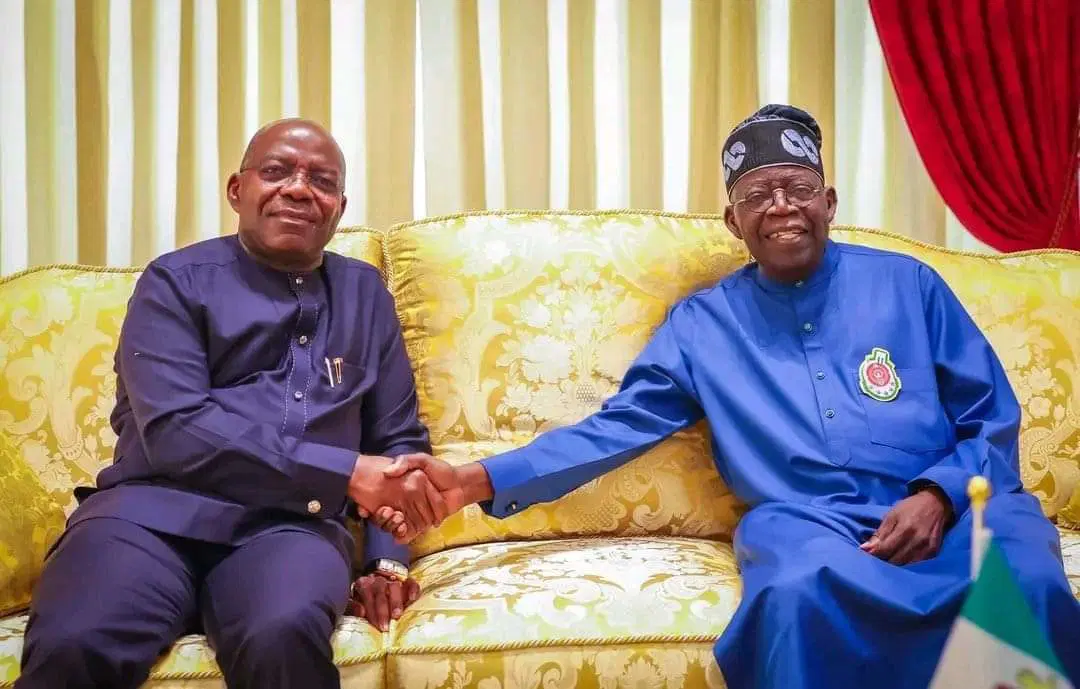
Abia State Governor, Alex Otti, has praised President Bola Ahmed Tinubu for removing the petrol subsidy and allowing the naira to float, describing the decisions as bold and courageous economic reforms despite the hardship and disruption they have caused in the short term.
Otti said the reforms, introduced by the Tinubu administration in 2023, had helped increase the revenues available to the Federal Government, states and local governments, enabling them to meet financial obligations and invest more in infrastructure and economic development.
The governor spoke on Tuesday while receiving First Lady Senator Oluremi Tinubu during her visit to Abia State to celebrate and promote the state's historic Akwete weaving heritage in Ukwa East Local Government Area.
During the visit, Otti asked the First Lady to convey his appreciation to the President, whom he credited with taking difficult decisions that previous administrations had been reluctant to implement.
“I want you to please thank him. Thank him for his courage. Thank him for his sacrifices. Some people may not understand. It takes a man with courage to do what he did in 2023, remove petroleum subsidy and followed suit with the floating the naira,” Otti said.
The governor argued that the removal of the subsidy had freed up public funds that could otherwise have continued to support consumption, allowing governments at the federal, state and local levels to redirect resources towards development.
According to him, the increase in government revenues following the reforms has enabled some states to meet their salary obligations, invest in infrastructure and support productive activities.
“What has that done? That has freed up a lot of funds that would have been used in financing consumption to doing other things in the federal government, in the states, and in the local governments.
“And today, a lot of states are now paying salaries. A lot of states are able to build infrastructure. A lot of states are able to empower people to produce rather than consume,” he said.
However, Otti acknowledged that the reforms have imposed significant economic pressures on Nigerians, particularly in the immediate aftermath of their implementation.
The governor said major economic policy changes often come with consequences, arguing that the short-term pain associated with subsidy removal and exchange-rate reforms was an expected outcome of the decisions.
“Now, make no mistakes about it. Every courageous decision, every courageous action, has its own consequences. So, if you remove subsidy and if float the naira, it will take its toll, and over time, the economy will begin to correct,” he said.
His comments come amid widespread public concern over the rising cost of living, particularly the impact of higher petrol prices and exchange-rate pressures on transportation, food prices and household expenses.
The removal of the petrol subsidy in May 2023 immediately altered the cost structure of fuel in the country, while the subsequent foreign exchange reforms led to significant movements in the value of the naira. The combined effects have contributed to increased living costs and placed pressure on households and businesses.
While acknowledging the difficulties, Otti maintained that the current economic challenges should be understood within the broader context of Nigeria's previous economic policies.
He argued that the hardship being experienced by Nigerians was not solely the result of the reforms themselves but also reflected the consequences of what he described as years of unsustainable economic practices.
“So, what you see that people interpret as hardship today are the fallouts of previous behavior,” the governor added.
Otti's position reflects the broader argument of supporters of the Tinubu administration's economic policies that the reforms, although painful, were necessary to address structural weaknesses in Nigeria's economy and reduce the financial burden of government subsidies.
Critics, however, have continued to question the pace and implementation of the reforms, particularly their impact on ordinary Nigerians who have faced higher transportation and food costs amid persistent inflation.
The governor's remarks also come as the Federal Government continues to defend its economic agenda, with the administration maintaining that its policies are intended to create a more sustainable economic foundation, attract investment and improve long-term growth.
For Otti, the key challenge is ensuring that the benefits of the reforms eventually translate into improved living standards, stronger infrastructure and greater economic opportunities for Nigerians.
The Abia governor has previously expressed support for some of the Federal Government's economic measures, while also pursuing his administration's own efforts to attract investment and strengthen economic activity in the state.
His latest comments were made against the backdrop of the First Lady's visit to Abia, where she announced a ₦2 billion donation to support the development and preservation of Akwete weaving, a centuries-old indigenous textile tradition associated with Akwete town in Ukwa East Local Government Area.
The intervention, according to the First Lady, is aimed at supporting the development of the Akwete production site, preserving the cultural heritage and creating economic opportunities for the women and communities involved in the craft.
The visit therefore combined discussions on economic reform with efforts to promote local enterprise, cultural preservation and job creation, areas the governor said could contribute to Abia's broader economic development.
Written by
Our Reporter
SkyHigh NewsHub correspondent.