
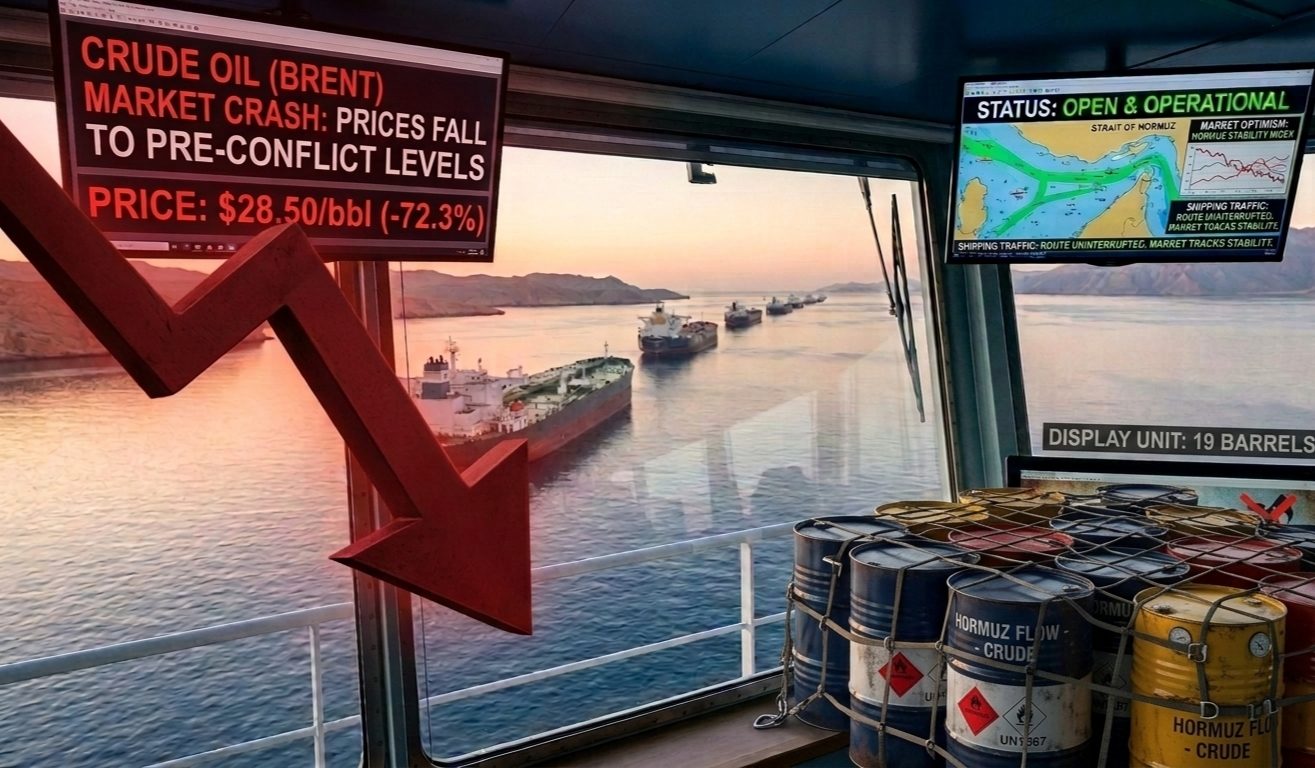
Oil Falls to $72 Per Barrel as Hormuz Supply Fears Ease
By SKYHIGHNEWSHUB · 25/06/2026 9:33 AM · 2 min read
Global oil prices have retreated to levels seen before the recent escalation of tensions in the Middle East, as traders grow increasingly confident that crude supplies will continue flowing through the Strait of Hormuz without major disruption.
The decline follows days of market volatility driven by concerns that geopolitical tensions could threaten one of the world's most important energy corridors.
The Strait of Hormuz remains a critical route for global oil shipments, carrying a significant share of the world's crude exports from producers in the Gulf region to international markets.
Recent fears of supply interruptions had pushed oil prices higher, but those concerns have eased as shipping traffic through the waterway continues largely uninterrupted.
Market analysts say investors are closely monitoring developments in the region, particularly the security situation around key shipping routes and the broader geopolitical outlook.
According to reports, traders remain focused on whether oil tankers can continue moving safely through the strait and whether tensions across the Middle East remain contained.
The return of relative calm has helped reverse some of the risk premium that had been built into oil prices during the height of uncertainty.
Adding to market optimism, US President Donald Trump said on Tuesday that oil flows through the Strait of Hormuz had reached record levels.
In a post on social media, Trump stated that 19 million barrels of oil passed through the strategic waterway on Monday.
"19 million barrels of oil flowed out of the Hormuz Strait yesterday, an all-time record. Oil prices are tumbling down, and the world is a much safer place," Trump wrote.
The comments came as investors assessed fresh supply data and evaluated whether the threat of disruptions to global energy markets had diminished.
Energy analysts note that the uninterrupted movement of crude through Hormuz remains one of the most important indicators for market stability.
Any disruption to the route could have significant consequences for global energy prices, given the volume of oil transported through the narrow passage each day.
For now, however, markets appear to be signalling confidence that supplies will remain available and that immediate risks to global energy flows have eased.
The decline in oil prices is likely to be welcomed by major importing nations, businesses and consumers, many of whom had been bracing for higher fuel and transportation costs if tensions escalated further.
Despite the recent pullback, analysts caution that oil markets remain sensitive to geopolitical developments and that any deterioration in regional security conditions could quickly trigger renewed price volatility.
Investors are therefore expected to continue monitoring developments in the Middle East, particularly around the Strait of Hormuz, which remains one of the most strategically important energy chokepoints in the world.
Written by
SkyhighNewshub
SkyHigh NewsHub correspondent.